

Don't Let Their Beauty Fool You: 15 Stunning Flowers That Are Actually Super Poisonous
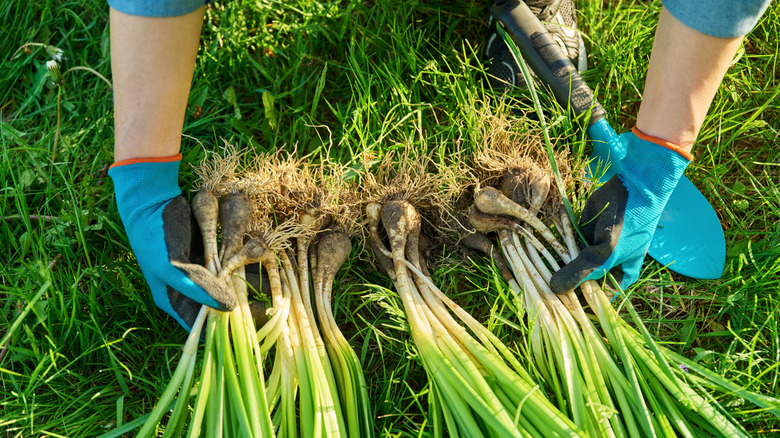
Some of the most stunning flowers in American gardens (and a few of my favorite plants) are potentially lethal. Many, like monkshood, contain compounds capable of causing cardiac arrest, organ failure, and death. I'm a master gardener with two decades of experience, and although I love many of these plants — like monkshood, bleeding heart, and foxgloves — and have the knowledge to grow them safely, I also have pets who would be at risk. Therefore, I choose to grow pet-safe plants instead. If you have pets or children, it's a good idea to avoid adding these plants to your garden.
One of the biggest issues is that most of the poisonous species are sold at mainstream nurseries, but they have no warning on the labels, so most people don't know just how dangerous the plants they have in their garden can really be. With some, like oleander, even inhaling smoke from burning clippings is dangerous. In others, the toxic compounds can be absorbed straight through the skin, which makes just tending the plant a risky affair unless you're wearing gloves. It's important to know what you're growing, whether it's dangerous or not, and how to handle it to make sure that you, your family, and your pets stay safe and can enjoy the beauty of your garden. For some of these flowers, even the vase water or honey made from the nectar can be dangerous.
Oleander (Nerium oleander)
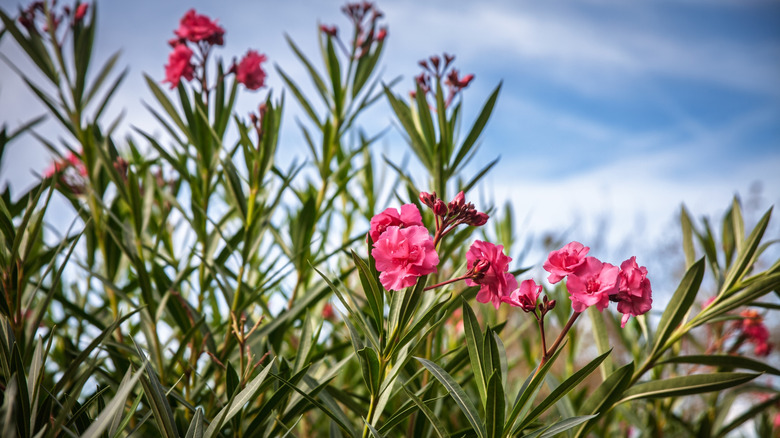
A tough evergreen shrub, oleander is native to the Mediterranean basin and parts of Asia — and it shows up across large portions of the U.S., being hardy in USDA Zones 9 through 11. It can grow up to 18 feet tall, and has narrow, leathery dark green leaves and clusters of single or double flowers in white, pink, red, or yellow. People like oleander because it is hard to kill, deer-resistant, and will grow even in thin, depleted soils. Unfortunately, while oleander has beautiful flowers, it can be deadly.
All parts of the oleander plant contain potent cardiac glycosides that disrupt the heart's electrical rhythm, making oleanders extremely poisonous to dogs, cats, horses, and humans. Those cardiac toxins also survive burning and drying. Because of this, burning oleander trimmings is not advised, as the smoke can be toxic. According to a 2025 case report published in Frontiers in Veterinary Science, 76 out of 205 beef cattle died within 30 hours of oleander clippings being burned a short distance from their housing. If you choose to keep or plant oleanders in your garden, make sure you're wearing gloves when you handle the stems. Bag clippings with your regular trash rather than trying to burn or compost them. Rinse the tools you used before they touch anything else in the garden.
Foxglove (Digitalis purpurea)
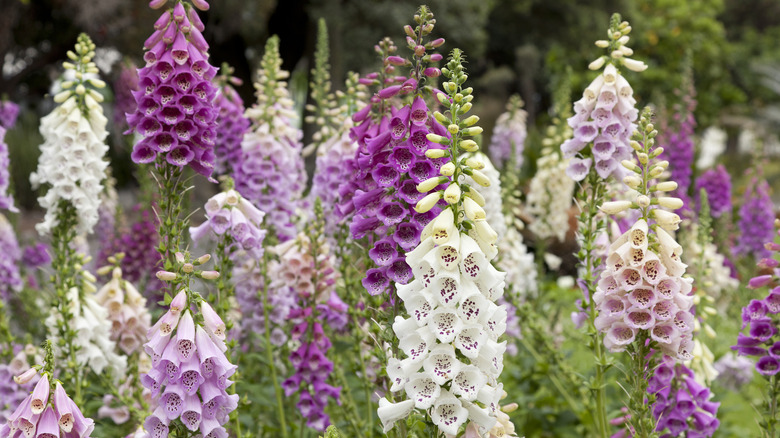
I love foxgloves. They are so pretty, and I enjoy seeing them while walking the dogs through my local woods, but I also respect that this plant is dangerous. It's the original source of digitalis, which you may have heard of as a potent heart medication. Its effect on the heart is what makes the plant so harmful, especially to unwary pets and children. Foxglove poisoning can disrupt the heart's rhythm and cause convulsions and visual disturbances. All parts of a foxglove are extremely poisonous and potentially fatal if swallowed. When in flower, foxgloves are pretty much unmistakable with their beautiful bell-shaped blooms on those tall spires, but when they're young, they can cause problems. For example, the National Capital Poison Control Center shared a case of a man who foraged what he thought was borage, picking about a dozen young foxglove leaves instead and made a sauce from them. He and his wife both ended up in hospital with dangerously slow heart rates and needed the antidote for digoxin.
Many people grow foxgloves because the tall flower spikes attract hummingbirds. If you have pets or children but still want to grow foxgloves, it's a good idea to plant them at the back of a bed, well away from little hands and curious paws. Make sure you use gloves when handling the plants, as digoxin can be absorbed through the skin. Foxglove is hardy in Zones 4 through 9 and does best in cool summers and part shade. It seeds aggressively, though, with each plant able to produce well over a million seeds. It's also considered invasive or weedy in some parts of the US, including the Pacific Northwest, so be sure to check before you plant.
Monkshood (Aconitum napellus)
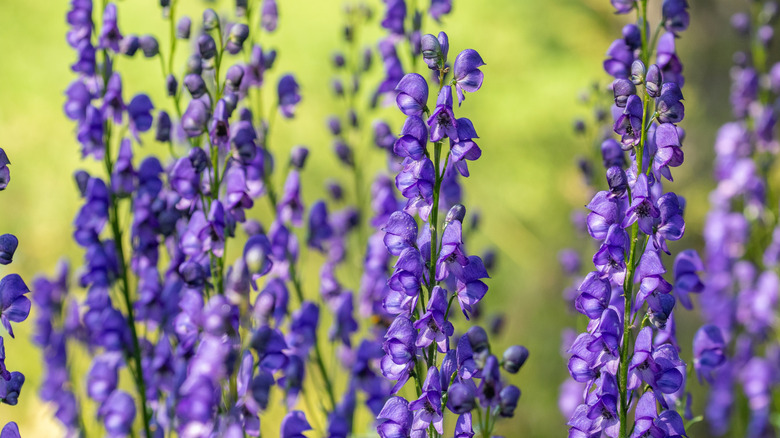
Also known as wolfsbane or aconite, monkshood is one of my favorite flowers, but it is incredibly hazardous. Just handling monkshood carries significant risk. It contains high concentrations of the toxin aconitine, which causes heart arrhythmias and can lead to respiratory paralysis and death. A single gram of raw plant material is enough to be fatal. There's also no antidote for Monkshood poisoning, only supportive treatment for the symptoms. To the untrained eye, monkshood leaves can look somewhat like cilantro or even parsley so I'd advise extreme caution if you're not sure what's growing in your yard.
This plant is native to the mountains of Western and Central Europe and is hardy in Zones 3 through 7, but dislikes hot, humid summers. It can reach up to 4 feet tall and is generally well-behaved, not spreading excessively. It likes part shade and consistently moist, rich soil. It's resistant to deer and rabbits, making it a popular choice where these pests are particularly problematic. However, this is one plant that I strongly advise against growing if you have children or pets because it's so poisonous. With monkshood, make sure you wear gardening gloves when handling it, as it's absorbed efficiently through bare skin, and you don't even have to ingest monkshood to suffer the effects of poisoning.
Angel's trumpet (Brugmansia)
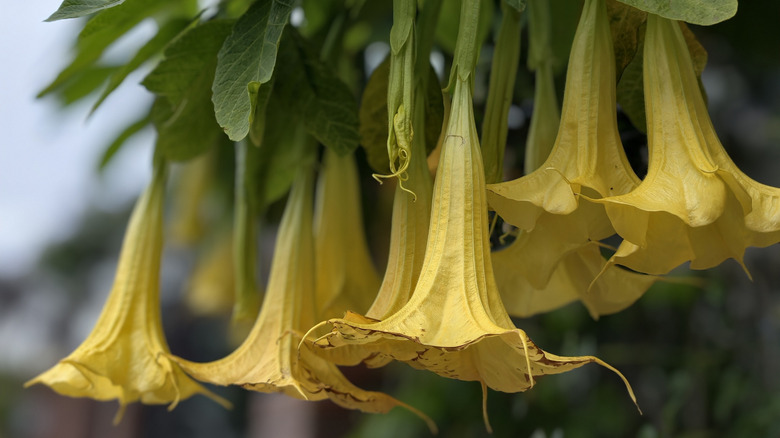
The big, pendulous blooms of angel's trumpet grow to nearly a foot long and get intensely fragrant after dark. It's a beautiful, fascinating plant that's native to South America and can reach 15 feet in containers and up to 35 feet planted in the landscape. It's resistant to deer damage and can tolerate some salt. Most brugmansia varieties are only truly hardy from Zone 9 and up, but some can handle Zones 7 and 8. Although the species no longer exists in the wild, there are hundreds of cultivars available with flower colors ranging from white and yellow to peach and pink. It's closely related to datura, but its flowers hang down as opposed to pointing upwards like the datura blooms.
Angel's trumpet beatiful-but-dangerous because it contains scopolamine, atropine, and hyoscyamine. These intense alkaloids affect the nervous system and the brain. Symptoms can range from impaired speech and swallowing and gastrointestinal issues, to hallucinations, delirium, seizures, coma, and death. Even the perfume of the angel's trumpet is harmful, causing respiratory distress, headaches, and nausea. Contact with the sap is also hazardous. Sharp HealthCare reported how a woman in California was trimming her angel's trumpet, then rubbed her eye with sap still on her fingers and lost her sight almost immediately, albeit temporarily.
With angel's trumpet, it is a very good idea to wear eye protection and gloves when doing any kind of handling. You should also clear away the fallen flowers and pods, especially if you have children and pets that may be tempted by them. While genuinely beautiful, angel's trumpet is a very heavy feeder and drinker, so if you want to grow angel's trumpet, despite its toxicity, be aware that it is not the best choice for a low-maintenance garden.
Lily of the valley (Convallaria majalis)
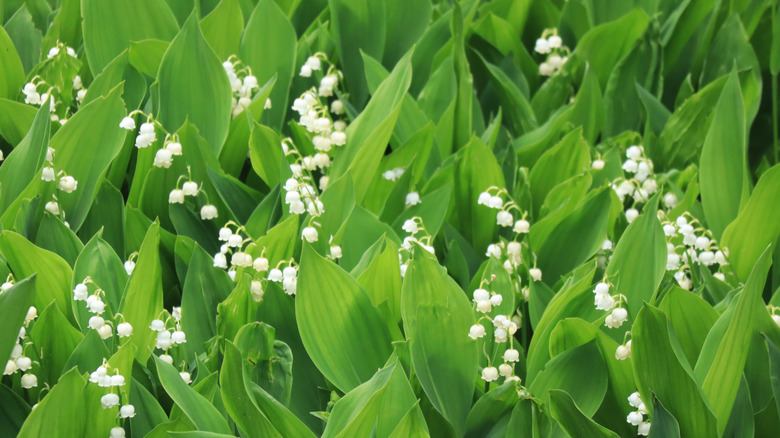
Lily of the valley is a lovely plant, and brides have carried it down the aisle for generations. It's actually a rhizomatous perennial ground cover that's native to Eurasia and is hardy in Zones 3 through 8. Lily of the valley is a popular plant for difficult, shady areas, where it can handle clay soils and drought. Its poisonous nature also renders this pretty perennial both deer- and rabbit-resistant.
Lily of the valley is another plant that contains cardiac glycosides that disrupt the heart's normal rhythm. It's toxic to dogs, cats, horses, and humans and can cause vomiting, an irregular heartbeat, and death in severe cases. One of the key dangers of lily of the valley, particularly for young children and dogs, is the bright red berries it produces after it flowers. These are particularly tempting but also incredibly hazardous.
Lily of the valley is also invasive in multiple states, including Wisconsin, Arkansas, Virginia, and Wisconsin. It spreads aggressively, choking out and smothering neighboring plants, so if you do have lily of the valley in your garden, you'll need to keep on top of it, or it will quickly take over a border. One way to keep it contained is to install a root barrier to stop rhizome spread. If it's already overtaking your garden, you may want to get rid of lily of the valley and plant something less toxic and less aggressive in its place.
Gloriosa lily (Gloriosa superba)
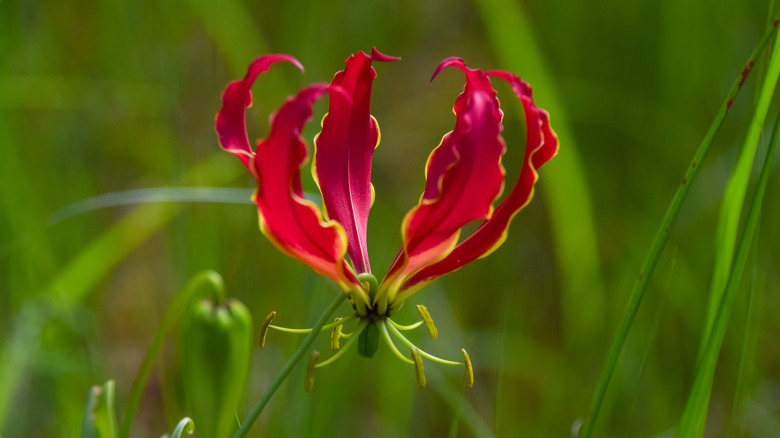
The gloriosa lily is a tuberous climbing perennial native to tropical Africa and parts of Asia, hardy in Zones 8 through 12. It produces interesting flame-colored petals in red, orange, and yellow that curl backward like little fires. Like lily of the valley, the gloriosa lily is also resistant to deer and rabbits, thanks to the toxins in its tissues.
All parts of this plant, and especially the tubers, are extremely poisonous, and ingestion can result in death. The toxins in the gloriosa lily are colchicine and gloriocine alkaloids. Symptoms include numbness and tingling, severe gastrointestinal distress, convulsions, respiratory paralysis, and death. It can also cause delayed multiorgan failure, and there is no antidote for colchicine toxicity. Lily species like the gloriosa can be particularly dangerous to cats and dogs who might chew on the plants or even inhale the pollen while sniffing.
Autumn crocus (Colchicum autumnale)
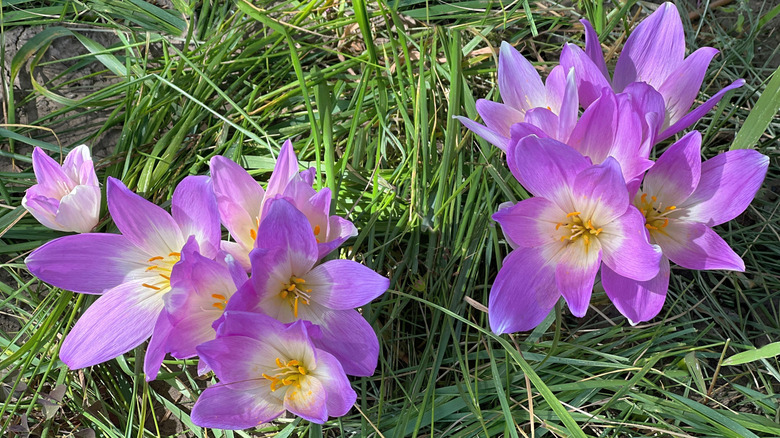
Also known as naked ladies, autumn crocus pushes stems up straight out of bare soil in early fall and flowers with no leaves in sight. It's hardy in USDA Zones 4 through 9 and grows wild in woods and damp meadows. Its tulip-like foliage doesn't appear until the following spring, where it lasts for a few months then dies back by early summer, leaving the corm dormant until the flowers appear once fall arrives.
Like the gloriosa lily, autumn crocus contains colchicine and so has the same symptoms and risks. Be extra careful with autumn crocus if you're a wild forager, because it can easily be mistaken for a wild allium and you really don't want to confuse the two, as severe colchicine poisoning has a very high mortality rate. If you wish to plant autumn crocuses despite their toxicity, make sure to don a pair of gloves before touching the bulbs.
Daffodil (Narcissus)
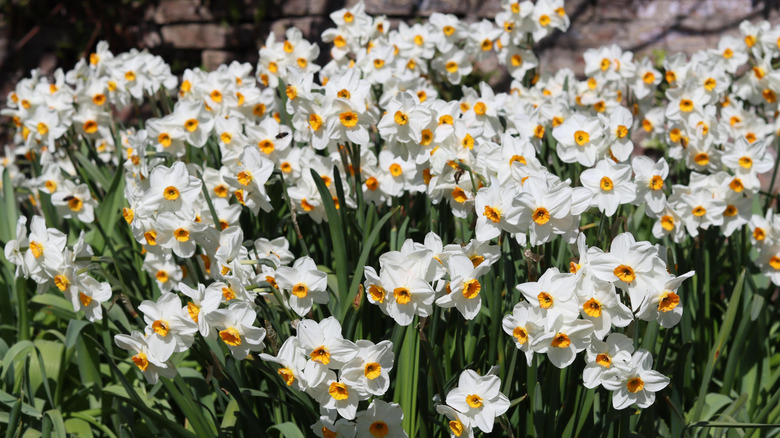
Most of us take daffodils for granted. They are everywhere each spring. They pop up all over gardens, are sold as cut flowers by the armful, and bulbs by the bagful. They are cheap, reliable, and a welcome promise of spring in the depths of winter. Hailing from parts of Eurasia and North Africa, daffodils are hardy in Zones 4 through 8. Cultivars range from big single trumpets to tiny double dwarf trumpets, cup-style and clustered varieties, sporting colors from white to yellow to orange and pink.
Thanks to their high concentrations of lycorine, daffodils are resistant to most mammal pests. However, it's this compound that makes daffodils poisonous to pets and humans. While all parts of the plant contain some lycorine, it's the bulb that houses the most. Licorine can irritate the stomach lining and cause vomiting, diarrhea, and stomach pain. Luckily, daffodil poisoning is not usually fatal, but it's very unpleasant. Some people who handle the bulbs and stems also develop a type of contact dermatitis known as daffodil itch. You may want to wear gloves if you are dividing or planting large numbers of bulbs. Daffodils are very easy to plant and will grow in well-drained soil with at least 6 hours of sun. They'll also multiply beneath the soil easily with no input from you.
Rhododendron and azalea (Rhododendron spp.)
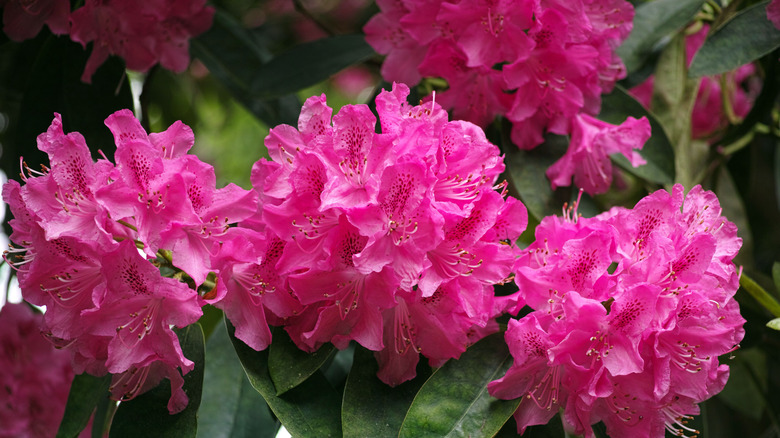
Many people like rhododendrons and azaleas because of their lush greenery, lavish flower displays, and relative hardiness. However, besides pushing out masses of pretty blooms, rhododendron and azalea also produce grayanotoxins, which are toxic to dogs, cats, horses, humans, and many other animals. Ingesting just a few leaves can cause significant problems. Rhododendron poisoning can cause low blood pressure and a slow or irregular heartbeat. Additionally, it can result in confusion, stomach pain, vomiting, and diarrhea. One of the most interesting things about rhododendron's toxicity is that honey made from the nectar is also hazardous. It's known as mad honey and is the result of bees that have been foraging on rhododendron or azalea. Just a tablespoon can trigger symptoms. There are historical cases of armies being defeated because they were so greatly affected by eating mad honey before battle.
Fortunately, cases of serious toxicity from rhododendrons and azaleas are relatively rare — but children are at risk of mistaking the flowers for honeysuckle and ingesting the nectar. The symptoms from this are usually limited to vomiting, nausea, and irritation of the mouth. However, it's still safest to keep children away from the plants. The same goes for pets who might chew on the leaves.
Wisteria (Wisteria spp.)
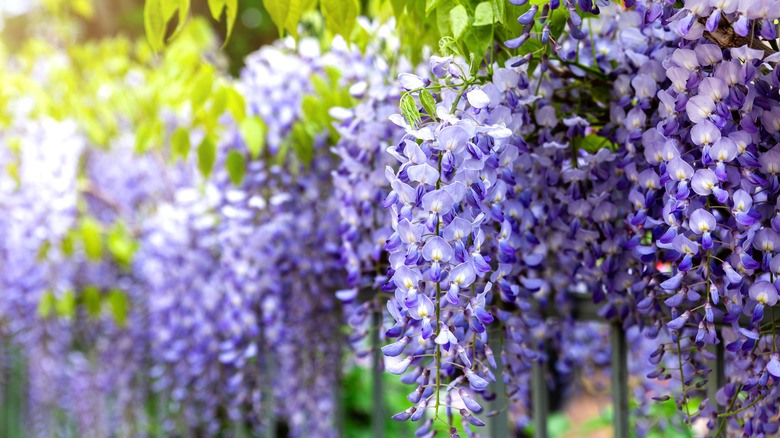
The flower clusters wisteria vines push out in spring sure make for a dreamy sight — but this plant has a less enchanting side to it. Wisterias (both the native and non-native species) are poisonous, containing lectin and a glycoside called wisterin. Both of these substances irritate the gut lining, causing stomach pain, vomiting, and diarrhea that lasts for a few days. The chemicals also cause burning sensations in the mouth.
The seed pods have the highest concentration of toxins. The problem is that those pods can look temptingly edible to young children and dogs. If there is a wisteria in your yard and you have pets or young kids, you'll need to make sure you keep on top of clearing away the fallen pods.
If you want to plant wisteria, make sure to opt for American wisteria (Wisteria frutescens), which is native to the Eastern U.S. and hardy in Zones 5 through 8. Two commonly sold wisteria types are Chinese wisteria (Wisteria sinensis) and Japanese wisteria (Wisteria floribunda), both of which are classed as invasive species in various states. If left unchecked, these particular types of wisteria can girdle and kill mature trees by constricting the trunk and shading out the canopy.
Lantana (Lantana camara)
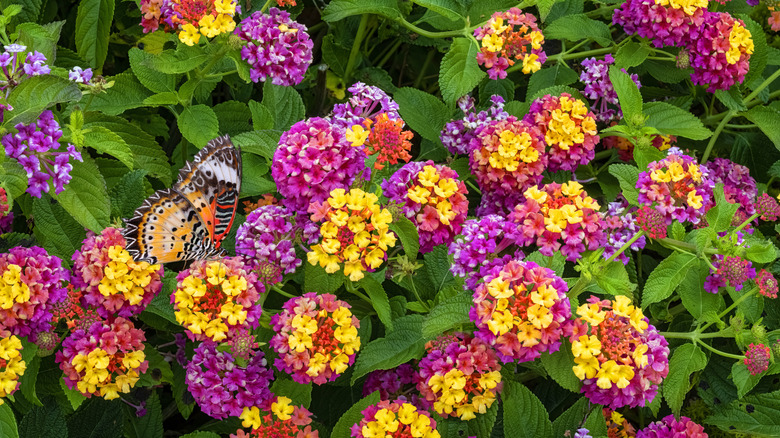
There are many types of lantana that can give your garden a stunning burst of color, and they are undeniably beautiful with their orange, yellow, red, and pink flower clusters. Lantana is a popular choice for people making a pollinator-friendly garden because it blooms from spring through to the first frost, and it draws in butterflies all summer long.
But the pretty blooms of lantana hide a toxic trait. The plant contains lantadenes, and ingestion of the flowers, leaves, or berries can cause vomiting, diarrhea, and respiratory distress (as well as liver failure in livestock after browsing). This is another plant you should be particularly careful of if you have children or pets.
Lantana is also considered invasive in some states, including Florida, and a serious pest in regions like Hawaii. There are non-invasive, sterile cultivars, such as 'Bloomify Red', which can be planted even where the wider species is considered invasive because these cultivars can't set seed. If you really do want to grow lantana, one of these cultivars is your safest option. Lantana behaves as a hardy perennial in Zones 8 through 11 and as a heat-loving annual everywhere else. It's pretty tough and can tolerate high temperatures, salinity, drought, and a range of soil types.
Bleeding heart (Lamprocapnos spectabilis)
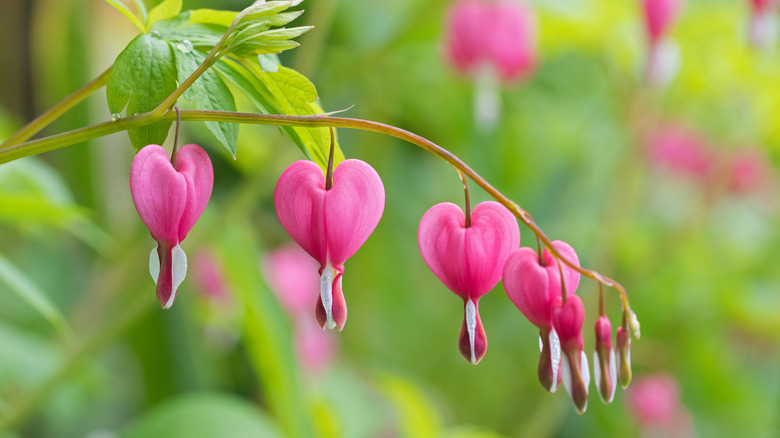
Bleeding heart is one of my favorite flowers. There's something so dramatic and romantic yet oddly macabre about those arching stems of dangling heart-shaped pink and white blossoms — which yield a fantastic show in spring. Even though I know they are toxic, I do still have bleeding hearts in my front yard where my dogs never go unsupervised. Hardy in USDA Zones 3 through 9, these plants are native to Siberia, Japan, northern China, and Korea, but they are not considered invasive in the U.S.
All parts of the bleeding heart plant, including roots and sap, contain isoquinolone alkaloids. Ingesting these toxins can result in vomiting, diarrhea, staggering, convulsions, and respiratory distress. Repeated contact with the plant or its sap can also result in contact dermatitis. To guard against this, you might want to wear gloves when pruning and handling the plant.
If you have children or pets, you can also consider placement that doesn't provide easy access — such as in hanging baskets. To successfully care for a bleeding heart plant, give it moisture-retaining soil and plenty of morning sun but afternoon shade. It dies back to the ground by midsummer, especially in hotter and drier conditions so, if placed in a border, it needs to be planted alongside something like hostas that can fill in the gap it leaves behind.