

5 Reasons To Ditch The Towel Rack In Your Bathroom
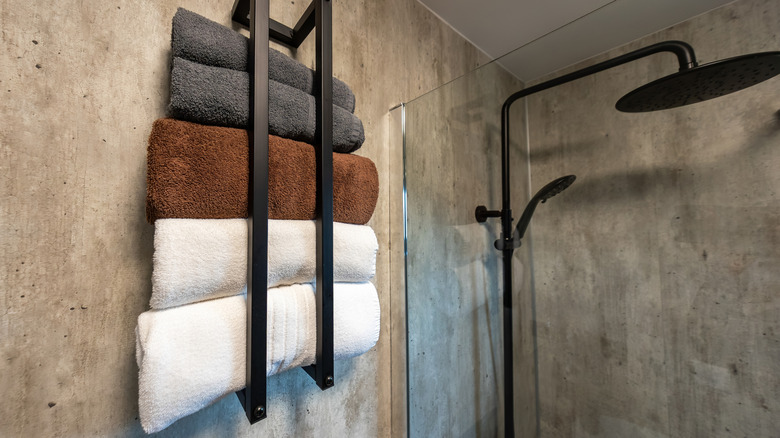
The bathroom is one of the most used rooms in the house, but it is also one of the most difficult to keep clean. From buildup from common usage to moisture and residue, bathroom cleaning is essential to maintain the health of the people in your home. Sometimes, it can seem like no matter how well you clean, the smell of mildew sticks around and your towels quickly lose their softness. If this sounds familiar, the problem may not be your cleaning habits; it might be your storage habits. By keeping your towels on towel racks in your bathroom, you're inviting a whole host of problems you may have never even considered before, such as odors, degraded towel fibers, and bacteria.
Ultimately, storing your towels in your bathroom might be ruining them, and towel racks are among the most detrimental devices that accelerate the process. Towel racks are commonly chosen for their neat, sophisticated aesthetic that fits with open-concept decor. Unfortunately, open concept also means open to the elements, and in the bathroom, that means moisture. If all your towels are rolled up in cute but dense towel racks, the moisture has nowhere to go. But that's not the only problem. Space is another issue that towel racks contribute to rather than solve. Not only does the rack take up more space than it seems when you install it, but you may also end up cluttering the space by keeping more towels around than you actually need.
Mildew and odors stemming from moisture
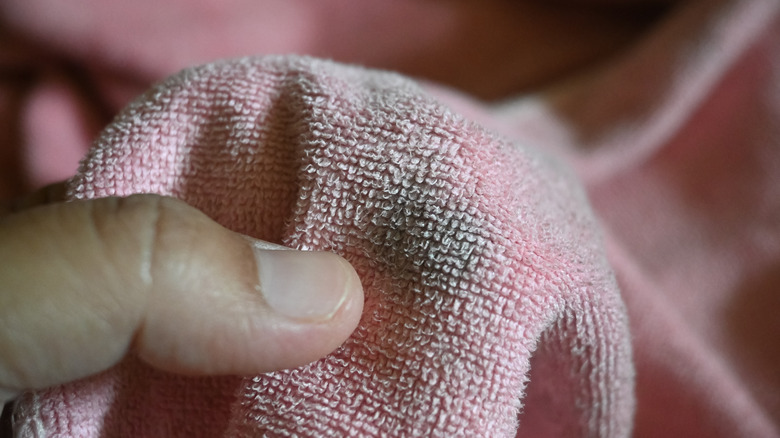
Design experts will tell you that you can store towels in your bathroom as long as you display them in a way that looks chic and doesn't overpower the space. However, cleaning experts have different advice. It's true that if you have a limited number of towels in the bathroom, you can safely store them for everyday use. The problem is that when you have extras folded or rolled up, they don't get enough airflow to dry properly between showers, which can lead to mildew and odors. Proper ventilation and towel storage can make a huge impact if you find you've got mold growing on your towels. If your towel smells, don't risk it. You'll want to launder it before using it again or discard it if the smell persists after washing.
It's best to hang dry your towels between uses and wash them about once per week or up to three times per week in bathrooms with high usage to prevent mildew and odors from taking over your bathroom. The moisture from drying off or the steam from showers can become trapped in your towels' fibers in as little as 24 to 48 hours. That means that by the time you trade out your current towel for a "fresh" towel that was stored in a towel rack near the shower, you could already have a mildew problem.
Fibers of the towels degrade faster due to moisture
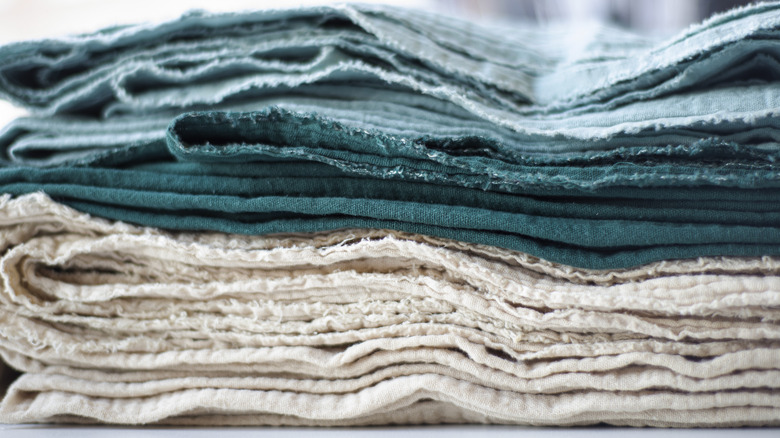
You may think that having freshly laundered towels neatly rolled or folded and put on display in your bathroom on a towel rack would keep them in better condition, but the truth is, it might be doing more harm than good. When fresh, soft towel fibers are exposed to regular moisture, such as steam from the shower, the fibers actually begin to degrade faster than when they are stored in a dry environment free from debris, like a linen closet.
Not only do towels absorb moisture from your skin when you dry off after a shower or wash your hands, but the bathroom is also likely to be a moist environment with fluctuating humidity. In fact, it is a common practice to place humidity-loving houseplants in the bathroom to help them thrive because you can pretty much guarantee they will get enough moisture from steam during daily showers. Consistent dampness in towels reduces their longevity. It can also reduce their softness, ultimately impacting your skin. Without strong fibers, especially in cotton towels, they may no longer dry your body well. Depleted fibers can't absorb moisture the way new towels can. If your towels feel scratchy or don't absorb moisture on contact, chances are they have lost their structure.
Risk of bacteria spreading when the toilet is flushed
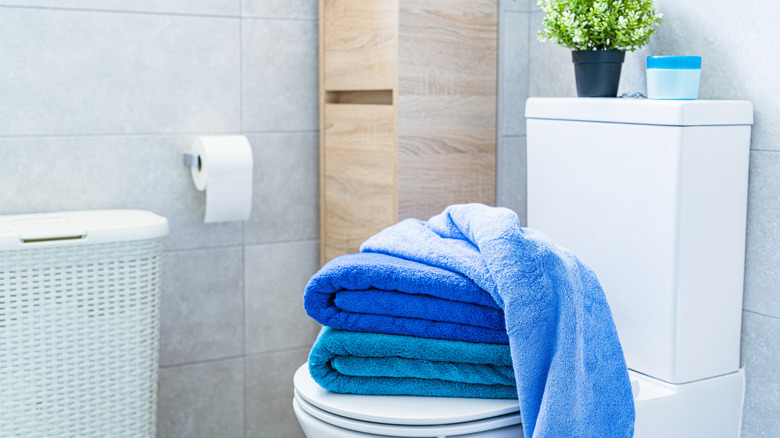
Bacteria can wreak havoc on your towels and, ultimately, your health. The risk of bacteria is even worse with towels that are drying after use. When you dry your body or hands off, dead skin cells are left behind on the towels, creating a perfect breeding ground for bacteria. Another issue in the bathroom environment, beyond moisture, is the bacteria lurking in the room from more undesirable activities. When you flush your toilet, especially if you leave it open, the bacteria from your waste can be kicked into the air and cling to the nearest absorbent surface, which just might be your stored towels on an open towel rack.
What's worse is that no amount of washing can fully remove bacteria that have set deep into the fibers. Luckily, a hidden bathroom storage solution that looks like a magic trick can solve sanitation issues. Built-in hidden storage cabinets can help you keep your towels (and other bathroom essentials) away from the less desirable aspects of bathroom elements.
Encourages having more towels than needed, resulting in clutter
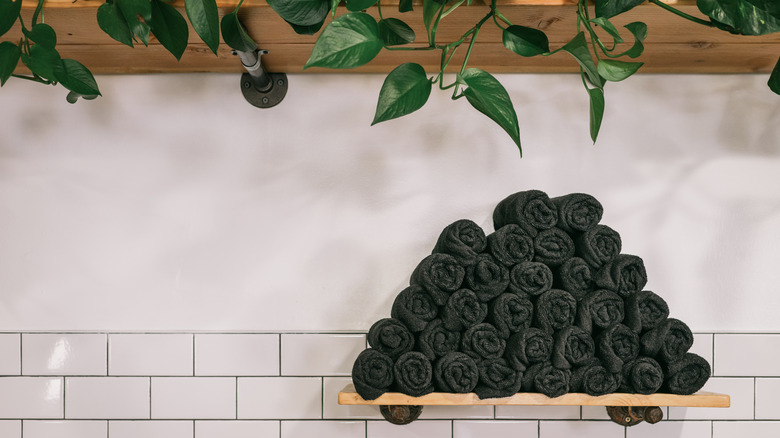
Having extra towels on hand isn't necessarily a bad thing, but your bathroom isn't the best place to keep them. The question becomes, why are you really storing your towels in the bathroom? Ultimately, you really only need a towel or two per person in the house, plus a few extra for guests. However, only those currently in use need to be in the bathroom.
Because you don't want extra towels sitting in the damp environment, having excess in the bathroom really only makes sense if you have a frequent need for the additional towels for guests. In any case, filling the towel rack to complete the decorative aesthetic just for the sake of looks adds to the clutter, especially in small bathrooms. If you find yourself with more than necessary, animal shelters are a great option to donate extras.
Towel racks take up more space in small bathrooms than simple alternatives
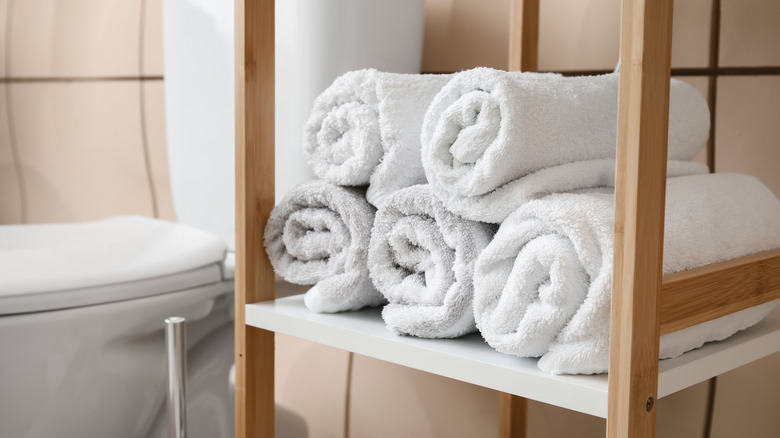
Sometimes, towel racks come with additional shelving for other items, which can make the space trade-off seem worth it. However, there are small, simple alternatives to over-the-toilet shelving for those items that get the job done without compromising space or leaving your towels exposed to bathroom hazards. For example, toilet tank shelf racks give you space to store bathroom essentials while keeping them clean and moisture-free without taking up usable space. When it comes down to it, towel racks serve a much more decorative purpose than a functional one.
If you remove the towel rack, the resulting wall space can be used for a simple towel rod to hang an individual towel after a shower. Towel rods aren't the best solution for bacteria, but they do solve the issue of space, clutter, and mildew. Plus, healthcare officials at the Cleveland Clinic recommend using a towel bar if you choose to hang your towels in the bathroom rather than a hook to ensure the towels dry completely between uses.