

The Overlooked Scrap That Can Extend The Life Of Your Wooden Kitchen Utensils
We may receive a commission on purchases made from links.
For most people, silica gel packets are just trash. They're those small packets full of mystery beads that come with packages that you swiftly throw away before moving on with your day. We know what they do: absorb humidity and keep things dry. But we don't often think about how we could use that to our advantage. Actually, there are creative ways to repurpose silica gel packets around the house. For instance, they can extend the life of your wooden kitchen utensils.
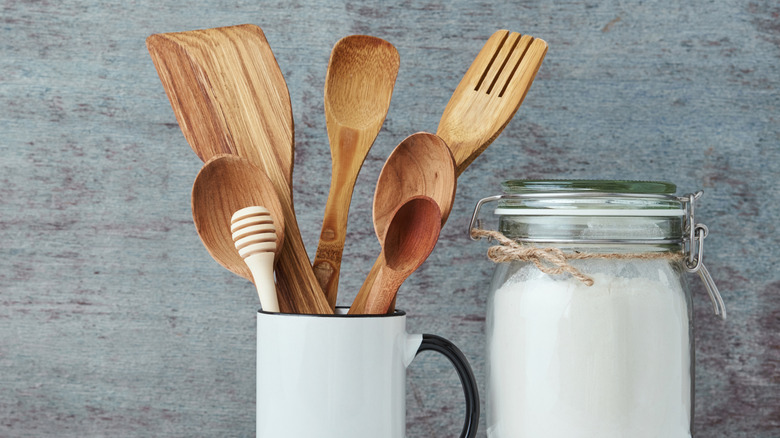
The idea is that by reducing moisture in your utensil drawer, you can prevent it from causing damage to the wood and keep mold at bay. Because even if you don't put wooden utensils in the dishwasher, drying them completely after hand washing them can be hard. After drying, you ideally want to store them in a well-ventilated spot to avoid any moisture buildup. For example, wooden chopsticks sometimes come with special breathable stands or boxes that allow them to be stored without excess humidity. But if you're just keeping your wooden utensils in a regular drawer or container, silica gel packets are a clever way to keep them in good shape. So, what makes this work? The surface of the gel, also known as silicon dioxide, has a natural ability to draw in moisture and hold it onto its surface (about 40% of its weight in humidity). By using this trick, the moisture in a drawer or container is drawn to the silica gel packets and away from your wooden spoons, chopsticks, and other utensils.
How to use silica gel packets for utensil storage
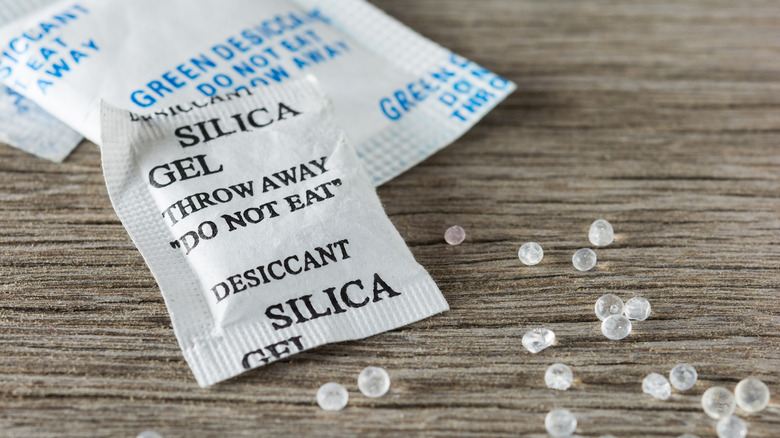
This seems simple: throw a few silica gel packets in your kitchen drawer where you keep wooden utensils, or in whichever container you use for them. The packets aren't meant to get wet, so don't use them in drying racks or other containers that make direct contact with water.The trick here is to know when your packets need to be refreshed. The easiest method is translucent packets with color-indicating beads; some change from blue to pink as they become saturated, while others start off orange and turn green. Even though the beads stay enclosed in a packet, it's safest to stay away from blue-indicating beads since they contain cobalt chloride, a chemical that shouldn't come into contact with utensils. Orange-indicating options like these Vbeijll silica gel packets are food-grade and safe to use in your utensil drawer.
Classic white silica gel beads won't change color, but you'll be able to tell that they can't absorb any more moisture when the packets start to feel sticky or mushy. If you're on the fence, err on the side of refreshing packets every six months. Despite the "do not eat" warning, these beads aren't toxic or poisonous — just be sure to keep them out of reach of kids as the packets can be a choking hazard. When any type of silica gel packet is oversaturated, you may be tempted to toss them and replace them with new packets, but you can recharge and reuse them by drying them out. This can be done by placing them in the oven at 250 degrees Fahrenheit for one to two hours, or placing the packets in direct sunlight for a few hours.