

The Hawaiian Home Decor To Keep An Eye Out For When Thrifting
An afternoon at the thrift store can be hit or miss, but expert thrifters know how to spot valuable, high-end items, unearthing unassuming finds that are worth more than they appear. For example, there are valuable vintage blankets you should always be looking for, many of which are prized for their high-quality materials and manufacturers. If you spot a blanket with a symmetrical design made with an appliqué technique, you might have stumbled upon a rare Hawaiian quilt. For non-quilters, appliqué is a technique where fabric of any shape is cut and sewn — either by hand, machine, or fusing material — onto a larger piece. This differs from the traditional quilting method of sewing squares together to form a blanket.
Hawaiian quilting dates back to the 1800s when American missionaries taught Hawaiian women about patchwork quilting. Lore has it that a native woman was drying a large piece of fabric outside when she noticed the shadows of leaves on the fabric. She cut out the shapes, created a symmetrical design with them, and then hand-stitched the smaller pieces onto the main fabric, creating the first Hawaiian quilt. This new style caught on, with symmetry and appliqué becoming the trademarks of this cultural handiwork. Although some companies still sell these handstitched quilts, blankets have commonly been destroyed or buried with the artist, making these items even more of a rare find.
What to look for in a Hawaiian quilt
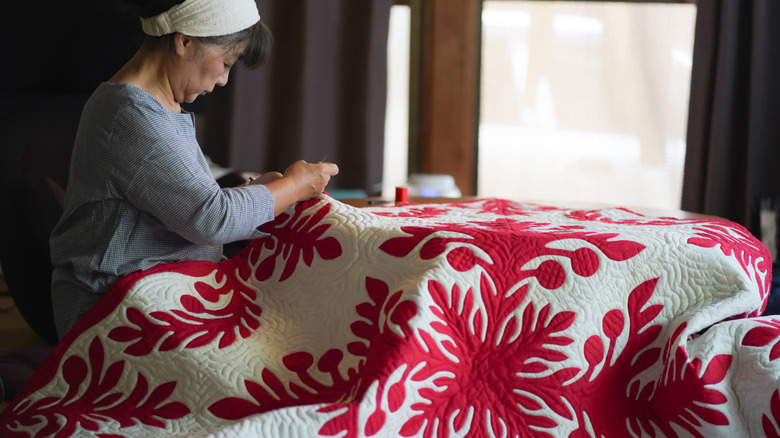
Authentic Hawaiian handstitched quilts should be made in Hawaii and ideally with 100% cotton, according to Maui Nō Ka ʻOi Magazine. Individual stitches and rows should be evenly spaced, with rows typically a half-inch to an inch apart. One common technique is for stitching to follow the shapes of the appliqué pieces and radiate outward, almost like waves — a style that differs from the straight stitches of traditional American quilting.
During the early years of quiltmaking, the blankets celebrated Hawaiian royalty with symbols like the feather cloaks and accessories worn by the monarchy. Quiltmakers also incorporated bright colors, like red, yellow, and green (again, often seen on royalty) against pale backgrounds. However, when America overthrew Queen Liliuokalani in 1893, the quilts became an outlet for subversive messages of protest and resistance, making these pieces a valuable record of history.
On quilts made during recent centuries, recurring elements include nature-inspired shapes like leaves, flowers, waves, and rain. You'll often see a large botanical shape branching out from the center of the quilt, sometimes with a solid or decorative border framing the central design, as if encircled by a lei. With many trends, the interest in Hawaiian quilts has been cyclical, rising again as later generations are diving into their cultural roots and seeking to preserve their rich culture. If you are fortunate enough to find one of these pieces, consider giving it a place of honor with these ways to hang a quilt.