

Forget Pyrex & Le Creuset: The Elegant Kitchenware Brand To Look For At Thrift Stores

Vintage Pyrex and Le Creuset often get all the love from collectors, but another classic vintage kitchenware brand has quietly remained a favorite among collectors for generations. Founded in Baltimore in 1892, Stieff became one of America's premier silversmiths, producing handcrafted sterling silver flatware, serving pieces, tea sets, and decorative tableware that were often passed down as family heirlooms. Today, those same pieces frequently appear in estate donations and secondhand shops, where they're sometimes overlooked by shoppers who mistake them for ordinary silverplate.
Stieff earned its reputation through exceptional craftsmanship and timeless designs, including beloved patterns like Repoussé, Rose, and Williamsburg Shell. One pattern thrift shoppers should learn to recognize is Stieff's Repoussé. That pattern is inspired by the ancient repoussé technique, which creates raised decorative designs by working the metal from the back of the piece. The pattern is covered in intricate flowers and scrolling foliage. Its ornate craftsmanship has made it one of Stieff's most collectible sterling silver patterns, and even individual serving pieces can command impressive prices when found in good condition.
While everyday place settings are often more affordable, individual sterling serving pieces from sought-after Stieff patterns regularly sell for more than $100, especially examples in desirable patterns like Homewood, Corsage, and Old Maryland. Complete flatware sets or elaborate tea services can be worth hundreds or even thousands of dollars, depending on the pattern and condition.
What to look for when shopping for Stieff silver
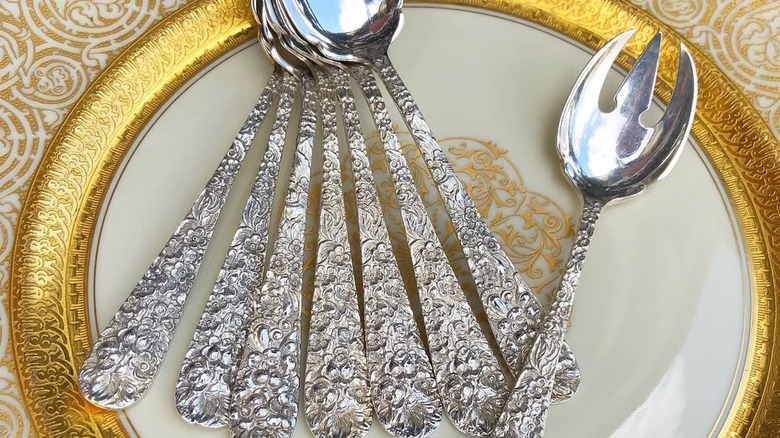
The easiest way to identify authentic Stieff silver is by checking the markings stamped into the back or underside of each piece. Most sterling pieces made after the company became The Stieff Company in 1904 are stamped "STIEFF" along with "STERLING," indicating they are made from solid sterling silver. This mark also includes date/triangle codes and sometimes a letter, like "B" or "D" behind the name. Earlier examples may instead bear the hallmark of the Baltimore Sterling Silver Company, the firm's previous name before its 1904 reorganization, while pieces produced after the 1979 merger with S. Kirk & Son may be marked "Kirk-Stieff." However, only new patterns introduced after the merger got this mark. Legacy Stieff patterns kept the "Sterling-Stieff" mark, and legacy Kirk patterns kept the "S. Kirk & Son" mark.
Many pieces were hand-finished with intricate floral details that continue to appeal to collectors and anyone looking to add vintage elegance to their dining table. While you may need to clean and polish sterling silver from time to time, its durability and lasting value have helped Stieff remain one of the most respected names in American silver.