

Ditch Traditional Wood Stain: The Spice Rack Staple You Can Use Instead
We may receive a commission on purchases made from links.
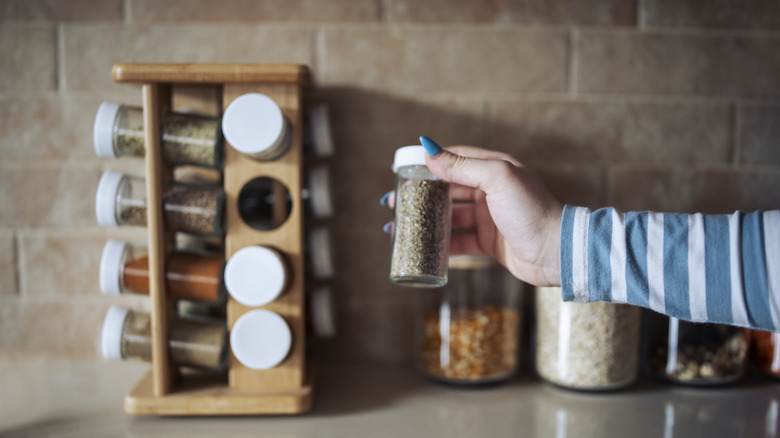
Once wooden furniture starts to look tired and worn out, the first impulse might be to get rid of it and replace it with something new. However, that's not always necessary, especially if most of the defects are non-structural. For surface flaws or aesthetic blemishes, you can save a lot of cash by simply refinishing the piece using wood stain. But before you head out to purchase traditional commercial stain, there's an easier, more affordable, and unexpected option that's likely on your kitchen spice rack right now: good old turmeric.
Yes, you probably only think of turmeric as something to add to your food or beverages. But this widely-used culinary spice is also the secret behind adding color to wooden furniture. It produces a beautiful sunny-yellow hue that can be used to add vibrant eclectic touches to your space. And this isn't too strange if you think of how your fingers turn yellow upon touching turmeric when cooking. Whether powdered or in its root form, it's likely you've already witnessed the dyeing power of turmeric.
Going with a natural stain rather than store-bought one is also one way to make your home more eco-friendly by using something non-toxic. So to make this DIY natural wood stain, grab some ground turmeric, a lidded mixing bowl, a spoon, and a clean scrap cloth for the application part, and let's get to work.
Making wood stain from turmeric and preparing the wood for staining
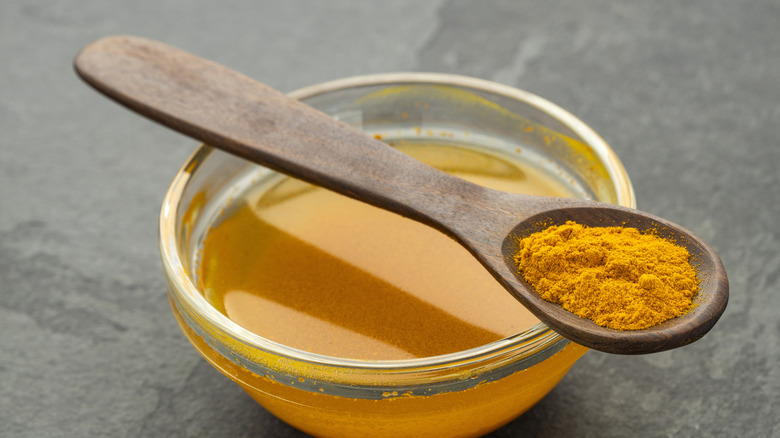
Before getting started, it's best you cover your working area with an old sheet and wear gloves, otherwise your surface and hands will get messy stains. Now, into your mixing bowl, put some of the ground turmeric and a little water to make a highly-concentrated solution. Stir everything together with the spoon. You'll notice the turmeric doesn't really dissolve, settling into a sandy-like mixture instead, but that's all right because you'll wipe off the sediments after the staining. Cover the bowl and leave it for about 24 hours so the stain develops fully, though you can start applying it immediately if you prefer.
Now, before you stain your furniture or woodworking project, one of the helpful tips savvy DIYers will want to know before using wood stain is preparing the wood by first sanding it down using sandpaper. The goal is to smoothen the surface and also remove any traces of the original paint or other finishing. This step will also help open up the pores in the wood, turning it into a conducive surface for taking up the stain. With that, your wooden furniture is ready for staining.
Applying the homemade wood stain
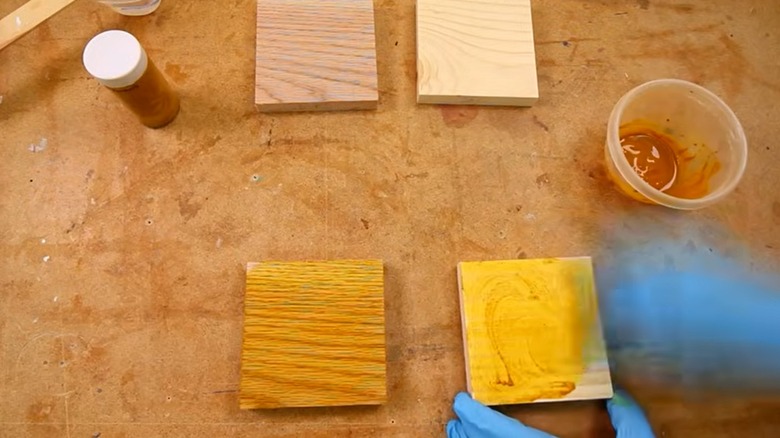
If you're wondering if you should use a brush or a rag as a better tool for staining wood, the answer in this case is the latter. A rag does a better job when dealing with water-based wood stains (like our DIY turmeric stain). This is in fact one of the clever ways to reuse your old t-shirts around your home. So just cut a small piece of a lint-free cotton tee, dip it into the turmeric mixture, then spread the stain evenly all over the wood surface following the wood grain. Be warned that the stain will smell quite strongly and appear somewhat gritty because the powder doesn't fully dissolve. Nonetheless, you should get a radiant and bold yellow pigment while still being able to make out the wood's natural grain pattern.
After you're done with the first coat, allow the stain time to seep well into the wood. If you like, you can apply a second coat or more until you are happy with the depth of color. Afterward, wipe off the gritty bits and leave the stained wood outside for a day or so to dry completely.
Even after a long stint outdoors, the pungent smell of turmeric might still remain. An easy way to get rid of that smell is sealing the wood with a water-based sealant such as Varathane Crystal-Clear Ultimate Polyurethane, available on Amazon. Do this once the stain is completely dry. Another upside to sealing the wood is that it'll prevent little bits of the stain coming off, especially when wiping to clean the furniture.