

Not A Swimming Pool: The Cheaper Alternative That'll Add A Rustic Touch
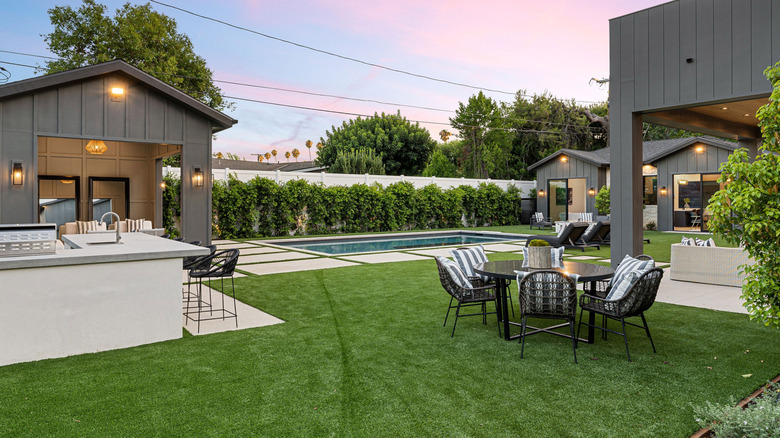
Sure, a backyard swimming pool can offer a lot of fun in the sun. But to really make a splash, consider a slightly less common alternative. Once you let your imagination flow, you'll realize that there are plenty of underrated water features that can give your yard a luxurious touch. Among them: adding a stream or pond to your garden, which can create a placid, rustic-looking vibe, particularly when styled with weathered wood furniture nearby, aquatic plants, and other bucolic touches.
More than just a pretty face, a pond provides a serene spot in your yard and adds a slew of environmental benefits — it creates an additional water source for the garden, plus cuts down on the amount of grass you need to mow with gas-guzzling mowers. Plus, ponds can attract a wide swath of wildlife, including beneficial insects, such as the dragonflies that can aggressively destroy mosquitoes, flies, and gnats.
Much like other water features, a well-maintained pond can yield quite the return on investment, giving a boost to your property value. However, diving into pool ownership is a much more expensive endeavor. According to data from Angi, installing an in in-ground pool costs around $66,000 on average, compared to roughly $11,000 on the high end for a pond. When it comes to maintaining each feature, the annual price tag for a pool is somewhere between $3,000 and $6,000. A pond, meanwhile, can cost you anywhere from $300 to $5,000 a year depending on size and style.
How to add a pond or stream to your yard
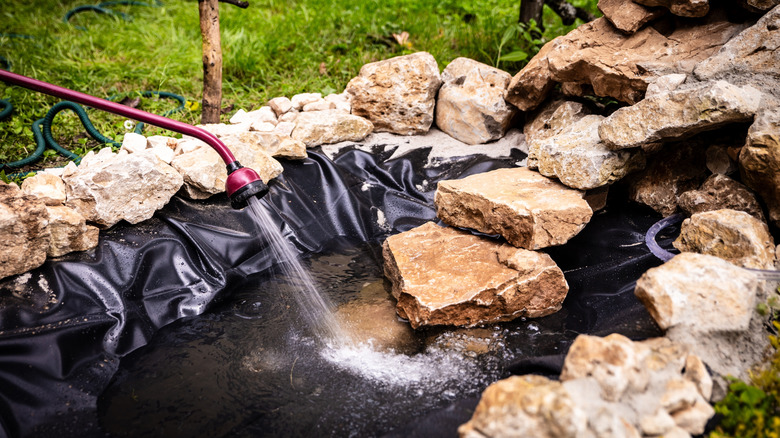
If you're considering wading in, here's what you should know about installing a backyard pond. Step one is to research local guidelines to see if a permit is necessary, especially for larger or deeper ponds. Location is particularly key, with the ideal spot getting at least six hours of sunlight per day. Avoid setting up your pond on slanted ground, or directly under trees where leaves and other debris can easily fall in. However, the pond still needs to be close enough to an electrical outlet to run the pump, and close to a hose for filling. While you could definitely outsource this project to professionals, if you're a DIY type, the process involves digging out enough soil — a 200-gallon pond, for instance, should be approximately three feet by six feet with a depth of a foot and a half — and installing an underlayment and a liner, then assembling the pond kit and pump.
To create a backyard river or stream, you'll follow a similar process once you map out exactly how you'd like it to snake its way through your space. You will also need to plan for a drainage basin on one end that can hold about five gallons of water per linear foot of flowing stream. Once everything is dug, the liners are set, and the pump is in working order, it's time to create the rustic retreat of your dreams, finishing the edge with stones, smaller pebbles, and plants. There are also many types of aquatic plants you can add to the interior of your natural water features to help disguise the liner and pump.