

Ditch Landscape Fabric: The Fragrant Overlooked Scrap That's A More Natural Alternative
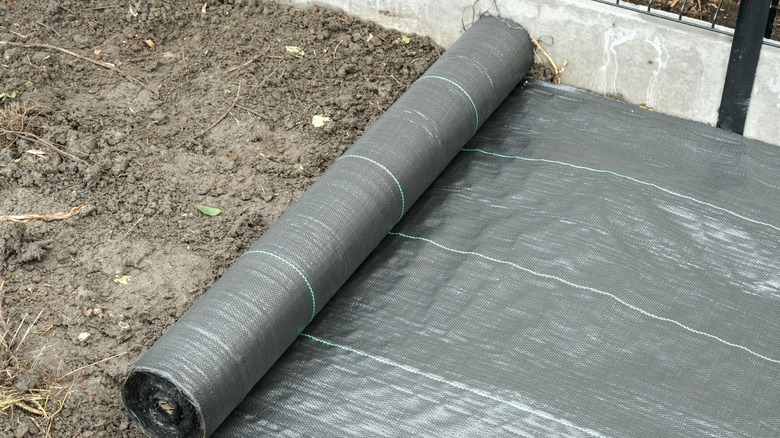
Let's face it. Landscape fabric is a great idea in theory for keeping weeds at bay. However, the downsides to using landscape fabric are concerning enough to consider natural DIY weed barrier alternatives. What's wrong with landscape fabric? It's not a permanent solution, suppressing weeds for no more than two years or so and eventually degrading. It also limits plant access to water and air. In fact, in a 2019 study published in the academic journal Soil & Tillage Research, landscape fabric was shown to decrease carbon dioxide's flow between soil and atmosphere roughly 1,000 times more than organic mulches like wood chips do. The fabric can also kill beneficial microorganisms. One organic alternative to landscape fabric — cocoa hulls — offers unique advantages in your landscape.
Cocoa hulls, also known as cacao shells, cocoa mulch, cocoa bean mulch, and cocoa bean hull mulch, result when the beans are roasted, and the hulls slip off. Mulch from these shells is eco-friendly since it's made from materials that would otherwise be discarded, carries the aroma of chocolate, and offers a pleasing dark appearance that doesn't fade. The hulls provide weed suppression and, as they decompose, nutrients for your plants, including nitrogen, potash, and phosphate. They support earthworms along with beneficial bacteria and other microorganisms. Cocoa hulls boost the soil's ability to hold water. The roasting process sterilizes the hulls, killing bacteria and weed seeds.
How to use cocoa hulls for weed suppression and more in your garden
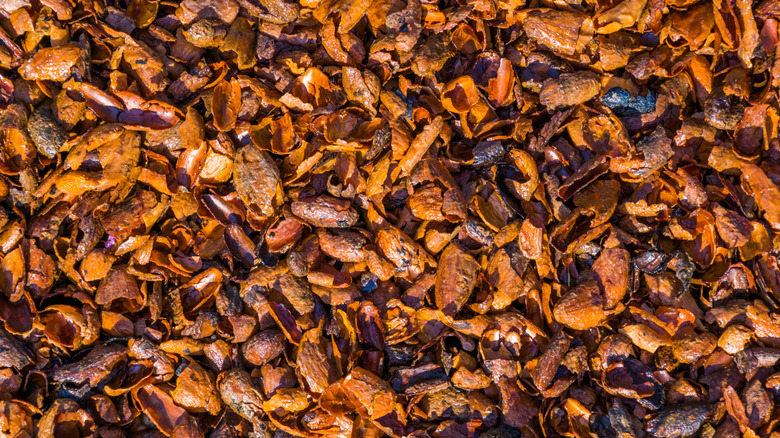
Should you mulch your garden with cocoa hulls? Yes, with a couple of cautions we'll get into. For best results, especially for weed suppression, apply cocoa hulls in late winter. As they settle, the hulls will form an interlocking mat that keeps weeds from coming up and holds water. You can place the hulls lightly — a 1- to 2-inch layer — on garden beds with newly sown seeds (taking care not to completely cover seeds and block them from germinating), as well as beds with transplanted specimens.
To prevent stem rot, avoid covering plant crowns with the hulls. If covered too heavily or allowed too much moisture, the hulls may develop a mold that won't hurt plants but is unattractive; the mold may also appear in humid, hot locales. Vanquish the mold by spraying a solution of 75% white vinegar and 25% water.
Cocoa hulls come with a few caveats for their use. They will attract pests if they get too wet. Always check the soil underneath the cocoa hull mulch, and don't water unless it is completely dry. Most importantly, you should never use cocoa shell mulch around pets. Dogs are especially vulnerable because they're attracted to the chocolate smell and are inclined to consume non-food items. The methylxanthine chemicals in cocoa hulls — caffeine and especially theobromine – are poorly metabolized by many fur-bearing animals, including cats and rabbits, as well as horses, resulting in severe symptoms, such as vomiting, tremors, and rapid heart rate. This exposure probably won't kill your pet, but it's best to avoid cocoa hull mulch if you have pets.