

It Was A Status Symbol In The '50s — Now It's The Valuable Kitchen Item Worth Hunting For
In 1924, less than half a century after the lightbulb was invented, manufacturers agreed to cap its useful life at 1,000 hours. This was one of the first examples of planned obsolescence, something that keeps consumers buying new products sooner than they may actually need to. By the 1950s, it wasn't just lightbulbs facing caps. Many products, including home appliances, were made with an expiration date. During this time, one exception was the Chambers Manufacturing Company, which spent over 50 years building gas ranges that go the distance. They were a status symbol in the '50s and are still a valuable kitchen item worth keeping an eye out for when you're at the thrift store.
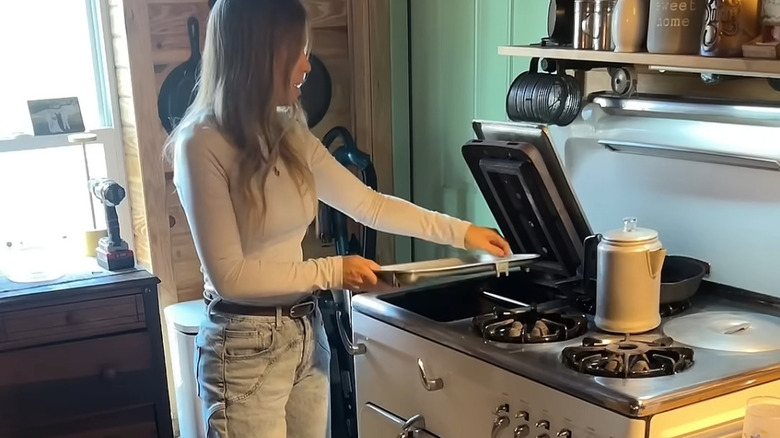
While Chambers stoves feature the white enamel and chrome fixtures common to stoves of the era, the brand's appliances have a few special features. They have three burners with a covered combination griddle and broiler. However, what really makes these models unique and sought-after — even today — is the deep, lidded ThermoWell in the stovetop that acts like a slow cooker. Both this feature and the ThermoOven below retain heat and continue to cook food even after the gas has been turned off. Chambers stoves were pricey in their day, and now restored models sell for thousands of dollars. They rank high among the most valuable vintage appliances you should always look for at thrift stores. Not only are they coveted by collectors, they're still highly useful and may even be making a comeback.
How to spot an authentic Chambers gas stove
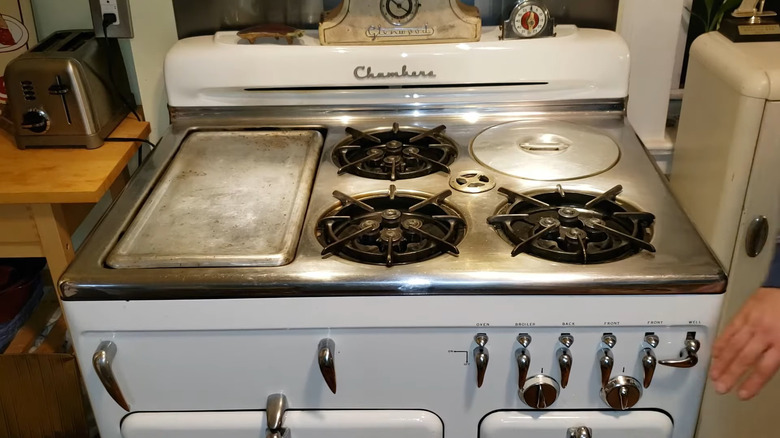
Legend has it that the Chambers company put itself out of business by manufacturing a stove that never needed to be replaced. Whether or not that's true, the product's durability means there are plenty of these stoves still out there. The features already mentioned, including the ThermoWell, griddle, and three-burner cooktop, make this stove easy to recognize. It only gets tricky when you're distinguishing between the different models, which came in different enamel colors and with various backsplash options.
The exterior of early Chambers stove models was coated in white enamel. As the appliances grew in popularity, the company made more color choices available to consumers. They go well beyond the standard look of most other vintage gas ranges. For example, the Model C, which debuted in 1950, was available in white, yellow, green, red, black, blue, gray, and copperplate. After 1956, the company released the same model in pink, teal, and brown. It's hardly surprising 1950s homeowners wanted to give their oven a pop of originality with unique colors — it was an era of bold, joyful hues in interior design.
Chambers adorned their stoves with different logos over the years, from simple stamped metal plates to ornate cutout lettering. If you're looking for one of the 1950s models, look for a long, colorful badge with Chambers imprinted inside. It is, for example, clearly visible on the tall backsplash of the highback models. Once you're certain you've found a Chambers gas range, inspect it carefully for rust, broken parts, and signs of deterioration inside the oven, around the door, and under the burners.
To restore or not to restore — and how to move your Chambers find
If you're ever shopping for vintage appliances you should have for your kitchen and come across one of these beautiful old gas ranges, you'll probably have a lot of pricing questions. Should you invest in a worn-out stove? Is a restored stove really worth such a hefty price tag? The first thing you should know is that an unrestored Chambers stove sells for a fraction of the price of a restored one. The cost of a restored Chambers Model C from the 1950s starts at $8,000 to $9,000. If you're in any way handy, finding an as-is model would be a good opportunity to bring one of these treasures into your kitchen. The Facebook group Chambers Marketplace is a good place to find models to restore and parts are available on eBay. Even unrestored models cost thousands of dollars, though finds in the low hundreds are possible.
While restoration may sound like a worthy project, it can take up to three years, depending on the condition and availability of missing parts. It's also important to factor in the immense weight of these ranges; moving them from place to place is a challenge all of its own. A Model C, for example, can weigh between 400 and 600 pounds. If you find a Chambers gas range at a thrift store, you'll need to plan the move carefully. To make it lighter, take off any easily removable parts and remove the side panels and legs with a tool. Then ask someone to help you put the stove on a dolly. Alternatively, you can hire moving professionals. Remember, these stoves aren't being made any more, so a little effort might be worth it to nab yourself an increasingly rare appliance.