

Not Banana Peels: The Tea To Add To DIY Fertilizer For Thriving Leafy Greens
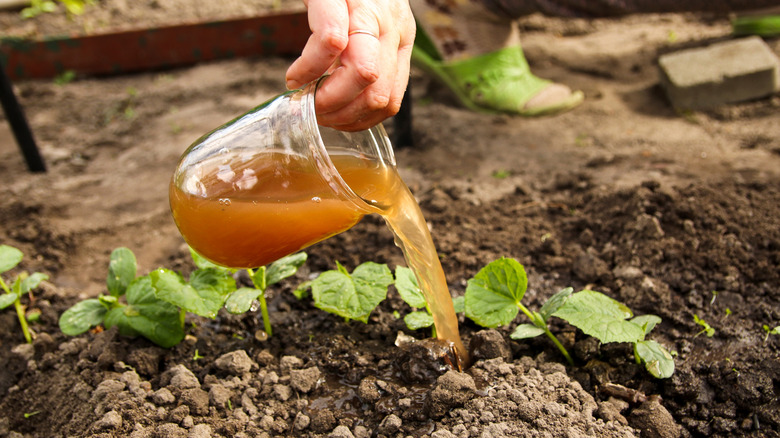
Wouldn't it be awesome to make a tea from the leaves of a shrub you may already have that can supplement fertilizer in producing robust leafy greens? You can find several DIY fertilizer teas you can make to nourish your garden, such as compost, comfrey, and nettle, but there's another liquid that offers unique benefits and comes with plenty of research to back it up. This tea, made from the leaves of the moringa (Moringa oleifera) shrub or tree, boosts plant growth and productivity. Moringa is known as a biostimulant containing zeatin, which drives cell division and leaf development.
It is packed with such nutrients as nitrogen, iron, phosphorus, magnesium, potassium, and calcium, and helps seeds germinate and roots develop. Moringa leaf tea also assists plants in taking in nutrients and handling temperature, drought, and salt stress. Treated plants are less dependent on synthetic fertilizers.
If you have a moringa tree or shrub in your yard, you may be jumping for joy about now, knowing how powerfully its leaves help other plants. Moringa is highly versatile — it's even one of the shrubs with edible parts you can grow in your yard, and a tea version for human consumption is used medicinally. If you haven't already been blessed with this versatile plant in your landscaping, it might be worth a trip to the garden center.
What you need to make moringa leaf tea to boost plant growth and leafiness
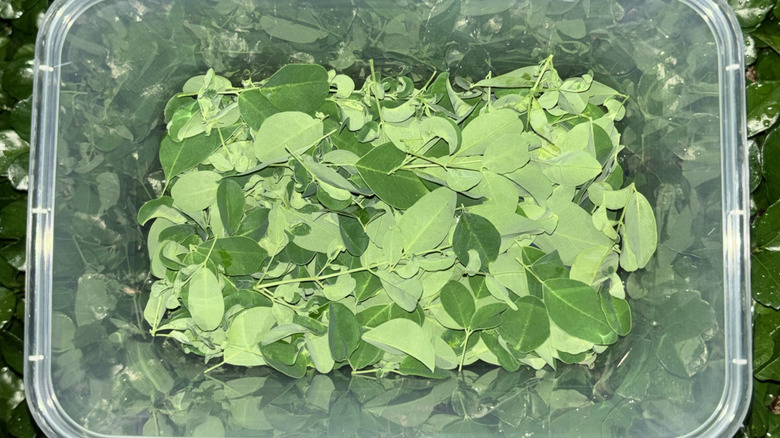
Moringa shrubs and trees are cold-hardy in USDA Zones 9 to 11. You can grow it as an annual in cooler locales or overwinter it indoors. We might not suggest picking up a moringa if they weren't so fast-growing, but this plant can shoot up to 18 feet in under half a year, allowing you quick access to leaves for tea. If that kind of growth is daunting or too big for your yard, you can keep your moringa at a reasonable size by regularly cutting it back (and using leaves from those cuttings for your moringa leaf tea). Be sure you're up to date on the tree-trimming tools you simply can't go without.
Your goal in making moringa leaf tea is to end up with liquefied leaves that will be diluted in water. This can used as either a liquid fertilizer supplement to pour on the ground around your plants or as a foliar spray to be applied to your plant from a sprayer. You'll be liquifying your leaves in a smoothie blender, so the size of the blender's cup will help determine the quantity of leaves to harvest. You'll be filling the smoothie cup halfway with leaves, and your finished liquefied leaves will need to be diluted in a gallon of water. If you, for example, wanted 5 gallons of moringa leaf tea, you would need five smoothie cups half full of leaves.
How to make moringa leaf tea
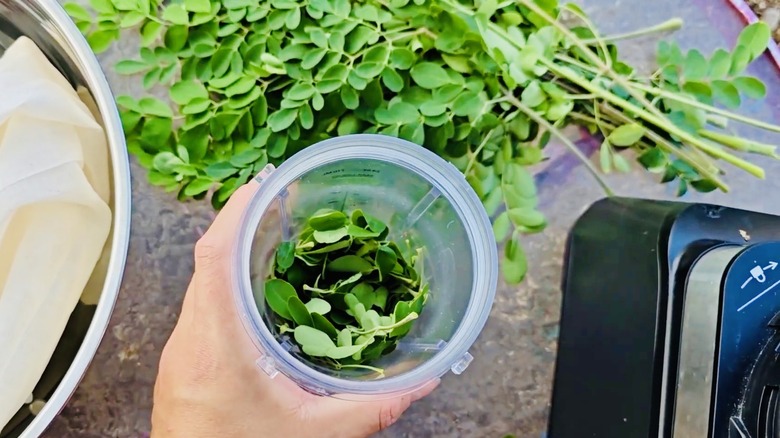
Harvest smaller leaves for your tea and place the leaves in the smoothie cup, compressing them down until the cup is half full. Fill the cup the rest of the way with water. Blend on the "extract" setting until liquefied. Then dilute in a gallon bucket of water, using a larger bucket if you made more than a cup of liquid moringa leaves. For your liquid fertilizer supplement, don't worry about bits and chunks of solid matter. You can then give your plants a little tea party by applying this liquid to their bases.
For the foliar spray version, you'll need to take the extra step of straining the finished, diluted liquid through a piece of cheese cloth to separate out those solid bits that would clog up a spray nozzle. Once it's well strained, pour the liquid into a hand pump sprayer and apply it to the leaves of your plants in the morning so it doesn't evaporate as quickly as it would in the heat of midday. Don't want to grow a moringa shrub? You can also find commercial moringa leaf extracts in the form of liquids and powders, though harvesting straight from the source is certainly more green and cost-effective.