

Ditch The Snap Traps: There's A More Humane Way To Deter Chipmunks From Your Yard
We may receive a commission on purchases made from links.
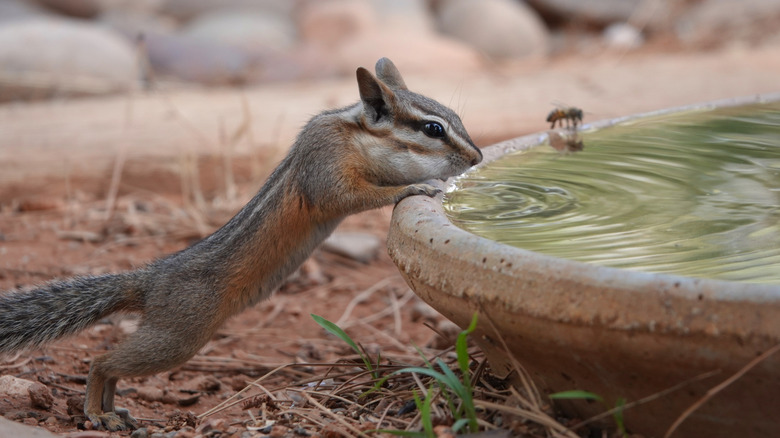
Sitting straight with their bushy tails curled behind them, quietly gnawing on acorns held in their tiny paws, chipmunks strike a cute pose that's every bit picture-worthy. However, this cuteness starts to ring false fast when you discover their whole brood in your yard. From seeds, seedlings, vegetables, and flower bulbs to patios, foundation slabs, stoops, or retention walls, these rodents damage everything in their path, plant or inanimate.
But rather than taking the inhumane and lethal approach to break their necks with a snap trap, consider using hardware cloth to deter chipmunks from your yard. It'll force them to move elsewhere and allow nature to play out as ordained, free to be preyed upon by their predators, like coyotes and hawks. In addition, you won't fall afoul of the state and local laws, as in many areas, killing of nongame wildlife is illegal.
Despite the name, hardware cloth is not exactly a fabric. It's a sturdy product made of welded or interwoven metal wire, arranged in an evenly spaced grid pattern. Unlike bird netting or chicken wire, it's far more durable and holds up well against the natural vagaries and pests. But to keep chipmunks out of your garden, you must pick the kind with a ¼-inch mesh size, so they won't be able to pry it open with their tiny claws. The Jotesnew ¼ inch Hardware Cloth is one such option and offers corrosion resistance.
How to use hardware cloth to discourage chipmunks
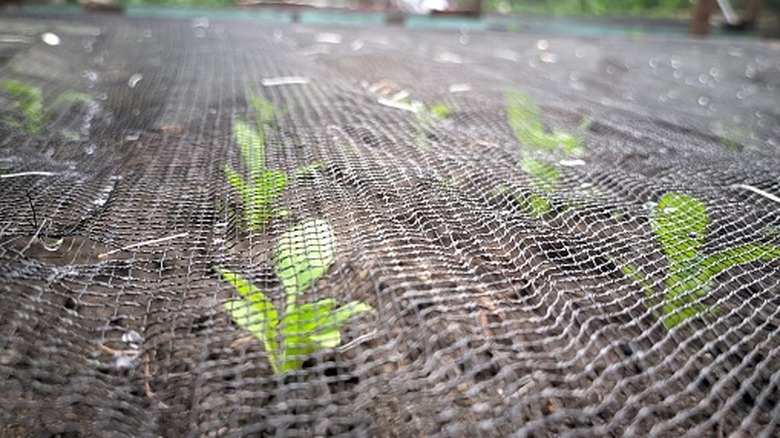
Chipmunks forage while the sun is still out, making their way to seeds, newly planted seedlings, or bulbs. They may also go for fruit-bearing plants, such as strawberries or your prized tomatoes, and rarely, for leafy vegetables if other food sources are scant (got to satiate that hunger, after all). To protect your flower and vegetable garden, you may cover your plants with hardware cloth, making sure it extends an additional foot beyond the bed's margins on all sides. Overlay soil on the wired mesh to keep it buried and prevent tunneling. Don't worry; your plants will still grow through the grid openings, and bees can pollinate them just fine. You can remove the wired system once your plants mature.
In case you're yet to plant out in-ground beds, you may lay down hardware cloth to protect them against underground burrowing. Chipmunks dig out a 10-inch-deep trench that can run over 20 feet underground to stash away food for winter. If the wired mesh is placed about 2 feet deep and backfilled with soil, you're less likely to encounter instances of chipmunks popping out of miscellaneous holes they dug through in your garden. Make sure the cloth protrudes outward. While you can take the same approach for bulb plantings, another option is to create an 8-inch-high box with hardware cloth, as it is fairly pliable. Place the bulbs inside and cover them with compost and soil per usual before placing them in the ground.
Caveats to consider when using hardware cloth to deter chipmunks
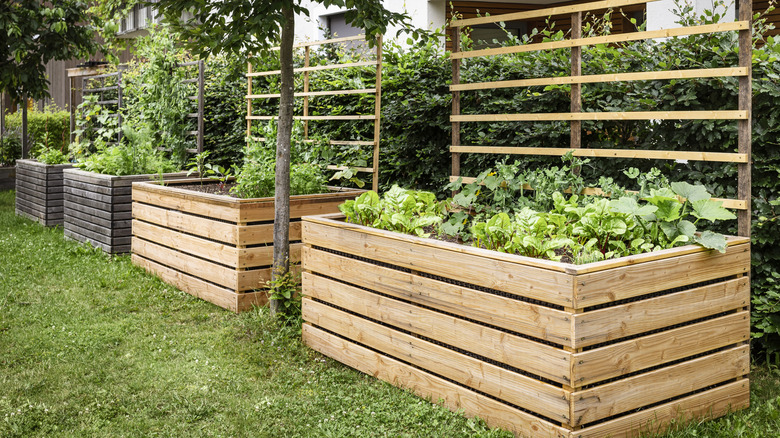
Although using exclusionary tactics like hardware cloth to deter chipmunks from your garden works well, it does make the gardening experience a tad cumbersome, as you must work around or fight through it to get to your plants. So, be prepared to be dexterous.
Another concern is perhaps cost. Snap traps seem like an inexpensive option, while covering the ground with hardware cloth feels like an insurmountable task, especially when you have many plants to protect. However, according to the Kansas Extension Wildlife Management, "Exclusion is less expensive in the long run than trapping, where high populations of chipmunks exist." It also minimizes the risk of harming non-target wildlife and any curious pets. Besides, such a strategy can have multiplying benefits, as apart from chipmunks, it can also keep other pests out of your garden, such as ground squirrels or voles.
Finally, consider complementing this tactic with habitat modification. While you might enjoy the look of greenery running uninterruptedly across your landscape, chipmunks use it to their advantage as a covered corridor to scurry about. Create multiple breaks between beds and move plants some span away from hardscape, particularly driveways and foundations, so they won't build their nesting burrows next to your home and enter it. Additionally, eliminate any wood piles or yard debris that may double as cover.