

Not Coffee Grounds: The Overlooked Scrap In Your Garden You Can Use As Dye
Dandelions often get a bad rap because these pesky weeds are quite difficult to control, but the benefits of having dandelions in your yard often outweigh the downsides. For instance, their leaves make great salads and their petals can be a source of yummy jellies, tea, and, you guessed it, dye. If you want to dip your toes into the world of DIY natural dyes, one of the best places to begin is with dandelions. These hardy perennials are free to source since they often grow as weeds. They're also a good example of plants you can put in your garden for natural dyes.
The dandelion petals will produce a lovely lemon to buttery yellow pigment that will add a warm, sunny hue to your handmade fiber projects. So, if you have these weeds popping up all over your lawn or garden, don't mow them down or spray them just yet. Just pick a bunch and make your DIY natural yellow dye. For a bright yellow dye, you'll only need to pluck the flower heads. But, if you'd like your dye to have an olive-green shade, pick the dandelion leaves as well.
This dye will work best on your 100% natural fibers like cotton, wool, or linen. Synthetic fibers don't take up natural dyes as well, so you can put aside the polyesters and nylons. Before you begin the dyeing process, there are a few preliminary steps including scouring the fiber (giving it a thorough wash), and mordanting (soaking the fiber in a mineral salt bath so the dye will adhere to it properly).
Preparing your fiber for dyeing using dandelions
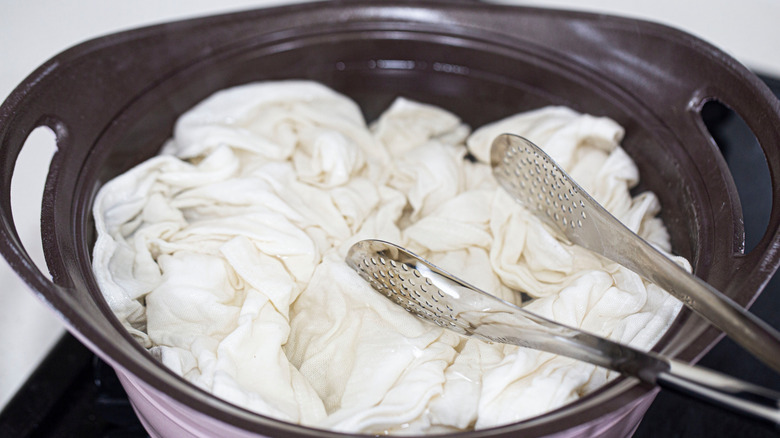
You want to start by preparing your fiber (fabric or yarn) by thoroughly cleaning it through the scouring process. First measure the dry weight of the fiber. Next, get pH neutral detergent (weigh 2% of the fiber weight). Add this detergent to simmering water in a non-reactive pot on the stove. Next, add in your fiber and let simmer for about one hour. If you're working with plant-based fiber like cotton or linen, add soda ash (weighing 5% the weight of fiber) with the detergent before adding the fiber and then simmer for about two hours. After this, let the fiber cool then rinse it.
The next step is mordanting the fiber. For animal-based (protein) fibers like sheep or alpaca wool, you'll use alum (aluminum sulphate or potassium aluminum sulphate) and soda ash weighing 12% and 2% of the fiber weight, respectively. Add these to a pot of warm water, then add the fabric and let steep for at least two hours or overnight as it cools. Keep stirring gently from time to time. Remove the fabric and hang to dry. For plant-based (cellulose) fiber, you'll first steep in a tannin bath (using, e.g., oak gall tannin or gallnut tannin) before mordanting using aluminum acetate. Once your fiber is scoured and mordanted, you're ready for the dyeing process using your natural dandelion dye.
How to turn dandelions into beautiful natural dye and dyeing your fabric
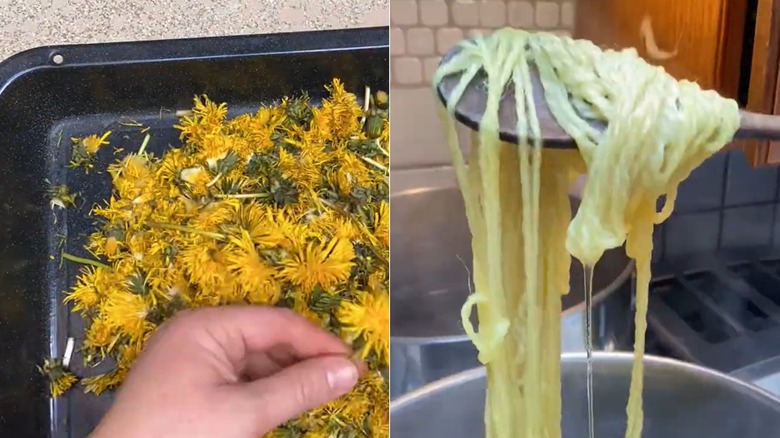
Making dye out of dandelions is an unexpected way to repurpose pesky weeds around your garden. It's time to head into your yard or the roadside and pick plenty of fresh dandelion flowers. You'll need twice the weight of the dandelion as the fiber weight. However, if you want to get an intense deep golden yellow dye, harvest dandelion petals 10 times the weight of your fiber. Put all the flowers in a pot, pour in cold water, and bring the mixture to a gentle simmer at about 176°F.
Stir occasionally with a wooden spoon and leave to simmer for one hour until the water takes on a rich golden color. Make sure not to boil the petals as the heat may ruin the dye. Pour the dye through a fine mesh strainer lined with cheesecloth into a clean jar or bowl. Squeeze the flowers gently to extract every last drop of that butter yellow dye. Return the strained liquid dye to the pot and add your pre-wetted natural fabric or yarn. Simmer gently for an hour or until you're happy with the color. Turn off the heat, leave to cool, then remove the fiber and rinse it in slightly warm water. Hang it outside to dry away from direct sunlight. Now you can appreciate the beautiful golden hue.