

Not Milkweed, Not Petunias: The Darling Little Annual Flower That Butterflies Love
If your goal is just to attract more monarch butterflies to your garden, then you're in luck: because they rely on milkweed as their host plant, you won't need to worry about starting a pollinator garden with a variety of plants. However, if you instead wish to attract a wide variety of butterflies, you may wish to instead incorporate other plants into your landscape. Certain petunias can help bring more butterflies to your garden, but they're far from your only option if you're looking for a charming annual flower. Instead, these showy little yellow flowers with a long blooming season are a hit among butterflies, helping cultivate a landscape that these insect pollinators absolutely adore.
Also known as gold medallion, butter daisies (Melampodium divaricatum, previously Melampodium paludosum) are a vibrant yellow flower that attracts a variety of pollinators with its eye-catching blooms before giving way to seedheads that songbirds enjoy. It does well in containers and in direct landscaping, all while being easy enough to grow that even beginner gardeners can grow this plant. They're also quite low-maintenance and generally don't require deadheading. This means you'll be able to save time on maintenance and common garden chores and dedicate it to watching the various butterflies this flower attracts instead.
However, as easy and low-maintenance as butter daisies are, they still need the proper growing conditions to thrive. This is especially true if you want to attract as many butterflies as possible with these sunshine-bright flowers.
How to grow butter daisies to attract more butterflies
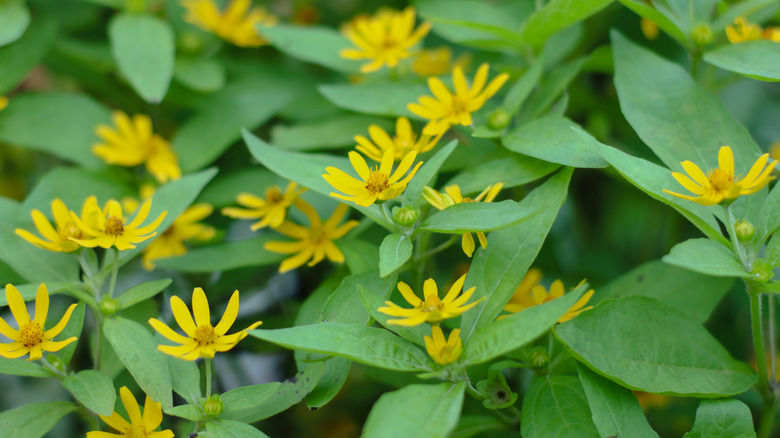
Because they're an annual, you won't need to worry about USDA growing zones when planting butter daisies. However, it is important to keep in mind that, in optimal conditions, they may self-seed. For some gardeners, this may be an added benefit for a butterfly garden that returns year after year even without perennials. For others, you may wish to deadhead seedheads before they can spread.
Whether you grow butter daisies in containers or directly in the landscape, sunlight is one of the most important factors to consider. These flowers require full sun for the best results. As a result, if you're looking to attract butterflies in a backyard that doesn't receive ample sunlight, you may prefer to look for a shade-loving butterfly-magnet instead.
While full sun also brings with it hot weather, don't worry; butter daisies hold up well to both heat and humidity. However, taller stems may become floppy during periods of extreme heat or heavy rain. On the bright side, as mentioned above, they are self-cleaning. As far as soil goes, butter daisies aren't too picky. They do, however, prefer that their soil is well-draining and kept consistently moist without being wet or waterlogged.