

Say Goodbye To Nosy Neighbors With A DIY Privacy Solution For Your Deck That Looks Good

If you have a porch or deck that faces your neighbor's, it can deter you from spending time outside, particularly if your neighbors tend to be a little nosy. However, you may not be able to put up a fence because of space constraints or a desire to keep a light, organic feel on your own deck, rather than a cramped, closed-off one. So, what can be done to solve this issue and create some privacy in your outdoor space?
Well, there is actually a brilliant way to use plants to give your porch added privacy, shade from the sun, and an organic, natural look. This involves adding a trellis to the side of your porch or deck and training a climbing plant to grow up it. The leaves and flowers of the plant will then block the view of the neighboring property, giving you some much-needed seclusion. One of the great aspects of this DIY solution is its versatility.
You can choose from many different sizes, styles, and shapes of trellis to fit any deck, and can offer a renter-friendly patio privacy solution for balconies overlooking neighboring apartments. If you want to opt for this clever privacy solution to help you say goodbye to nosy neighbors, there are some key aspects to think about, like what plants and trellis to use. So, let's check out how to choose the right climber and trellis for your situation, then how to put it all together.
Choosing the right trellis and plants for a privacy screen
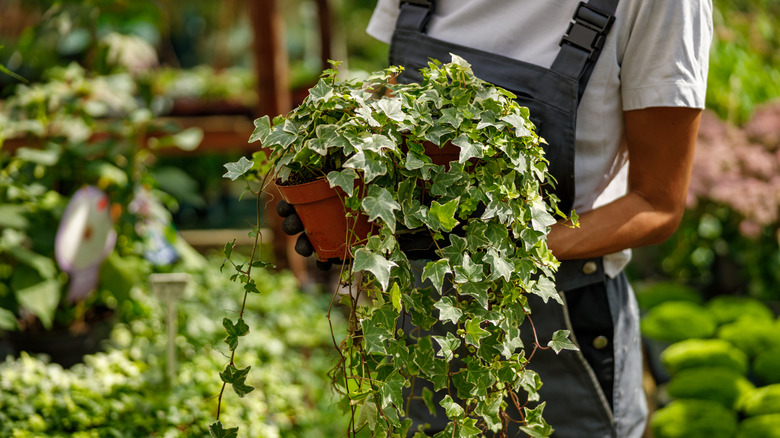
When creating your own living privacy screen, first consider what kind of trellis you want. This will determine the overall look, so it can be helpful to examine the available options. You could go for a simple wooden one painted to match your home's trim for a sleek, understated look. Or, if you want something more rustic, you could opt for one made from twigs or unpainted wood. Whichever style you choose, make sure it's sturdy enough to hold the climbing plant as it grows.
If the side of your deck gets full or partial sunlight, for example, you could opt for Virginia creeper (Parthenocissus quinquefolia), which grows well in Hardiness Zones 3 to 9. However, keep in mind that Virginia creeper is deciduous and will lose its leaves in winter. If you want an evergreen option for privacy year-round, consider crossvine (Bignonia capreolata), which is also great for attracting pollinators like hummingbirds and thrives in zones 5 to 9.
Many climbing plants like crossvine grow very quickly, which is a plus when trying to build your own privacy screen. Just remember that they also require some maintenance to keep them in check and prevent them from growing where you don't want them to. Once you choose your trellis and climbing plants, take a look at some important steps for building your own DIY privacy solution that looks good.
How to build a living privacy screen for your deck
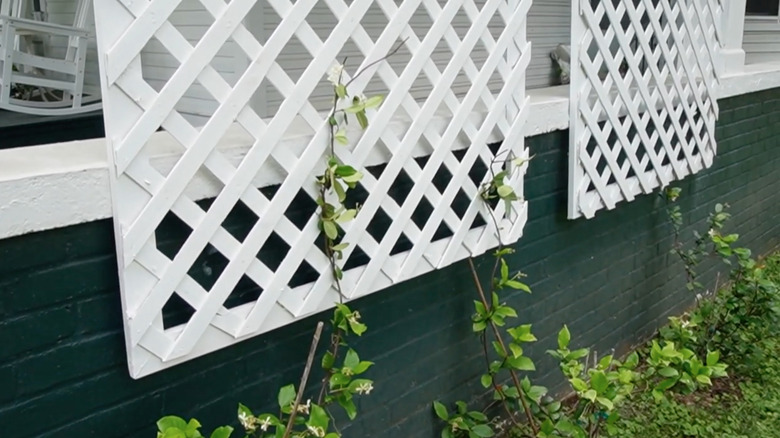
To ensure your trellis has a sleek, framed look, an optional first step in this DIY is to add trim around the edges to make it look nice and polished. You will need to make sure there is a flower bed directly below the side of your porch, so the climbers can grow up the trellis. If you don't have space for a flower bed or you are doing this DIY on a balcony, you could also place a long, low flower box below where you want the privacy screen to be and plant the climbers in there instead.
You will then need to secure the trellis in place. If your space has a roof, you could consider hanging the trellis from it. Screw some hooks into the roof and some onto the top of the lattice, then hang the trellises. You could also add a length of chain if you want them to dangle lower.
Make sure the bottom of the lattice rests against the side of the deck so it won't be as prone to swinging in the wind before the vines have climbed enough to keep it in place. Alternatively, you can attach the trellis to the deck itself or to a railing using some exterior-grade screws. Some DIYers tend to use 3-inch screws to ensure that the trellis is firmly in place. Finally, make sure that the climbing plants you've chosen are arranged so that their tendrils can reach the trellis and begin covering it for a living, stylish privacy screen.