

Everyone Used It In The Mid 1900s — The Eco-Friendly Yard Feature We Want To See More Of
We may receive a commission on purchases made from links.
While electric dryers have become a household staple in the United States, this wasn't always the case. Fully automated clothes dryers first entered the US market in the 1940s, and an increasing number of homes continued to adopt dryers throughout the mid-20th century. Before that, air-drying was the standard method for drying clothes, and Americans used creative solutions to get the job done. People affixed clotheslines to everything from windows and trees to back porches and other structures around their homes. Some even used pulley systems to make hanging and retrieving clothes easier. In spite of its fall from popularity in modern America, having a clothesline in your backyard might be something you should seriously consider even today.
Much of the world still relies on air-drying for several key reasons. Although the convenience of an automatic dryer can be tempting, there are actually drawbacks to using a machine. Hot, tumbling dryers can be much harsher on your clothes, causing fabric damage and shrinkage. If you want to keep your clothes in good condition for longer, air drying is essential. In addition to the fact that clotheslines reduce wear and tear on your garments and helps extend their lifespan, drying your clothes on a clothesline uses no electricity, making it cheaper and also more environmentally friendly. If you have space in your yard, installing an old-fashioned clothesline could save you both money and stress while providing a simple, eco-friendly change you can make to your laundry routine.
Considerations for a retro backyard clothesline
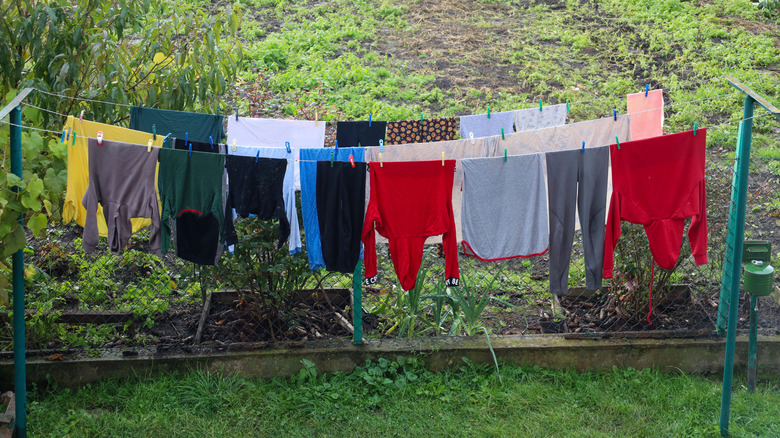
No dryer, no problem. You can easily dry clothes without a machine by installing a simple clothesline. One of the most common ways to create a secure clothesline in your yard is by using cement to secure two posts in the ground and threading lines between them. After digging the holes for your posts, make sure to wet the soil so that the ground doesn't absorb the concrete mixture. You can also add gravel to the bottom of the hole for drainage. Use a product like this Instant Anchoring Cement by Akona. If you have a small yard or you don't want to install a two-post clothesline, there are also single post clotheslines like this Brabantia Topspinner Outdoor 4 Arm Spinning Clothesline which also uses a concrete anchor. For a more temporary and adjustable setup, secure a clothesline to trees, existing posts, or fence lines.
Despite all the benefits of adding a DIY clothesline to your yard, there are a few possible downsides to air drying clothes that you should be aware of. If you live in a climate where humidity exceeds 70 to 80%, the clothes could be at risk of staying moist too long and developing mildew. Their drying time depends on the climate and the fabric. In hotter months, breathable cotton fabrics can dry as fast as 30 to 45 minutes, whereas thick towels may take a few hours. On dry winter days, the cold weather won't prevent clothes from drying. However, they might get frosty first, so you can expect the drying time to increase to up to 12 hours. It's easy to change your approach based on the weather and your laundry; choose lightweight garments to hang outside and only tumble dry larger items like towels or blankets.