

Mulching Vs Mower Blades: What's The Difference?
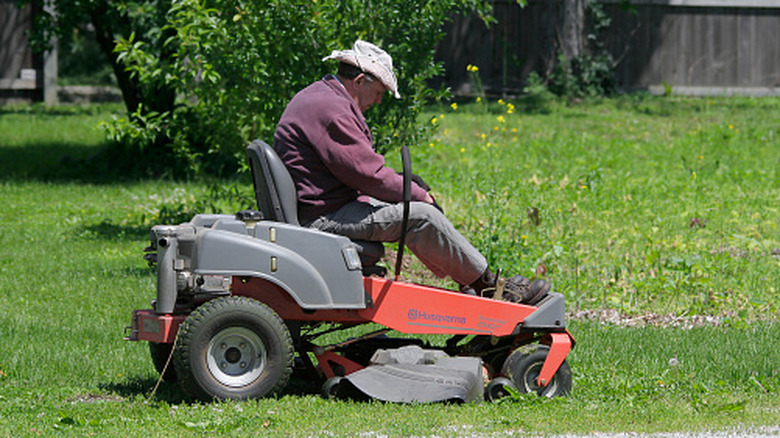
At first glance, a mower seems like a pretty simple tool. Just turn it on, cut the grass, and go about your day. But in addition to certain best practices, like the ⅓ mowing rule to keep your lawn stress-free all year, there is also more than one type of blade to consider. The two most basic types include standard and mulching. Standard blades, often referred to as high-lift or 2-in-1 blades, can lift and discharge grass clippings, making them ideal for bagging or side discharge. They are the go-to for regular mowing. Mulching blades, on the other hand, feature a more curved design compared to the mostly straight standard blade. They chop grass into tiny pieces, dropping it back onto the lawn to act as natural fertilizer.
While you may have a preference for one type of blade, both can prove useful depending on the job at hand. Either way, you should also watch for warning signs that indicate your lawn mower's blades might need sharpening. Dull blades not only make the mower work harder, but can leave jagged tears in the grass, affecting overall lawn quality.
When to use mulching vs. standard mower blades
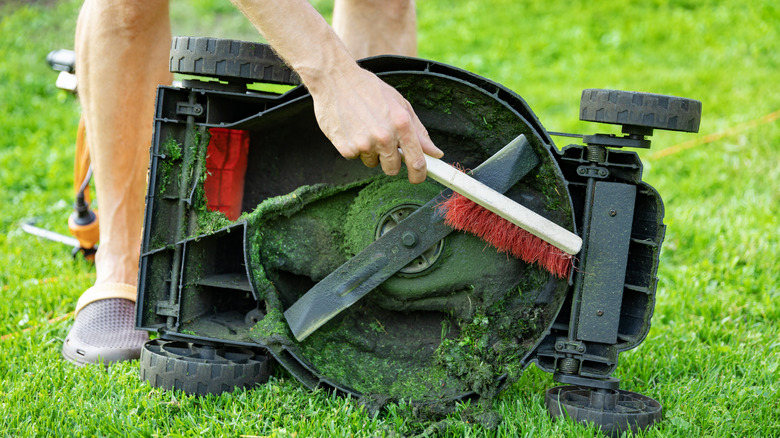
There are a few general rules of thumb that can help you determine when to use mulching versus standard blades. If you mow frequently (every three to four days) and your lawn is generally dry and well-maintained, use mulching blades for regular mowing. Dropping the mulched clippings back on your lawn will add nutrients such as nitrogen, potassium, and phosphorus to the soil and prevent you from having to bag and dispose of larger clippings. However, if your grass is tall or damp, or your mowing sessions are spaced out to once a week or longer, opt for standard blades. Standard high-lift blades will leave a cleaner-looking cut and allow for greater discharge, making them ideal if you want to bag your clippings.
With that said, even if you use standard blades most of the lawn-mowing season, mulching blades may still be useful, especially during dry seasons when the grass isn't growing quickly. These blades can also come in handy during the fall. For example, when it comes to raking vs. mowing the leaves in your yard, only one method reigns superior: mowing with a mulching blade. The blade's design allows you to skip the back-breaking work of raking by finely chopping leaves, dropping them in the grass, and returning nutrients to the lawn. And really, who wants to do more work for fewer benefits?