

Ditch DEET: Study Finds An Herbal Lotion Just As Effective For Mosquitos

Mosquitoes aren't just annoying, they're potentially dangerous. To stay healthy, you need to find a repellent that works as effectively as possible. For a long time, DEET was considered one of the best choices, but this chemical is often avoided because of its risks and side effects. Unfortunately, alternatives are usually considered less helpful than DEET, which is why Consumer Reports ranked a natural mosquito repellent as one of the worst tested — Badger Anti-Bug Shake & Spray. Thankfully, according to a 2026 study published in Scientific Reports, there may be an effective natural solution after all: catnip.
The study found that a 6% catnip lotion could be just as good at keeping away mosquitoes. This plant has long been believed to be an easy-to-grow herb that pulls double duty as a mosquito repellent in your yard, but now evidence backs it up. "We found that a 6% catnip oil was just as effective as [DEET], and the 2% catnip oil was only marginally less effective than that," said Dr. Simon Scofield, a Cardiff University senior lecturer, in an interview with The Guardian.
Around 30% DEET is the typical suggested strength. Increasing the percentage, however, doesn't improve its effectiveness, only how long until it needs to be reapplied. According to the study, the catnip lasts at least four hours, but you may want to keep an eye on the time so you can reapply as needed.
How to make your own catnip lotion to repel mosquitoes
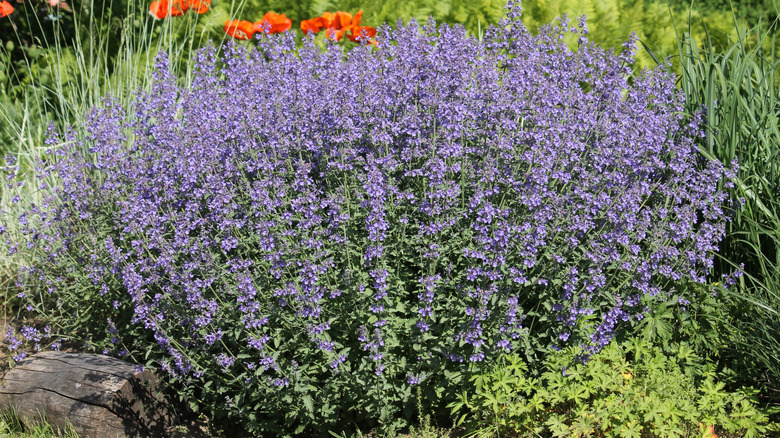
This study was done specifically to find solutions for people who don't have easy access to DEET, but that doesn't mean you can't also apply its findings. You can grow this plant in your yard to help repel mosquitoes, and then harvest the plants to make oil. By combining it with some lotion, you'll be left with an incredibly effective homemade repellant. This is just one of the reasons why you should grow catnip even if you don't have cats.
Making your own oil can sound pretty daunting, but it's easy enough to do. You could go with a whole fancy distillation process, but another common option is to harvest the leaves and stems, cut them up finely, place them in an oven-safe container, and cover the diced plant in soy, olive, avocado, or melted coconut oil. Once everything is fully submerged, bake for two or three hours at about 200 degrees. Let it cool for at least an hour (though longer is better), strain out the plant, and let your oil cool.
To replicate the formula found in the study, you'll want to create a 6% catnip oil solution — this is a ratio of 3 parts oil to 50 parts lotion. In more accessible terms, this is about 3 teaspoons of oil mixed with slightly more than 1 cup of lotion. Once it's ready, slather it on, and don't forget to reapply every few hours.