

Vintage, Antique, And Retro: What's The Difference?

When you're sifting through a thrift shop, you might be on the hunt for something totally retro. Maybe you're searching for something vintage for your living room or an antique to hang in your bedroom. Oftentimes, we equate the words vintage, antique, and retro to one thing — old! While these descriptions are often used interchangeably, there is a distinct and important difference between the three categories. Pay close attention next time you're in the market for a cool vintage find or a priceless antique treasure. Once you can identify these categories, you'll see the shelves in your local secondhand store with new eyes.
Antiques are defined as items dating back at least 100 years. So in 2026, anything from the year 1926 and older would fall under this category. Some of these items can be exceptionally valuable, but being an antique doesn't automatically make the item worth of something. There's a bit more wiggle room when it comes to what qualifies as vintage. Generally, collectors agree that something between 20 to 99 years old can fit in this category. So that means that in 2026, anything from 1927 to 2006 would be considered vintage.
Retro is a completely distinct descriptor that actually has nothing to do with an item's age. In fact, something made this year could be considered retro. This term is used to describe any item that looks like it could belong to another era. It's more tied to the style or aesthetic of something. Think old-school-inspired record players or cameras you can buy at a place like Target. These items are generally more affordable reproductions of vintage or antique items.
How to identify vintage, antique, and retro finds while thrift shopping
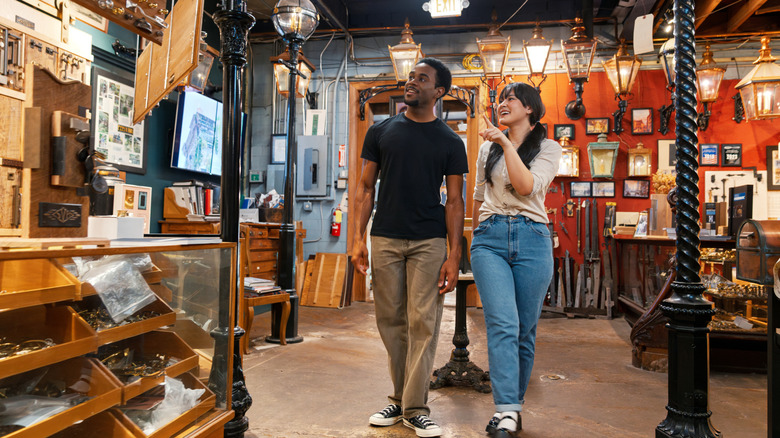
By nature, thrift shops are a hodgepodge of all kinds of different discarded treasures. You need a keen eye to identify vintage, antique, and retro pieces. Authenticating your latest thrift store find is a matter of taking a good look at clues such as manufacturer's marks, workmanship, and era-specific construction techniques. A foundation of knowledge of history can be helpful when categorizing different finds.
Items that appear to belong to styles like Victorian, rococo revival, or art nouveau could all potentially be antiques. Pay close attention to any markings or dates on the item. Antiques are typically heavier and feature distinct proportions. They may also have more signs of wear than newer items. Vintage items are a bit more prevalent in thrift shops since they're relatively recent. You can still find plenty of pieces from the late 1900s and early 2000s in pretty great condition. From mid-century modern kitchen gadgets to nostalgic board games, you only have to do a bit of digging to find unique vintage decor secondhand. Keep your eyes peeled for coveted vintage brands such as Lenox, Wedgewood, Pyrex, or Drexel.
There may be a lot of retro items mixed in with actual collector's items at the thrift shop. These pieces draw inspiration from antique or vintage styles. However, you will be able to trace these pieces back to a more contemporary manufacturer. These goods may also be constructed using lower-quality materials to make them more affordable. If you're stuck on whether something is vintage, antique, or retro, don't be afraid to take it to an appraiser. There are also countless online resources to explore. Vintage and antique forums can be extremely helpful too.