

Not Firebush, Not Milkweed: The White Bush With Flowers That Butterflies Love

Let's be honest: Gardens feel incomplete without butterflies. There is just something so magical about these winged creatures that makes the space feel truly alive. Luckily, attracting butterflies to a garden is easy. All you have to do is plant some flowering shrubs like firebush and milkweed, and they will come flying right in. There is, however, another plant that you can also grow in your garden to attract butterflies, especially if you are after white flowers: summersweet (Clethra alnifolia). Also known as clethra, summersweet is a fragrant flowering shrub that not only attracts butterflies but also provides year-round interest in gardens.
It has lush green leaves in spring, beautiful spikes of white and pink flowers in summer, bright yellow leaves in fall, and ornamental seed capsules in winter. The flowers are rich in nectar, and they attract a number of butterflies. Eastern tiger swallowtail, gray hairstreak, two-spotted skipper, monarch, common buckeye, question mark — the list just goes on. However, butterflies are not the only pollinators that love summersweet. Bees, hummingbirds, and songbirds are attracted to it, too. Summersweet is the plant you want to bring more pollinators into your yard and garden.
As for its size, summersweet grows about 3 to 6 feet tall and equally wide. You can plant it alone as a specimen plant or in groups for mass plantings, hedges and privacy screens. It is especially a good pick to plant in wet and rainy gardens as it grows naturally in swamps, floodplains, and wetlands. If, however, you live in a dry or arid area, skip summersweet and instead plant some other flowering plants that thrive in dry climates.
Growing summersweet to attract butterflies to your garden
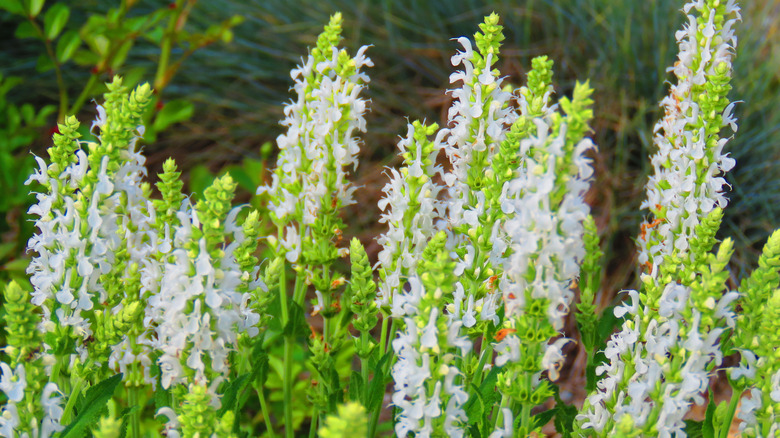
If you want to attract butterflies to your garden by planting summersweet, you must do it with a proper plan instead of just planting these shrubs randomly all over. Butterflies and many other pollinators are attracted to large flower groupings of a single color far better than flower groupings with mixed colors. It makes it easier for them to spot the flowers and also gives them a better and more reliable food supply. So, when planting summersweet, make sure to plant it in groups rather than individually in isolated locations or in combination with other colorful flowers.
Just make sure that you get the spacing right. Keeping the shrubs too far away might reduce the mass flowering effect and encourage weeds, and planting shrubs too close can reduce airflow and attract pests and disease. For summersweet, the ideal spacing is about 4 to 6 feet between the plants. Also, plant summersweet in slightly acidic soil with a pH of about 4.5 to 6.5. There is no need to worry, though, if your soil is alkaline. There are many easy ways to make your soil more acidic for a healthy garden.
Lastly, prune the plants in late winter or spring. Its flowers appear on new growth, and pruning will not only help boost flowering but also keep its growth and size under check. Just remember the three D rule to properly prune your plants. Also, keep an eye out for its suckering roots. They can cause the summersweet to spread very aggressively, leading to the formation of dense thickets, which can ruin the look of your whole garden.