

Have You Been Using The Wrong Type Of Tomato Cage?
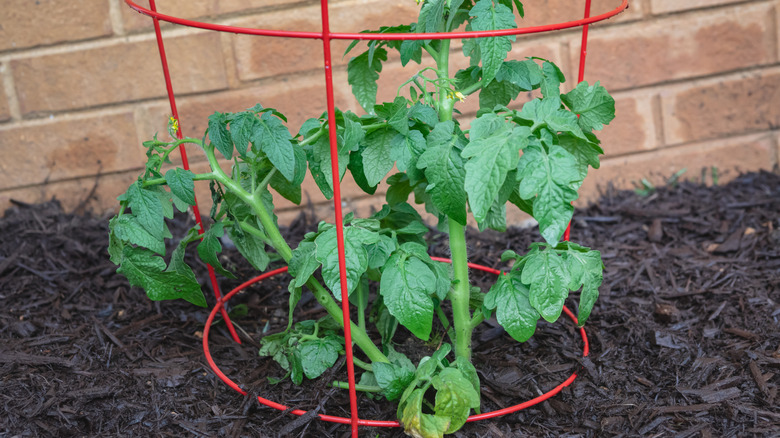
Whilst arguably the most popular way to support tomato plants, choosing the wrong style of tomato cage can also invite problems to the party. Incorrect support can leave your plants with stunted growth, broken branches, stems that sag, or even fruit sitting on the ground which runs the risk of them rotting. This is because different tomato plants need different support — determinate tomatoes, which grow to a fixed bushy size before stopping, have very different needs from indeterminate tomatoes that continue to sprawl throughout the season.
When you think of tomato cages, you probably think of that classic cone-shaped wire cage that is sold at every garden center, and yes, those work well for compact determinate varieties. That is, provided they are sturdy enough and have plenty of crossbars to support heavy fruit. But these traditional cone cages are often too short and lightweight for indeterminate tomatoes, which can easily grow well over 6 feet tall and so need a cage of a similar height. If you're growing larger varieties, you're much better off with a square cage made from thicker, galvanized steel as this will provide better stability and support. They are often taller and provide support across the full height of the plant so they're less likely to bend or topple under the plant's weight.
It's not too late if you've already picked the wrong cage
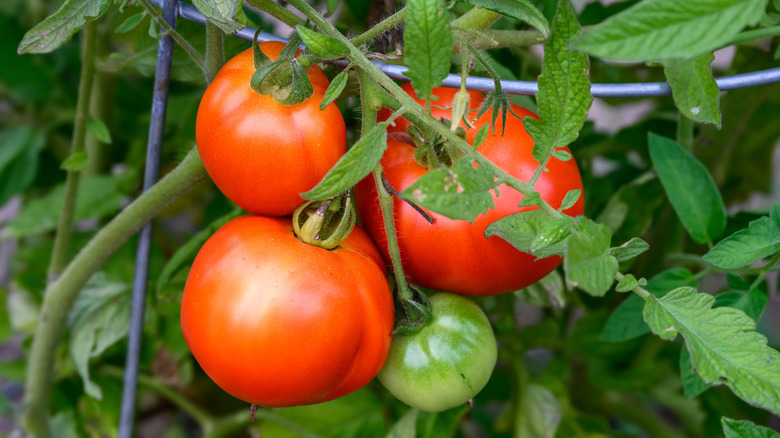
Don't panic if it's halfway through the growing season and your tomato plant has outgrown its cage — there are ways to fix the issue. If you're growing indeterminate varieties and they have started spilling over the top of a cone-shaped cage, you don't actually have to remove the support altogether as this could disturb an established plant. Instead, reinforce the cage by driving sturdy, large stakes alongside it and then tie the healthiest stems onto the stakes as they grow to provide extra support. This is much less risky than trying to force a larger cage over a sprawling plant. And similarly, if the issue is that you've been using a lightweight cage that has now begun leaning under the weight of the fruit, you fix this in a similar way by adding some additional stakes to help keep it upright for the rest of the season.
Now, of course, there may be times when replacing the support is the better option — such as if the cage is badly bent, repeatedly toppling over, or restricting the plant's growth. Though it's generally recommended you try and avoid this for established plants, swapping your current support for a taller square cage or an alternative to a tomato cage such as a cattle-panel trellis could be the better move. Unfortunately, some of the downsides to using tomato cages only become obvious once the plant reaches full size which is why for some gardeners it's trial and error to find the support that suits their plants best.