

Ditch Landscape Fabric: Use A Common Household Waste Item To Keep Weeds Out
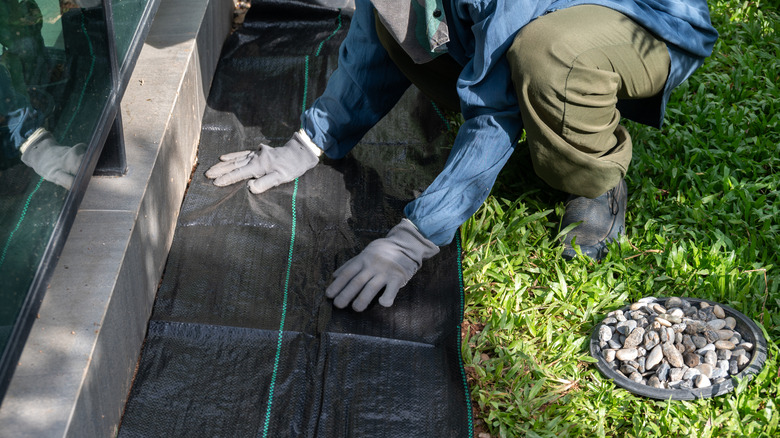
Landscape fabric is one of the most oversold gardening products in the garden center. Having been gardening professionally for over 20 years, pulling out this hideous plastic and removing carpet from beds and pathways are my least favorite jobs. Even if I weren't a permaculture gardener, I would still hate this stuff. There are so many downsides to using landscape fabric in your garden. It doesn't work like it is supposed to and it shreds into fine strips within just a season or two. The weeds still find their way through, and they grow tangled into the landscape fabric, making it and the weeds even harder to remove. Plus, it contaminates soil with microplastics as it degrades, so you are essentially paying to add a fairly useless pollutant to your garden soil.
You still need some way of suppressing weeds, though. Especially if you are adding new beds or topping old beds with mulch. You've got plenty of options here, but a great free one that most people can access fairly easily is newspaper. You probably already have it in your recycling pile. It's one of the best ways to repurpose old newspapers around the home or garden. The technique is called sheet mulching. It works by blocking light from the weed seeds in the soil so that they can't germinate. It also creates a physical barrier that takes them a while to grow through. As the newspaper decomposes, it feeds back into the soil, adding some organic matter.
Sourcing newspaper for sheet mulching

Many people use whatever newspaper they have on hand, dumping the sheets in the bottom of a garden bed without giving any thought to what's on those sheets. But some older newspaper inks contain inorganic heavy metals that could contaminate the soil. This is particularly relevant if you plan to grow fruit and vegetables. Thankfully, many modern newspapers use soy-based inks. Some experts agree that the heavy metal risk is over-stated, but in my opinion, it's not worth the risk. In fact, in edible beds, I don't use newspaper at all. Instead, I opt for clean plain cardboard as it does the same job without the risk of potential contamination. But in flower beds, I'll happily use standard black and white newspaper.
Before you dash outside with a couple of newspapers and start laying them in the bed sheet by sheet, know that you will need more than you think you do. Aim for a thickness of at least six sheets. Otherwise, as soon as it gets wet, it will rip and weeds will just push straight through. You need a decent layer of newspaper to act as proper sheet mulch, and it needs to overlap so the weeds don't germinate between gaps in the sheets. Overlap every edge by a couple of inches. Plan to use a large number of newspapers even in a small bed. My best advice is to gather them first, rather than having to stop midway to try and find more. If you can't gather enough yourself, ask neighbors and family or even libraries, dental offices, and doctors' clinics, who may be happy to save them up for you to collect.
How to sheet-mulch a new or existing bed
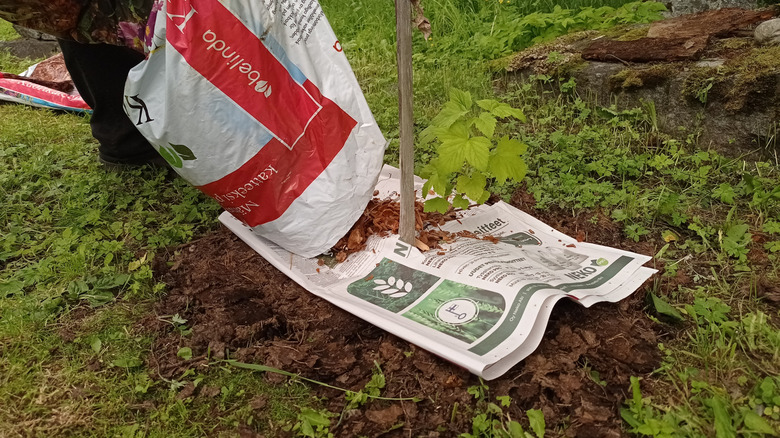
Once you have your big stack of newspapers ready to go, mark out the area that you plan to sheet mulch. If the area is weedy, mow or strim it. Remove any obvious large seed heads and leave the rest of the cut weeds lying on the surface, as it just acts as another layer of weed suppressant and organic matter for the soil. If you are building a raised bed, get the bed edges in place. Next, lay your newspaper sheets overlapping by at least 2 inches at every seam, then thoroughly wet the whole area. Wetting the paper softens it and helps it settle against the soil so it more effectively blocks out light. It also stops it blowing away while you cover it.
Your next job is to cover the wet newspaper with topsoil or mulch, depending on what you're landscaping. Aim for at least 3 inches of mulch or soil to more effectively keep weeds out. If you're mulching an area where there are already trees and shrubs in place, make sure you cut enough of a hole in the newspaper to keep it from bunching up against the plant's stems or trunk. Once the newspaper is in place, just add your 3 to 4 inches of of wood chips, straw, or another organic garden mulch.