

The Kitchen Scrap You Can Use For A Unique Wood Stain (It's Not Coffee Grounds)
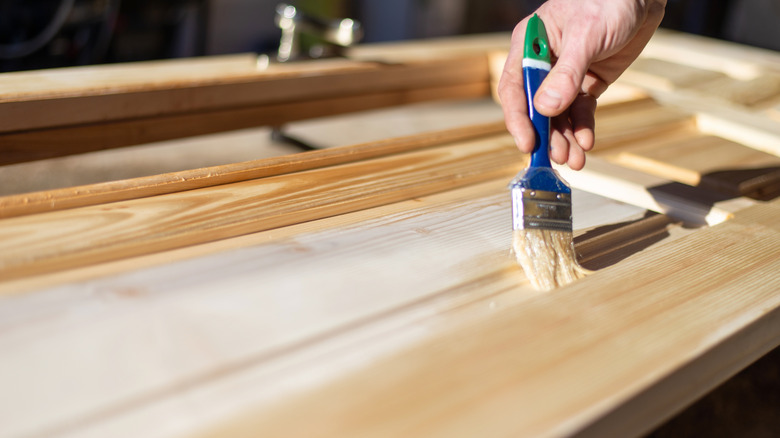
Stains are a great way to breathe new life into wood that's looking scuffed or simply outdated. Whether you want to match its existing hue or go for something totally fresh, there are numerous high-ranking wood stains available on the market, but the best option might just be one you make yourself. Not only is this alternative practically free, but it's also all-natural and allows you to better match the color to your aesthetic. Indeed, there are various kitchen scraps you can use as a natural wood stain with coffee grounds being one of the most popular. However, tea is an even better option as it delivers pro-level results with less mess.
While black tea is ideal for neutral brown shades, consider using berry or hibiscus tea instead for an unexpected result. As these herbal brews steep, they release a bright red color that can pack a real punch when applied to light-toned wood. The longer the tea steeps, the more potent it becomes and, when applied to basswood or pine, can unleash stunning shades of red and purple. It is important to note, though, that berry teas will react to the wood's pH, which means the final color of the stain isn't guaranteed beforehand. For that reason, it's a good idea to try it out on a small invisible area, such as the back or underside. If you're happy with what you see, here's how to get the best result.
How to use berry tea to stain wood an unexpected hue

Before using wood stains, there are some pro tips to be aware of. First, make sure the wood you want to transform is a good match for your DIY tea stain. If the natural color is too dark, the reds and purples will have a hard time shining through. That's why this project is best suited to the lightest woods, such as birch and pine. Just as important is to properly prepare the surface you wish to stain. If it's painted, varnished, or sealed, the stain won't be able to penetrate down to the wood. Sand the entire surface with a 120-grit sandpaper before giving it a final once-over with a 220-grit sheet. While bare wood will also benefit from sanding, use an 80-grit paper instead, always rubbing in the direction of the natural grain.
Next, apply your tea stain with a cloth or bristle brush, then wipe it off after a few minutes. Use a dry cloth and follow the wood grain, making sure you never let the concoction fully dry on the surface. The more coats you apply to the wood, the more visible and saturated the color will be. Once you're happy with the finished hue, make sure to seal your project as herbal tea stains are more prone to fading than many other natural dyes. Water-based Polycrylic is a good option as it won't eat away at the stain and won't change its color after all of your hard work.