

If You Like Birds In The Yard, Think Twice About Removing This Toxic Plant
Quite understandably, everybody rushes to clear poison ivy (Toxicodendron radicans) whenever it springs up, whether that's along fences, around tree trunks, or on their garden edges. Given that many people are allergic to it, ripping it out as soon as you spot it is a fairly reasonable response. Poison ivy contains urushiol, which is the compound that so many people find themselves allergic to. It can cause all kinds of problems ranging from a few days of intense itching to painful, blistered, and weeping skin.
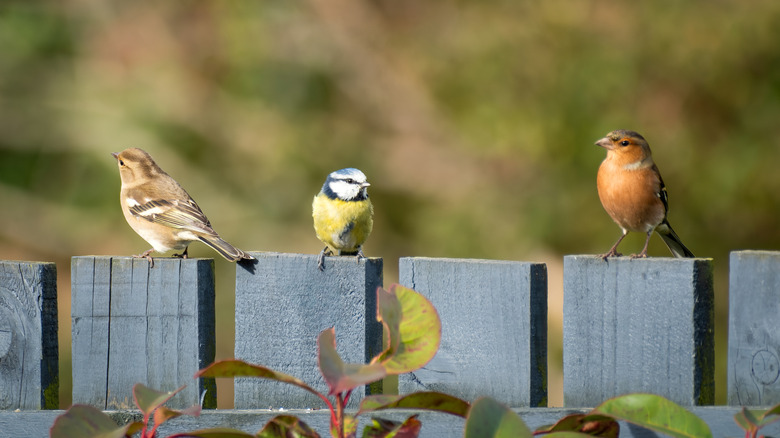
Although this plant is an aggressive weed that can cause significant pain to humans, poison ivy is still a North American native. There are many creatures that use it as a valuable food source and it's a berried plant that attracts birds. Many birds depend on the fruit for survival especially during lean periods when many other food sources are scarce, and they are not affected by the urushiol. Plus, as the fruit is nutritionally dense and holds on the vine well into winter when most other berry sources in the average garden have been stripped bare, poison ivy is an invaluable food source to both native and migrating birds. If you want to make your garden bird-friendly and you already provide feeding stations to support them, then let your poison ivy grow in a controlled manner along with other native berry-producing shrubs. That way you can support birds and other wildlife for free. This isn't a good idea, however, if you have small children or curious dogs and cats that might decide to try one of the berries.
Coexisting with poison ivy without getting into trouble

Don't let poison ivy run rampant and unchecked across your whole yard. That's the fastest way for someone to accidentally encounter it and spend days suffering the consequences. It's also not a good idea to let it grow in some of the more well-used parts of the garden. If it pops up in heavily-trafficked areas, then remove it ruthlessly to keep everybody safe. However, if you have a wild area or a designated wildlife garden, then you could leave it in place here as it provides genuine wildlife value. You can also make it harder for your pets to access by installing a short picket fence with a gate around the wildlife portion of your garden. If you see poison ivy pop up along back fence lines or in hedgerow edges, especially in hard-to-access places like behind the shed, then let it grow, as humans and pets are unlikely to encounter it here, but wildlife will find it and be very grateful.
You also want to make sure that everybody in your household knows that the poison ivy is there and how to identify it. The old adage "leaves of three, let it be" is useful, but it's probably a good idea to show everybody what they're looking for, too, so they know not to touch it or disturb it. You'll also need to know how to spot poison ivy in winter when it has no leaves. When the foliage is long gone, the berries will still cling to the vine in cold weather until the birds strip them.
How to control poison ivy
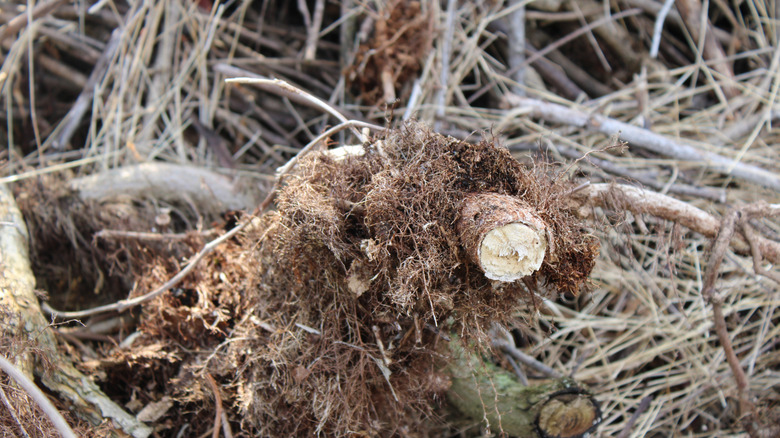
Obviously you don't want a yard full of poison ivy, so you do need to keep on top of it with cultural controls. This plant reproduces by seed and underground runners or rhizomes. Once you've decided where you will tolerate it, you need to remove any young shoots that appear outside of this area. Make sure you're wearing clothes that cover all of your exposed skin. That includes wearing closed-toe shoes, a hat, and sturdy gloves.
Dig down beneath the new plant as deep as you can to get as much of the root as possible so that new plants don't form from root fragments that you've missed. You might find that new plants or old plants that you cut back as close to the ground as possible keep coming back. If you persist poison ivy doesn't do well with repeated cutting or tillage so you will eventually weaken the plant and get rid of it altogether. Don't try to compost poison ivy and under no circumstances should you burn it. Burning is one of the most dangerous mistakes you can make when dealing with poison ivy. In doing so, the urushiol gets into the smoke. If you breathe it in, it can cause serious lung and throat problems. Inhaled urushiol from burning poison ivy is far more dangerous and problematic than skin contact with the whole plant. Bag it and put it out for curbside collection instead.