

The Big-Blooming Companion Flower That Fills Out A Rose Bed
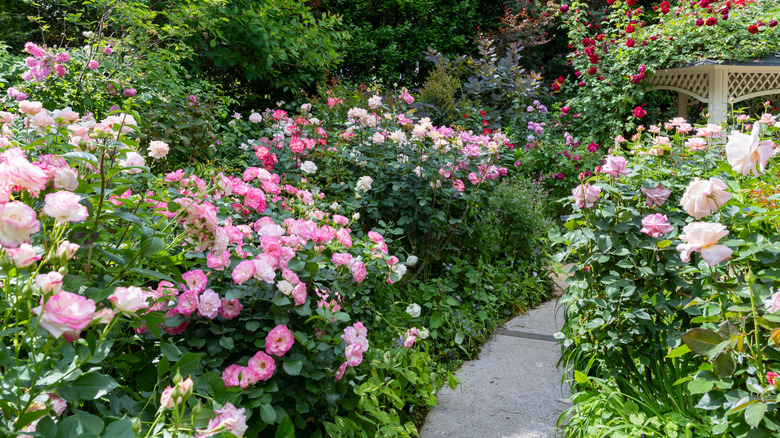
You could argue that a garden bed completely decked out in colorful roses makes for an unmatched display. And it may ring true, too, when you imagine sprays of vibrantly colored petals, covered in dancing bees and perfuming the air with their sweet aroma. But when you tire of your love affair with roses or are willing to spruce up their displays, consider companion planting them with snapdragons (Antirrhinum majus).
One of the main reasons to grow these companion plants with your roses is to achieve a showstopping garden of color year-round. Unlike roses, which mostly bloom in the summer, snapdragons fill beds from spring through frost. Although flowering tapers during the dog days of summer on standard varieties, newer hybrids are bred to handle the heat better and keep up their blooms. And due to their affinity for cold, snapdragons are especially prized for fall color. In fact, down south, where winters are mild, they continue flowering through the winter and into the following spring, extending the blooming season. With their tall flowering spikes, snapdragons echo the vertical lines of roses, while their lipped flowers, reminiscent of dragon heads, provide a beautiful contrast next to the roses' cupped forms.
How to grow roses and snapdragons together
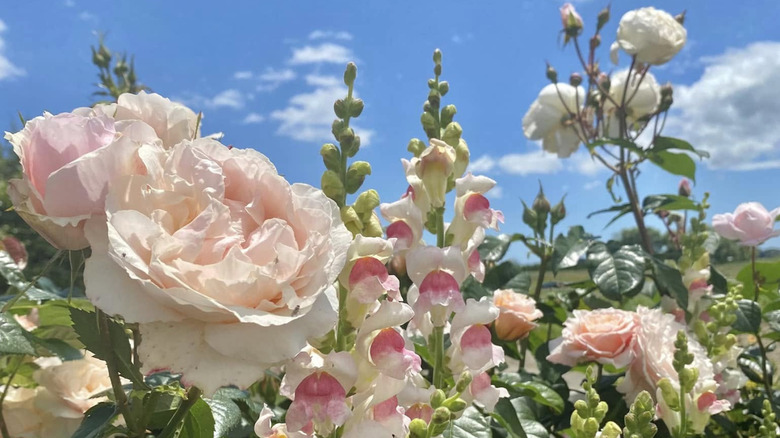
For successful companion planting in your garden, both plants must thrive in similar conditions and with similar care without outcompeting each other for resources. Fortunately, the rose-snapdragon pairing fulfills these conditions. Like roses, snapdragons thrive with full sun exposure, that is, at least six hours of direct sunlight, and rich, well-draining soils. There is a suitable rose for nearly every USDA Hardiness Zone, while snapdragons are only winter-hardy in zones 7 to 10 and are usually grown as annuals.
Since both plants are cold-tolerant, the ideal time to get them into the ground is early spring, though container-grown roses can be planted throughout the growing season. Just save yourself the trouble and don't try growing snapdragon from seed. Their seeds are tiny and difficult to handle. Plus, they often take a long time to become transplant-ready. Nursery starts are available for cheap, so buying these makes the most sense, especially when replanting them each year as annuals. Just be sure to get the ones budding out (and not full-on flowering), as they transplant better.
With snapdragons and roses in the same garden bed, be prepared to enjoy plenty of pollinator action. Snapdragons attract butterflies, bumblebees, and other bees, along with hummingbirds that will snack on any pesky aphids ailing your roses. You may also use this pairing to create a florist-grade rose bed. By planting tall snapdragon varieties, such as 'Potomac', 'Madame Butterfly', or 'Rocket', that are at least 2 feet tall, you'll have the option to cut their flowers for floral arrangements that last nearly 10 days!
Keeping roses and snapdragons healthy and problem-free
One reason some gardeners are afraid of growing roses and snapdragons together is the risk of disease spreading. Although both plants are disease-prone, most disease-causing fungi are host-specific. For instance, different fungi are at play when you notice powdery mildew coating the foliage of a snapdragon versus a rose. Similarly, snapdragons' biggest problem, rust, doesn't automatically spread to roses. In fact, it doesn't spread to any other plant except other snapdragons, and may not become a problem at all if your beds are in hot, dry conditions. In other words, outside of high-humidity areas, like the Pacific coast, snapdragons usually perform well.
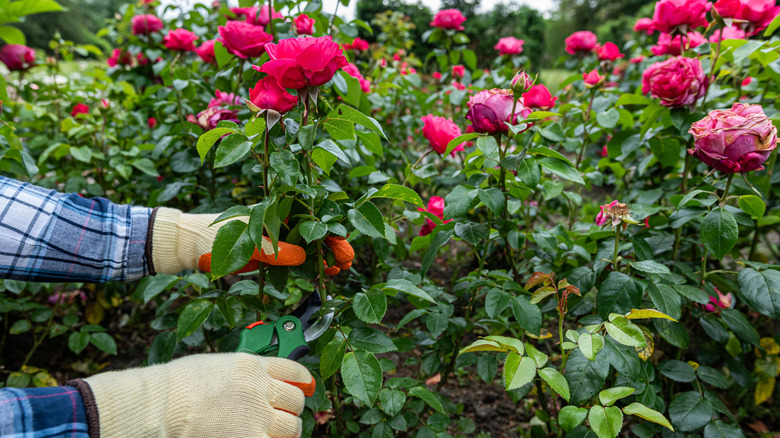
Still, to protect your beds against outbreaks, focus on maintaining proper air circulation by regularly pruning and removing infected, dead, or damaged leaves. Also, deadhead these plants for maximum blooms and to deprive fungi of a suitable habitat. Water both flowers at the base instead of from the top, so the foliage doesn't get wet and invite in fungi. Moreover, space snapdragons at least 1 to 1½ feet away from your roses. Don't forget to use disease-resistant cultivars and check seedlings for symptoms before planting.
Interestingly, white or light-colored, highly fragrant roses are more likely to attract western flower thrips, which also like snapdragons, albeit without being as damaging. In these cases, snapdragons may double up as a trap or distraction crop until you squash these thrips or knock them off with a strong spray of water. You may also have to watch for green peach aphids, though their damage is minor.