

Before You Cut Your Dead Hydrangea Flowers, Consider This
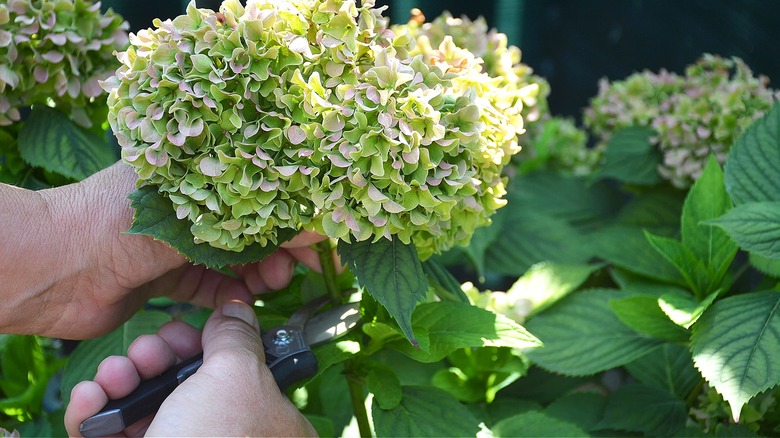
Hydrangeas are some of the most magnificent flowers to grace a landscape. Assuming a variety of forms — most commonly mopheads, lace caps, or conical – in a wide array of hues, hydrangeas lend beautifully to hedges, foundation beds, and borders. But once they've terminated their last flowers, you may wonder whether it's time to cut them off, or in other words, "deadhead" them. To decide that, all you really need to do is determine whether you want winter interest.
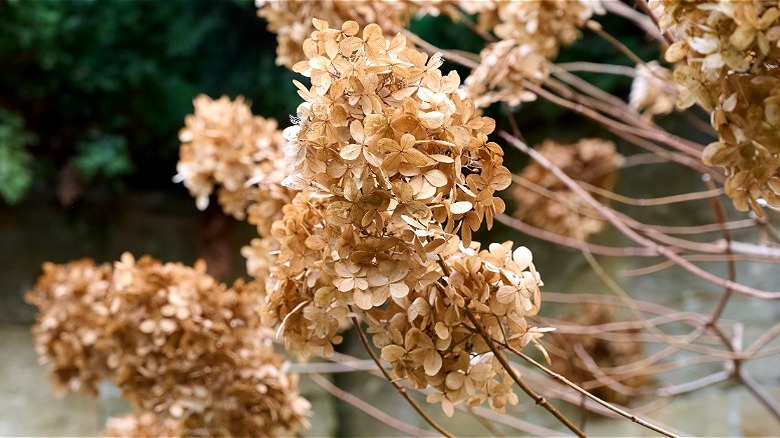
While we'd all want our hydrangea blooms to last forever, they only last for so long and begin discoloring by the end of summer. To some, there's a certain charm to watching them slowly turn and fade into different shades of brown. These dried flowers seem to add an ornate and textural appeal, especially against a snow-laden landscape, breaking away from the norm of an otherwise staid, bare-branched look.
This also allows Mother Nature to take over. When the flowers can no longer hold fast to the branches, they'll drop and scramble away on their own. You can deal with any leftovers in spring so the new blooms appear neat and healthy.
However, if you find the dying or dead brown flowers ugly, scraggly, withered, crispy, or plain dreadful, it's best to cut them off, purely from an aesthetic point of view. Apart from reasons of age, the dead look may be a consequence of hydrangeas becoming stressed from heat or dry spells.
Deadheading hydrangeas may involve other considerations
Although most decide how and when to deadhead hydrangeas based on their personal preferences, there are other worthy factors to consider. Even if you don't enjoy the dead flowers, it is believed that retaining them can offer winter protection to new buds that may have already formed on the shrubs. This usually holds for hydrangea varieties, like oakleaf, bigleaf, climbing, and mountain, that bloom on one-year-old wood and set their buds in late summer (around August or September). In addition, sometimes, beneficial insects may overwinter in the dried flowers, and harboring them in your garden can be extremely valuable if pest pressure is high.
In contrast, if you're growing reblooming hydrangea flowers — think the Endless Summer hydrangeas – then you should always deadhead these flowering plants for maximum blooms. With this action, you can redirect the plant into producing another flush of flowers, sometimes at a quicker pace, instead of wasting resources on seed production.
However, you can leave the last wave be for winter interest if desired. Cutting off aging blooms may also become essential if your shrub is afflicted with diseases. Removing the diseased sections can prevent further spread or overwintering of pests and microbes. Besides, deadheading also creates an opportunity to take your floral arranging game to the next level, as these dried, papery flowers add a nice flourish and last a long time.
Trimming dead flowers the right way (should you choose it)
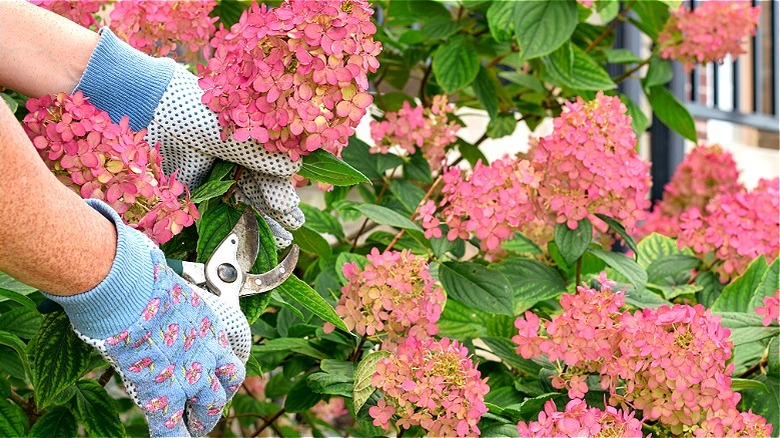
With the reasons established, it's important to make a distinction between deadheading and pruning. Deadheading is limited to removing the aging flowers and does not involve cutting into the flowering stems. For this reason, unlike pruning, it can be carried out anytime after the last flowers have faded, irrespective of the hydrangea variety.
However, if you wish to trim or neaten the shrub by cutting into old growth, the earlier you act, the better it is, especially with old wood hydrangeas. That's because you risk cutting off developing buds that may not be visible just yet. Not to mention, it may prevent the plant from hardening in time for winter.
To be on the safer side, though, and should you choose to go ahead with deadheading, know this is a gardening task to do in late summer for bigger hydrangea blooms in the spring. Using a pair of sterilized, sharp tools, cut the dead flower right above a string of healthy, large leaves (not the tiny ones).
If you hope to strike a happy medium where you enjoy the spent flowers for a short while and then bring them inside for flower arrangements or wreaths, leave them standing on their stems for about eight weeks. Once they turn wispy, make an angled cut at about 18 inches. Strip the blooms of all leaves and suspend them downside up for a bit before moving into a vase.