

Bye, Gravel Driveways: The Futuristic Material That's Easy To Recycle
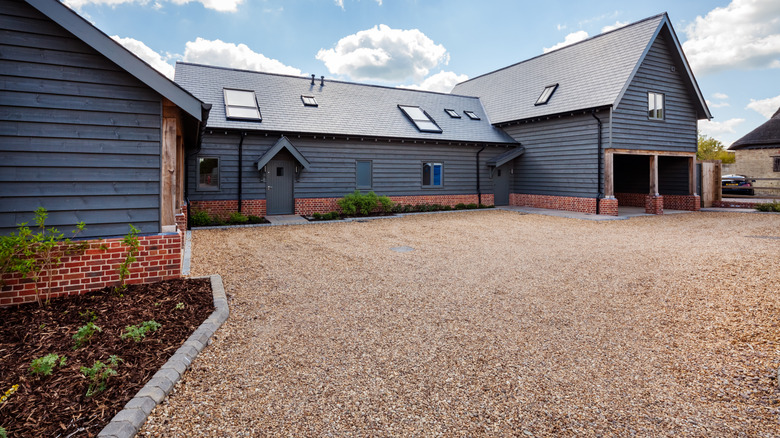
Gravel was the standard for elegant driveways until the advent of the automobile, and many people still love that crackling sound of tires on crushed stone. But, there are a few other popular options, too, like the most-used building material in the world: concrete. If you want the durability of concrete with the eco-friendliness of gravel, geopolymer concrete, also called greencrete for short, is something to consider.
Geopolymer concrete, sometimes marketed as greencrete or Geo-Green Crete, is made from aluminosilicate materials that react with an alkaline solution and turn into a hard binder that's more environmentally friendly than cement. Currently being used as an alternative to concrete in both residential and commercial markets, it still uses the same aggregates, such as crushed stone and gravel, but the binder comes from waste by-products like fly ash and slag instead of cement. It is mixed and poured into a solid surface just like regular concrete.
Although geopolymer concrete is made from recycled materials and accepts recycled concrete as a filler, it's still more expensive to install than traditional concrete. Concrete driveways run about $8 to $20 per square foot, so expect to pay at least that much. Also, until production scales, lower availability may be an issue for some homeowners who are interested in this green driveway solution.
How to use geopolymer concrete
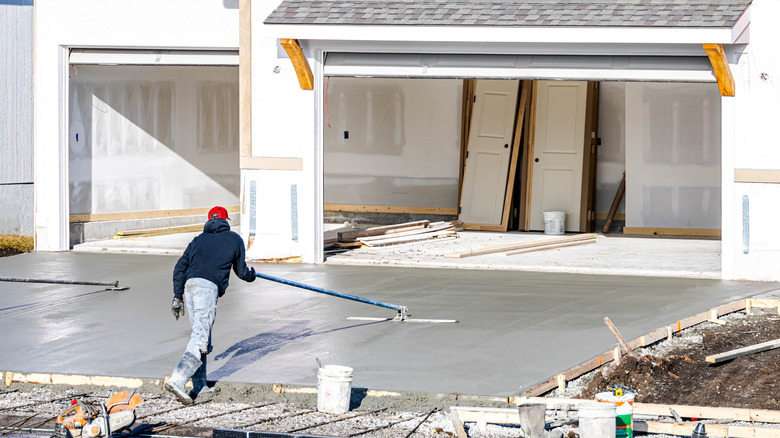
According to a 2024 study, Portland cement accounts for about 8% of global carbon emissions, so finding alternatives is low-hanging fruit for researchers, innovators, and manufacturers wanting to capitalize on more sustainable options. Geopolymer concrete has been around for decades, with recent field testing and applications yielding promising results. In fact, after field-testing geopolymer concrete, the road authority in Victoria, Australia included it in its paving specifications as an equivalent product to Portland cement concrete for low-risk projects like driveways and footpaths.
But because geopolymer concrete is still in development and there is limited availability, DIYing a driveway with this material isn't in the cards just yet, so you'll need to find a geopolymer concrete installer near you if this is something you want to consider. When searching for the right one, it helps to know what you're asking for. The fly-ash-based mixes perform poorly under freezing conditions, so for cold climates, you'll want a slag-based formulation that's high in calcium. Freeze-thaw cycles can ruin any type of concrete driveway, especially if it's improperly cured, but these high-calcium formulas actually outperformed regular concrete in freeze-thaw testing. Just make sure to ask your greencrete installer what you're getting when they quote a price. And since you may not be able to find more than one installer for multiple quotes, get a couple of quotes for conventional concrete so you can compare costs.