

Not Pyrex, Not Le Creuset: The Copper Cookware Collectors Dream Of Finding
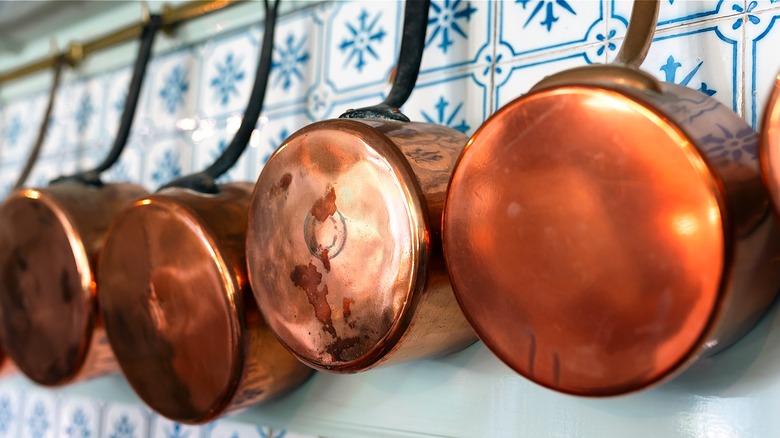
Pyrex and Le Creuset may dominate the world of collectible kitchenware, but serious collectors know there are other names worth the search. Legry, a French maker of handcrafted copper cookware from the late 19th and early 20th centuries, produced elegant saucepans, pots, and kitchenware that combined function with exceptional craftsmanship. Copper cookware has a resurgence lately as this once-dated kitchen staple is now a must-have collectible. Today, finding a genuine Legry piece is a rare and beautiful discovery.
Legry's history is closely tied to respected French coppersmith, Alfred Duval, who operated a renowned metal shop in Paris sometime in the 19th century. In 1896, Paul Legry purchased the Duval copper cookware business and continued producing high-quality handcrafted cookware from its Paris workshop. As a result, collectors often discuss Duval and Legry together because of shared history and similar craftsmanship. Before modern stainless steel and nonstick cookware became common, professional chefs prized copper due to how well it conducts heat and its performance in the kitchen as it prepares food evenly.
Legry used thick-gauge copper, the thickness helping prevent warping under intense heat and stops hot spots from scorching food. Legry pieces were made in limited quantities in a single workshop through the 1930s, making them extremely rare. While everyday vintage copper cookware may be found for modest prices, authentic Legry examples can sell for several hundred dollars per piece depending on size, condition, and rarity. A simple saucepan can fetch $250, while collectors may ask over $1,500 for a sauté pan.
How to identify Legry copper cookware
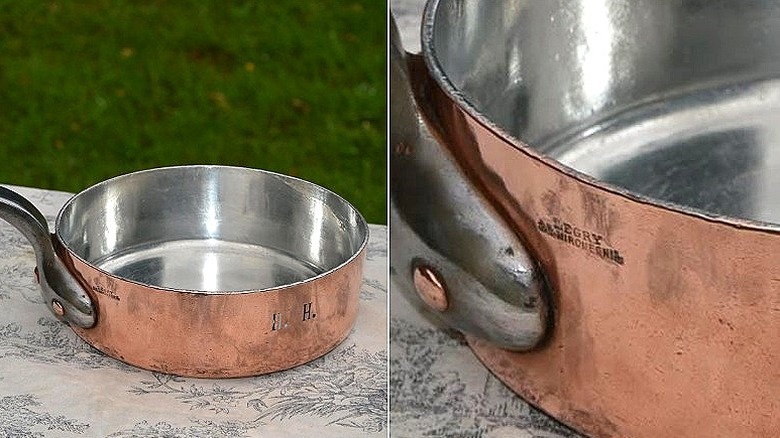
A Legry saucepan or copper pot represents a time when cookware was built by skilled artisans. Since vintage kitchen items are making a stylish comeback in 2026, it is always worth examining copper pieces carefully, because you might discover the find of a lifetime.The first thing collectors look for is the maker's mark.
Authentic Legry pieces are typically identified by stamps or engravings bearing the Legry name and the factory's street, Miromesnil. Such marks include "2.R.MIROMESNIL," where the "R" stands for the French word for street, Rue. Copper cookware experts surmise this was used shortly after Legry bought the shop. A second, more rare mark is ""P. LEGRY 2 R. DE MIROMESNIL PARIS," date unknown. Later, the Legry pieces began featuring the words "Cuverie Standard," with Legry appearing in the middle. The exact date for these pieces are estimated to be 1923-1925, according to Vintage French Copper.
Like other vintage cookware that could be worth serious money, condition also plays a major role in value when looking at Legry. Collectors look for thick copper construction, intact handles, clean interiors, and original details rather than heavily damaged or repaired pieces. One of the charms of antique copper cookware is that it often carries the marks of the person who made it. When you examine a copper piece that has slight irregularities, this could indicate that the piece was shaped by hand using traditional techniques, since Legry pieces were hammered.