

Swap Bee Balm For A Blue-Blooming Salvia Flower That Hummingbirds Can't Resist
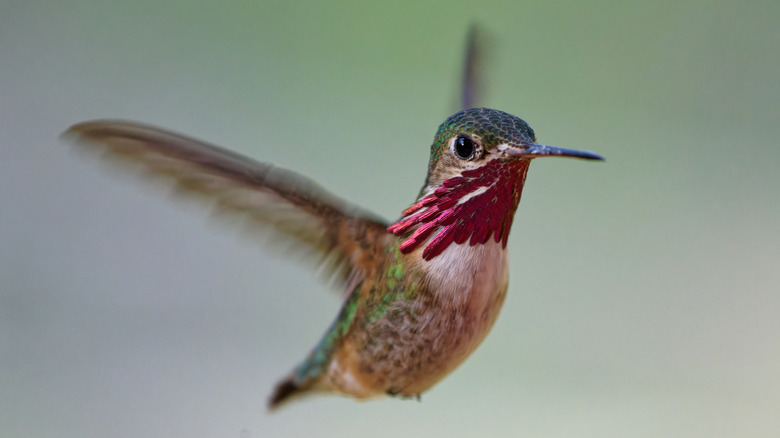
There's nothing quite like stepping into your garden and finding it alive with flowers and wildlife. A thriving, healthy backyard has visual appeal, fills the air with fragrance, and gives you a sense of pride. Spotting a hummingbird flitting around your well-cared-for blooms is the icing on the cake. The experience may lead you to start a pollinator garden. Who doesn't want more of these lively birds around? Bee balm is a popular choice for wildlife-friendly gardens — the plant's abundant flowers attract hummingbirds and other pollinators, such as butterflies and bees. However, when it comes to cultivating a landscape for hummers specifically, bee balm isn't your only option. Try growing blue-blooming bog sage (Salvia uliginosa) instead.
Also known as sky-blue sage or blue spike sage, bog sage is an eye-catching salvia from South America. It sports light blue, lipped, tubular flowers that grow throughout spring and summer. The nectar-filled blooms definitely attract pollinators, but the plant's show-stopping long flower stems also make this a lovely cut flower plant. Bog sage doesn't just have ecological and visual appeal, though. It's also quite hardy. It spreads easily, though not aggressively, and thrives in moderately fertile, damp soil. Plus, it resists grazing by deer. All of these attributes make it useful as a cover plant in spots where other plants struggle to grow.
How to grow bog sage in your garden for hummingbirds
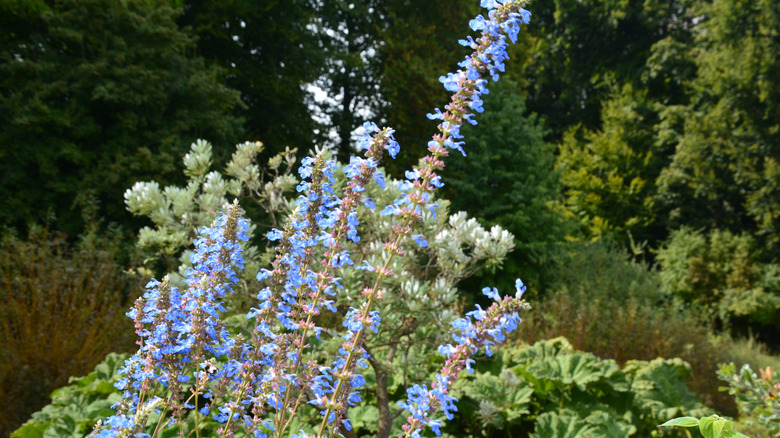
Before you rush to the nursery for a few bog sage plants, you'll need to learn what a USDA growing zone is and which one you are in. This plant thrives in Zones 6 through 10, so depending on where you live, you can grow bog sage as an annual or a perennial. If you do choose to grow this stunning, blue-flowering plant as a perennial, you need to prune it annually in late April and divide your patch around the same time. Bog sage can get a bit weedy if it's not well-maintained. It's not immune to pest infestations and diseases — issues to watch out for include powdery mildew, rust, stem rot, fungal leaf spots, whiteflies, aphids, mealybugs, and spider mites.
If you want lots of hummingbirds to visit your garden, you need to optimize blooming. That means planting bog sage in a full-sun site. Though it's generally hardy, this perennial won't bloom nearly as much as you would like if it doesn't get at least six hours of sunlight a day. It can get floppy in shade, too. A south-facing garden bed or a large container placed in a spot free of overhanging trees or structures are excellent options. As mentioned, bog sage grows best in consistently moist soil and can even handle occasionally boggy sites. However, it still needs good drainage. This makes it one of the easiest plants to grow for beginner gardeners or anyone still establishing their garden watering routine.