

Why There's Simply No Need For Tomato Cages Anymore
We may receive a commission on purchases made from links.
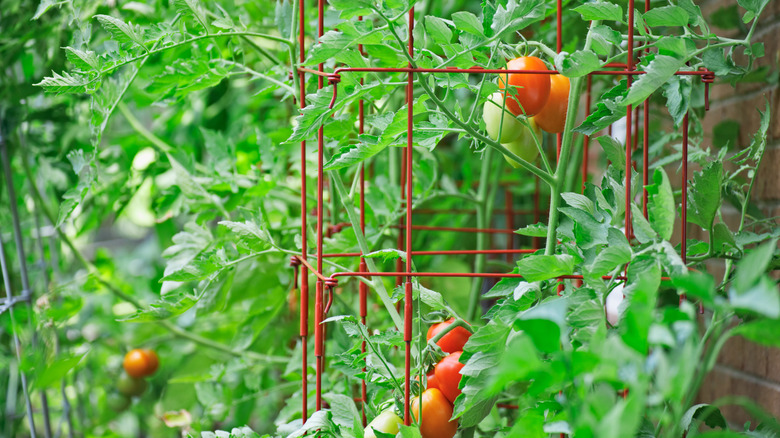
For many gardeners, it's hard to imagine growing tomatoes without the help of cages. These structures are intended to provide support for your vines, which tend to grow and spread out from their bases very quickly after planting. However, the assistance tomato cages provide comes at a cost. There are a few little-known downsides to using tomato cages to support your plants that make it worth reconsidering whether to purchase them. They're not actually that strong, they limit airflow, and they're often far from large enough. Simply put, they can end up causing more issues than they're worth.
Let's say you're growing one of the tomato varieties that provide the biggest harvest. Brandywine tomatoes, for example, can weigh over a pound each. Standard tomato cages made of thin metal or plastic, both of which bend easily, are simply not strong enough to support these plants. The cage might start leaning to one side with the weight of the fruit. It may eventually fall over, bringing the whole tomato vine down with it.
Even if you're growing tomato plants with smaller fruit or less yield, cages can still give you trouble. Unless they're custom-made to suit your specific growing needs, most tomato cages tend to be too small. As the structure gets packed with stems and leaves, air circulation decreases, increasing the risk of fungal diseases like septoria and early blight. Plus, it becomes very difficult to prune the plant through the cage. Then, when the growing season is over, you have to find somewhere out of the way to store your bulky tomato cages. It's easy to see why there's little reason to use them, but what's the alternative?
Tomato cages don't hold a candle to other support structures
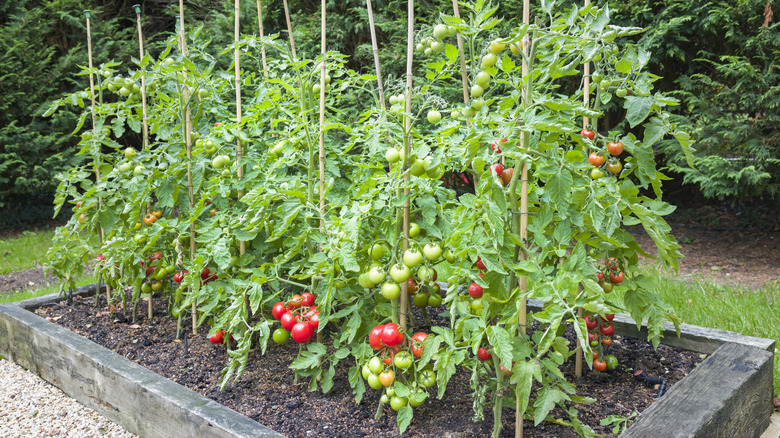
Fortunately, there are lots of other ways to support growing tomato vines other than cages. The most straightforward method is to drive a stake — such as rebar, a thin wooden post, or a Groovboo Natural Bamboo Plant Pole — deep into the soil next to each tomato plant's main stem. Then use a strip of fabric cut from an old t-shirt or Decoroca Reusable Waterproof Plant Wire to gently attach the stem to the stake. Add more ties as the plant grows, and you'll be left with a flourishing vine that's easy to prune, inspect for disease and pest infestations, and harvest. This option is best for determinate tomatoes that grow on stockier stems, including Roma tomatoes.
Alternatively, if you're growing indeterminate vining tomatoes, such as Beefsteak, you could upgrade from a tomato cage to a freestanding A-frame trellis. Garden trellis structures will upgrade your gardening game because they're as attractive as they are functional. A solid, sturdy metal or timber trellis with an open frame will provide plenty of support for a growing tomato vine, ensuring the plant gets plenty of sun and fresh air. Depending on how well the plant is growing, you may need to tie the stems to the frame in a few places or trim away wayward branches. You can grow pruned tomato plants much closer together. This is a very low-maintenance growing method, and it has the bonus of being a stunning garden feature. You can even grow tomatoes on arch trellises!