

Build Or Buy A Shed: Here's The Cheaper Option For Outdoor Storage
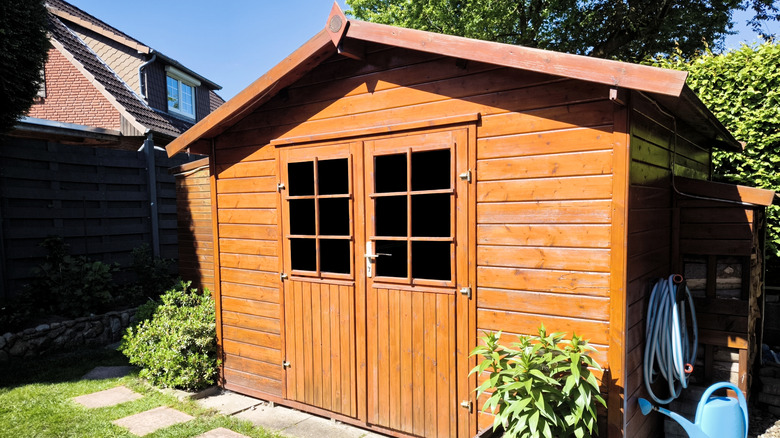
Whether you're remodeling your kitchen or building a garden shed, big DIY construction projects rarely end up coming in under budget. Even when you add padding to your cost and timeframe estimates, you often experience overruns. This hard truth may have you wondering if it's cheaper to build a garden shed yourself or buy one ready-made. It turns out that the former approach is usually more affordable, but the difference is razor thin. There are several factors that can swing the balance one way or the other.
First, no matter how you define a garden shed, there's a big difference between a prefabricated kit you assemble in your backyard and a fully built shed that's ready to use as soon as it arrives. When it comes to kits, there's a huge range of options to sort through — everything from small kits that cost a few hundred dollars to more substantial structures worth thousands of dollars. However, buying a garden shed kit saves on professional labor costs, something that can quickly blow a budget, depending on the scope of the project.
When deciding between a DIY or pre-made shed, which is right for you and your backyard depends on how long you expect the structure to last. A framed shed constructed piece by piece on site can last up to 30 years. Prefabricated kit sheds, by contrast, generally last up to 10 years. If you already have a shed that needs to be torn down and the waste removed, building a shed from scratch may offer better value, especially if you plan to stay in the same home for a long time.
Price out your shed options — and cut costs where you can
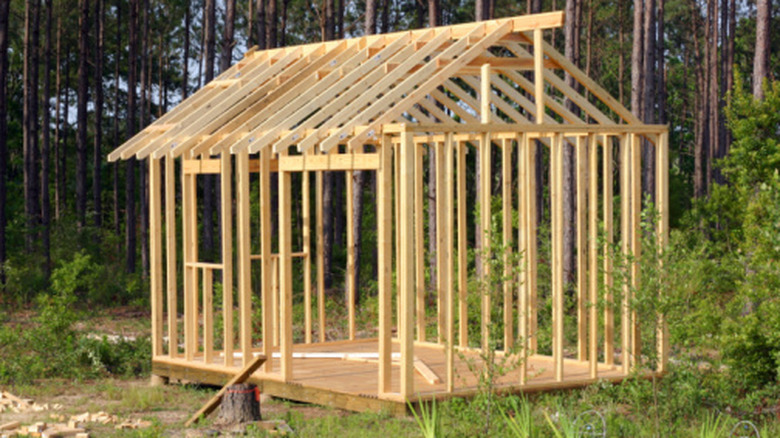
To determine which option is best — building or buying a shed — you need to take the time to price everything out. Discovering where your money is actually going will help you make a decision. Factor in everything that costs money, including materials like roofing, siding, and pressure-treated lumber, as well as finishes, labor, tools, and more. While a shed isn't a house, many of the building requirements are the same. Some municipalities require permits related to size, intended use, utility connections, and more, which can result in additional fees.
When you're making your budget, take the time to uncover any hidden costs of building or buying a shed, especially if you're customizing the shed. Every additional feature, whether decorative windows, wiring, or plumbing, adds to your overall cost. If you're DIYing the shed, do you have all the tools you need on hand, or do you have to buy them?
One way to DIY a budget-friendly storage shed that won't break the bank is to install a single-slope roof, also called a shed roof. It requires less roofing material than many other roof styles. At up to $15 per square foot, roofing costs can add up quickly, even on a small shed. For the base of your shed, you can choose between a concrete slab, footers, or pressure-treated skids on a gravel base. (Hint: Pressure-treated skids on a gravel base are the cheaper option.) Other ways to save money on building or buying a shed include reducing its size, choosing a model with fewer windows, salvaging a shed door instead of purchasing a new one, and renting or borrowing any tools you need.
Why quality may be a good reason to build a custom shed
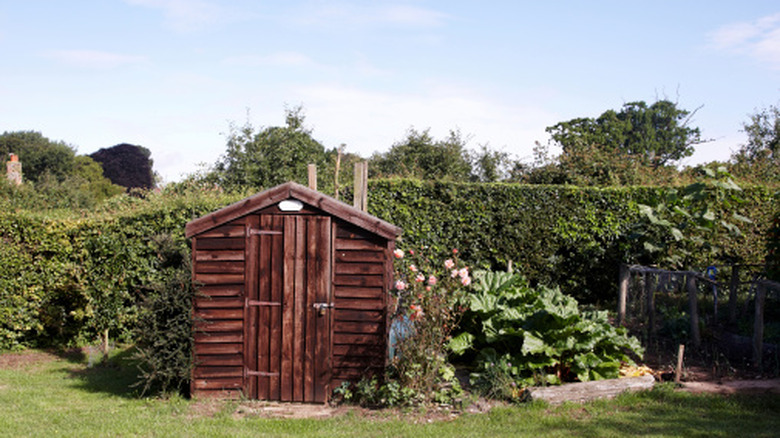
For many homeowners, quality matters more than any money-saving tips they might want to know before building a shed. Those who want or need a custom-built shed are probably happy to spend whatever's required on a concrete slab foundation rather than settle for pressure-treated skids. If you have a healthy construction budget and have factored in the cost of overruns, all that's left is making a plan and putting together a supply list. Then, find a contractor — or develop whatever DIY skills you're missing — to complete the project.
Understanding where to cut costs so without sacrificing the quality of a shed is also important — no matter which approach you take. Manufacturers of premade sheds and prefabricated kits sometimes cut corners that an experienced DIY builder or professional carpenter wouldn't to reduce costs. Examples include using 2x3s for framing instead of stronger 2x4s, using plywood instead of solid wood, or omitting studs. These choices may compromise durability and longevity.
With all that in mind, buying a pre-built shed is the better option in many scenarios. Not everyone has the four to eight hours required to assemble a shed using a prefabricated kit. In other cases, you may have a bunch of garden equipment that you don't have space to store in the garage and need a shed right away. For many homeowners, however, building a shed offers a chance to learn valuable DIY skills — and that alone may be enough reason to go down the custom path. If you can use the project as an excuse to buy more tools, so much the better!