

Not Milkweed Or Coneflower: The Yellow Sunny Annual Flower That Butterflies Love
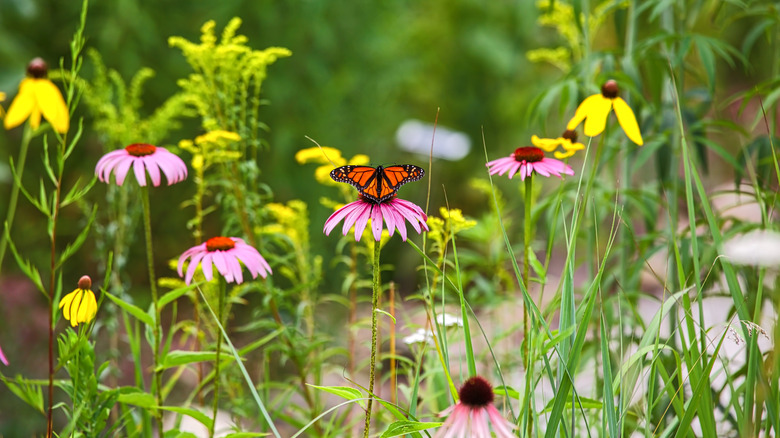
Are you looking for plants that will fill your garden with a variety of butterflies, but are tired of hearing the same recommendations of milkweed and coneflowers over and over again? How about some partridge pea (Chamaecrista fasciculata) instead? Like those two, it is native to the U.S. and shares a close relationship with the local butterflies. If their range overlaps with your region, expect to see several Sulphur butterflies, like the sleepy orange, cloudless sulphur, and little sulphur, in your yard. They lay their eggs on the plant because their larvae feed on partridge pea's leaves. In Florida, even the gray hairstreak uses this native wildflower as a host plant. Fun fact: Once it starts to get dark, or if you lightly touch the leaves, they'll quickly fold closed until daylight returns, earning the plant the nickname "sensitive plant."
But that's not all. Starting in summer and into fall, this native plant is covered in sprays of bright yellow flowers. These colorful flowers also bring bees into your yard. Heaps of bumbles, honeybees, and leaf-cutting bees happily buzz around for the pollen. The survival of native bees like black-legged long-horned and Walsh's digger depends on this plant, as they share an exclusive relationship with it. What makes partridge pea even more interesting is the presence of nectaries on the leafy stems, which consequently attract ants, flies, wasps, and Halictid bees that help with pest control.
Use partridge pea to cover bare patches swiftly
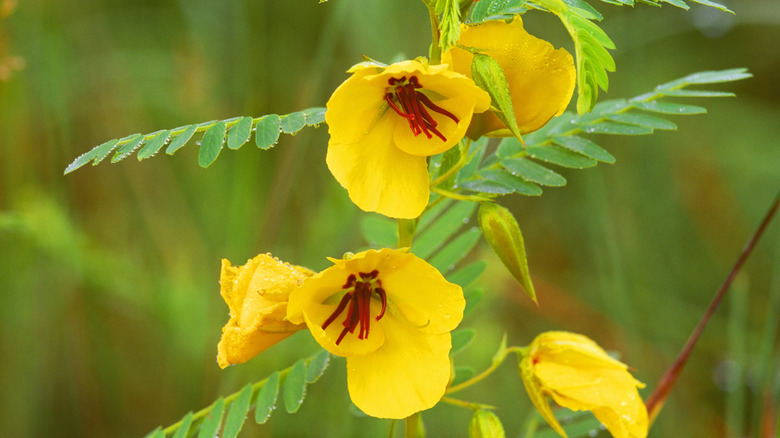
Partridge pea is a pioneer species. So, if you have a bare patch of land that you want to fill out quickly, it'll do an excellent job. This annual grows fast and is fairly adaptable — clay, sand, or gravel are all fair game as long as it receives over six hours of direct sunlight. Better yet, it thrives in poor or disturbed soils, where it often faces less competition, and being a member of the pea family, it has the ability to fix its own nitrogen. Naturally, letting this wildflower roam can help improve your garden soil, opening up the window for more resource-intensive flowers in a few years.
It also helps that partridge pea isn't particularly susceptible to many diseases. But if the soil doesn't drain well, it may suffer from cosmetic mildew issues. It can also handle dry conditions, droughts, and salt really well, and doesn't require much supplemental water after establishment. Additionally, it can be used in sloped areas to check soil erosion. That being said, mass plant partridge pea in an exclusive area when trying to create a pollinator paradise. Besides butterflies, you might find many birds taking cover in these stands that stand no taller than 3 feet at full maturity. But be prepared for hungry deer to munch on its foliage.
Partridge pea can reduce weed pressure
Even though partridge pea is grown as an annual, planting it isn't necessarily a one-and-done investment. After the last flowers fade, they make way for green pods that, over the fall, mature, turn brown, and explode, releasing many seeds. Although the resident birds, turkeys, quails, and pheasants may gobble up many of these, as will any overwintering mice if they're present in your area, there'll still be some stock left over for the annual to return next year.
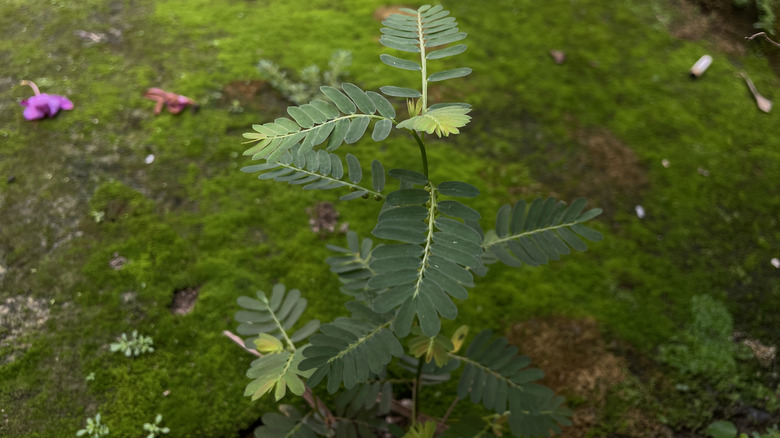
Eventually, however, you'll find fewer seedlings. But this can be advantageous if you're waiting on your perennial beds or grasses to grow out. By interplanting partridge pea, you can help outcompete the weeds. To make sure this strategy is working, all you have to do is check out the burgeoning seedlings — when tiny, partridge peas resemble small fern plants. As the seedbank runs down while the perennials reach maturity, these wildflowers are eventually shaded out. So, you won't have to waste any time on weeding out errant pea seedlings later.
Since partridge peas are widely prevalent along the roadside and are propagated using seeds, you can harvest their seedpods during autumn if they're indigenous to your area to further save on costs. However, do so after making sure that your state or local government doesn't disallow this practice. You'll need to nick the seeds before sowing, and inoculating them with the appropriate rhizobium bacteria can improve growth and nitrogen fixation.