

5 Attic Safety Tips To Know Before Heading Up
We may receive a commission on purchases made from links.
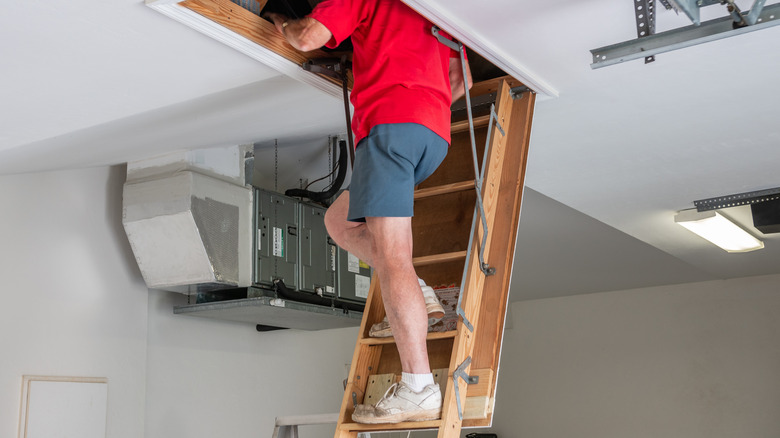
While many homes have attics, they aren't spaces that you want to spend your time in. Nevertheless, your attic does a lot more than storing old boxes. From time to time, you'll need to head up into the attic, whether that's to dig up something stored in there, to check on a roof leak, or to investigate any mysterious skittering you're hearing. In these moments, it's imperative to take the appropriate precautions before entering this portion of your house, as there is the potential for accidents or misadventures while up there.
Since attics are very distinct environments from your home, you need to properly arm yourself with the tools and knowledge to stay safe while working in them. For the sake of time and efficiency, stocking yourself with the right tools before going up the ladder is wise; it also helps prevent falling while ascending and descending the narrow ladder. Other safety tips include wearing the right clothing and gear to protect you from the elements that you'll be exposed to in the attic, like debris and excessive heat. You'll also want to tread carefully — literally — to avoid a misstep that sends your foot through drywall.
Gather your tools in advance — and bring the right ones
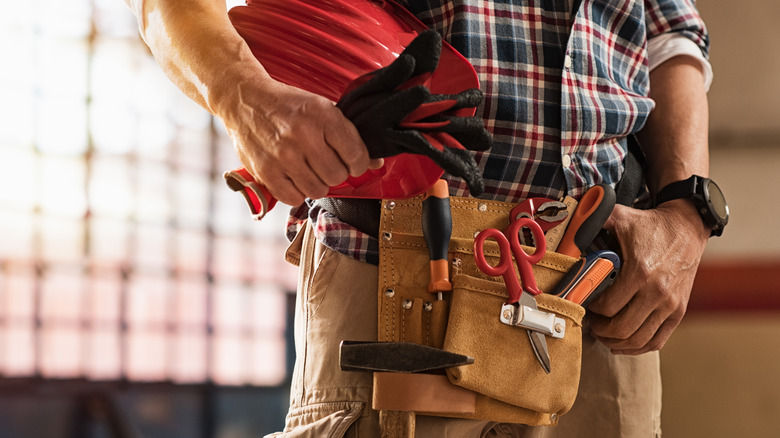
Going up and down into your attic can be a challenging process; because you're likely dealing with a fold-down ladder and a small point of entry, it's best to think ahead, gathering the tools you might need before climbing up. Even if you're only bringing a few tools or supplies with you, strapping on a tool belt is a smart move that can keep your hands free. It also helps you keep track of your items so you don't accidentally forget something on the ground.
Some commonly called-upon tools worth bringing up include a good source of light, which can help you clearly see potential obstacles, as well as what you're looking for. Your phone or a camera is another good item to bring with you, since it can help you document issues that you encounter, such as rodent droppings or roof leaks. If you do suspect a leak, bringing a small bucket to collect dripping water until a repair person comes is a wise choice.
Beware of the heat
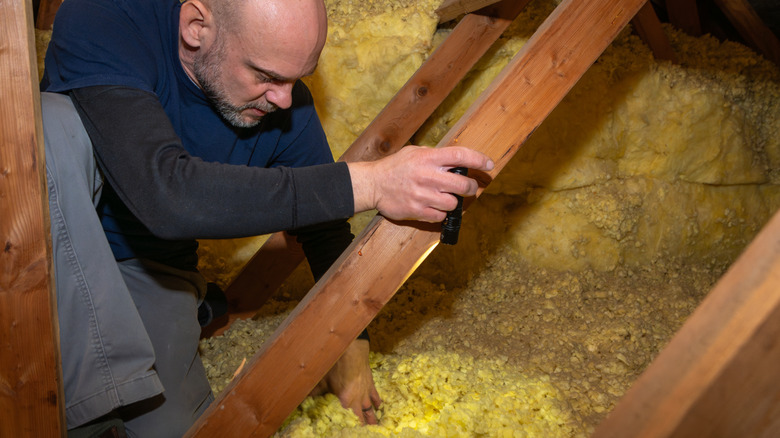
Attics can get dangerously hot during the course of a day. If you're planning to make an ascent, preparing for the heat in advance is a smart choice. Going up earlier in the day rather than during the hottest part of the afternoon can shave off some degrees. In addition to timing, bringing a bottle of cold water with you can help prevent overheating while up in this hot space. You can also utilize wet rags, placing them across the back of your neck to help you cool down if you're spending more than a few minutes in the attic.
While you want your skin covered during your time working in the attic, wearing light clothing is a wise move that can save you from overheating. Opt for cotton or another textile that breathes well. Lastly, keep an eye on the time spent in the attic. While it is easy to lose track of time when working on a project, setting a timer for 15 minutes while working in a hot attic can prevent accidental overheating.
Move with caution
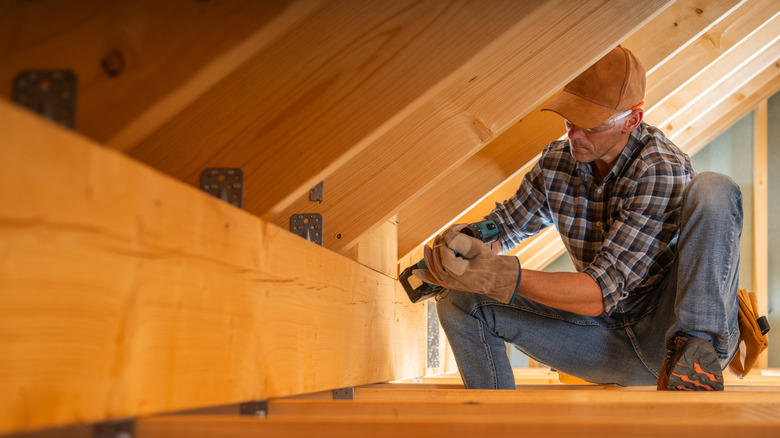
While an attic is technically part of your home, it's still riddled with risks and obstacles. Rafters, insulation, low beams, nails, screws, and exposed electrical wires can all be dangerous. There are all sorts of ways that you could bump, trip, or slip on something while working in the attic, but moving carefully is a great way to avoid any injuries, as is being sure to fully illuminate your path while walking.
When walking about, step only on a select number of sturdy wooden portions, since these are structurally more sound than drywall. Top plates and trusses are two surfaces that are generally safe to walk on when in the attic, but it's best to familiarize yourself with what they look like prior to ascending. Since dust and insulation can be thick in the attic, they may obscure your ability to see what is what; in that case, try to push aside the dust with your shoe before putting your body's weight on a surface.
Use appropriate footwear
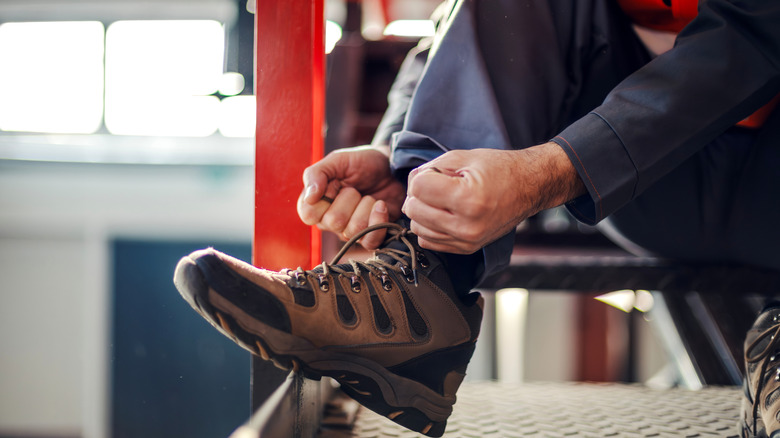
While you might be tempted to slip on a pair of flip-flops or sandals and dash up into the attic, this rash decision could leave you in a world of trouble. Nails, screws, rodent droppings, and other hazards abound in the attic, so wearing appropriate footwear is highly important. Choose work boots or something with a sturdy and thick sole so that you don't risk a puncture from sharp items on the attic floor. You'll also want something with adequate slip resistance to help you get a good grip on the ground.
Hiking boots can be a wonderful alternative if you lack work boots, but above all, you'll want to opt for something that is closed toe and fits snuggly — remember to tie up any extra length of laces so you don't trip on them. If you want to be better about cleaning your attic, here are some helpful tips, as well as common mistakes to avoid.
Wear protective gear
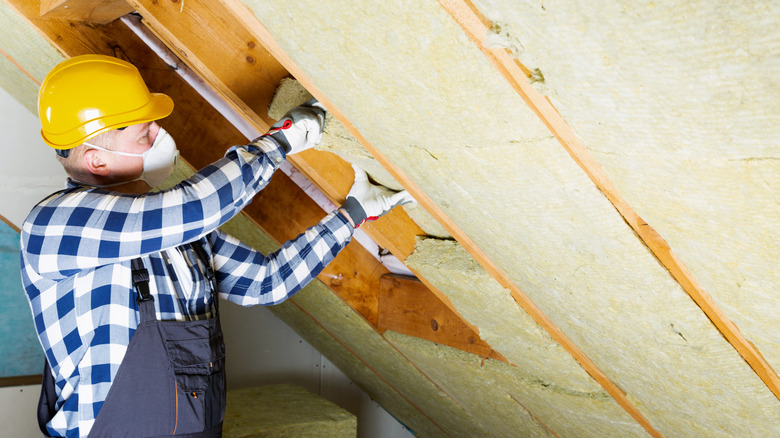
Last but not least, when working in the attic, you'll need to arm yourself with the right protective gear and equipment. Since your attic is filled with dust, debris, and other sources of pollution, adequate gear will include goggles to protect your eyes, as well as a face mask to keep dangerous elements out of your lungs. Exercise due caution by acquiring an appropriate class of face mask to filter out dangerous bacteria that can be found in rodent droppings; a N95 or N100-style mask can ensure you're safe from germs as well as insulation dust. You can easily order a 10 pack of BNX N95 Masks on Amazon for $14.99.
Wearing protective rubber gloves is also necessary if you're touching any surfaces that rodents might have come into contact with. If you're working on simple repairs, you'll want to opt for thicker work gloves that can prevent your hands from getting splinters or save you from a run-in with rusty screws or nails. While it might sound silly to gear up before simply heading upstairs in your own home, it's much better to be safe than sorry.