

Use This Healthy Kitchen Scrap Instead Of Coffee Grounds For DIY Fertilizer
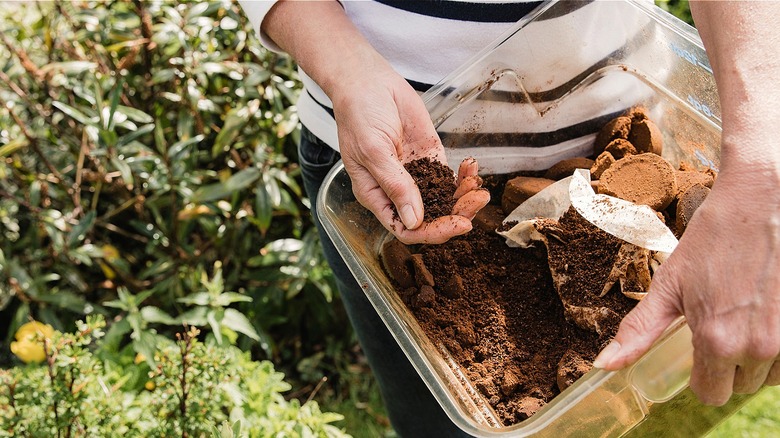
While adding coffee grounds to soil has become a popular DIY method of boosting soil health and improving soil structure, it doesn't mean it's the only kitchen scrap that can provide plants with the nutrition they need. In fact, you may want to reuse another kitchen scrap as a natural fertilizer in the garden, one said to be rife with those very nutrients plants need to grow: vegetable peels.
According to a 2025 paper published in IJERT, or International Journal of Engineering Research & Technology, vegetable peels as a whole contain significant amounts of macronutrients like nitrogen, phosphorus, and potassium, along with trace amounts of micronutrients, namely iron, manganese, magnesium, and zinc. Vegetable peels are also said to provide soil with vitamin C and calcium.
These kitchen scraps can also release antioxidants into the soil while adding rich, organic matter that helps plants to grow. So, instead of tossing them, it's a good idea to not only always keep your potato scraps for plants, but also your onion and carrot peels, too, among others. While composting is probably the most common way to turn vegetable peels into fertilizer, it isn't the only approach; you can also use vegetable peels to make liquid fertilizer.
Adding vegetable peels to your compost
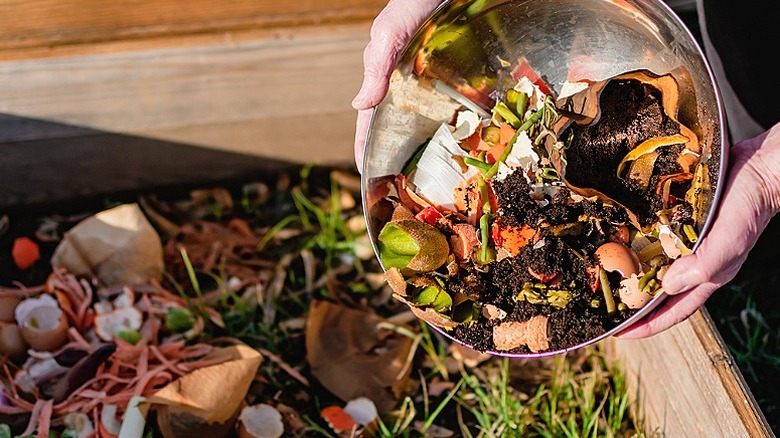
Some of the best vegetable plants to use in your compost pile are ones you would expect: scraps from potatoes, onions, carrots, and tomatoes (which you can count as both a fruit and vegetable). Another is avocado.
While not technically a vegetable, though many likely think of it as one, avocado berries are also a good candidate for compost piles, as they're rich in potassium, magnesium, and calcium, and they'll also add diversity to a pile's greens. (Also, if you vermicompost, red worms have been known to use avocado skins for breeding and nesting.)
There aren't necessarily any specific vegetable peels you should avoid adding to your compost, but you do want to be mindful of how much scraps you add. Vegetable peels fall into the "green" category, which comprise nitrogen-rich items. "Brown" compost materials are those rich in carbon. Your mix between green and brown should be, in general, around 75% to 80% brown to 25% to 20% green. So, when adding your vegetable peels as part of your greens, just make sure it doesn't tip the balance.
You can use vegetable peels to compost even if you don't have a composting setup by using the trenching method. Instead of adding them to a pile and turning it until the scraps break down, you simply add the scraps directly to the garden in a trench that is 8 to 15 inches deep.
Turning vegetable scraps into liquid fertilizer
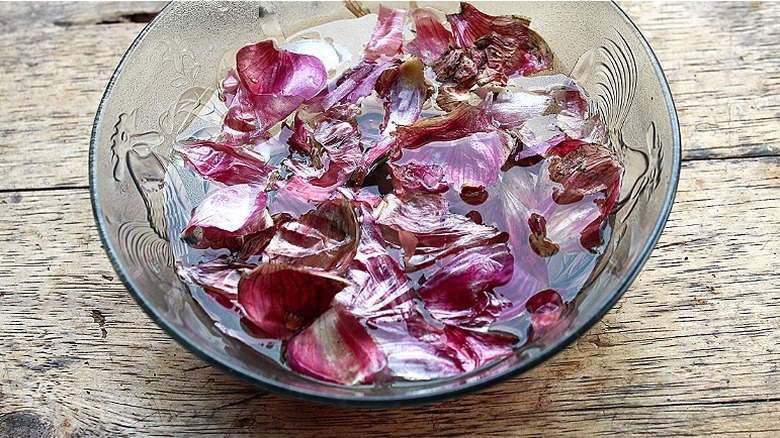
If composting isn't your cup of tea, you can always opt to turn your vegetable peels into a batch of homemade liquid fertilizer. Once made, you just apply the blend to your plants with a watering can as you would water. The entire process takes about one week.
To do so, add the scraps to a container (e.g., a bucket), and fill the container with water. Next, cover the container loosely, as you need to allow for some airflow. Don't trap everything inside the container with a locked seal like you're fermenting. That said, the cover will still help to keep bugs out, such as fruit flies that might want to breed in the nutrient-rich water. Soak the scraps for five to seven days.
When ready, strain the mixture to separate the liquid. Then dilute the liquid fertilizer with more water. For every part of liquid fertilizer, add 5 parts water. If the concentrate is particularly thick, double this to a ratio of 1:10. Then, simply use the liquid in place of one watering cycle for your plants. (Also, check out which pantry staple you can turn into a nutritious DIY liquid fertilizer, too.)