

Why These Leafy Greens Are The Key To Thriving And Healthy Tomato Plants
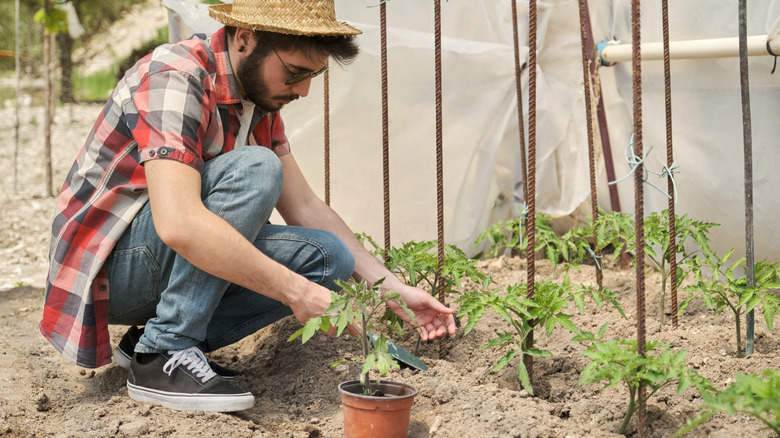
Companion planting is a relatively easy and eco-friendly way to improve growing conditions for multiple crops at once. Of course, this style of gardening only works if you choose the right companions and keep the growing conditions consistent after planting. For example, choosing crops with similar root systems is one of the most common companion planting mistakes that everyone makes — they will directly compete for space and nutrients. Tomatoes are a great candidate for companion planting because there's a wide selection of leafy greens that they partner well with for plant health-boosting benefits.
Individually, tomatoes and leafy greens are great options for beginner gardeners because they produce high yields with little effort. When you grow them together, you can cut down even more on the work required to get a great harvest. That being said, not all leafy greens work well with tomatoes. The best companions for these nightshade plants include loose-leaf lettuce, spinach, arugula, and mustard greens. These particular leafy greens have compatible nutrient needs and growing habits. Leafy greens like head lettuce and selected Brassica family species should be avoided.
Why lettuce, arugala, spinach, and mustard are good companions for tomatoes
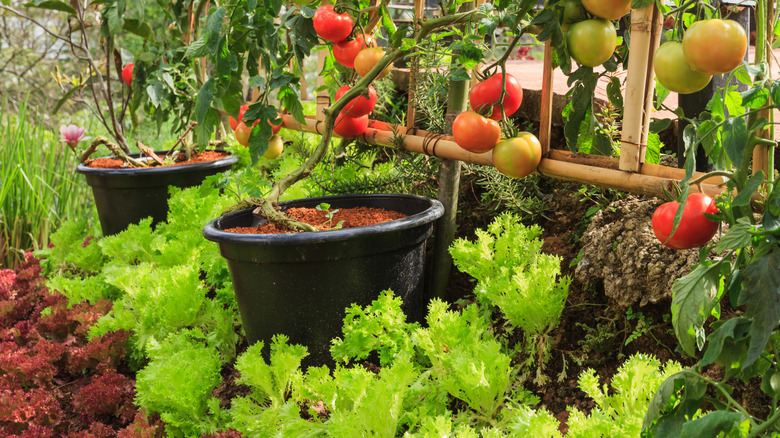
Leafy greens like lettuce, arugula, and spinach have shallow root systems. They need at least 8 inches of soil to develop a strong root system. In contrast, tomatoes need between 12 and 24 inches of soil. Since the root depth of these species is so different, they won't compete for space in the garden bed. Lettuce, spinach, and mustard greens can grow in a wide range of soils, so they're less likely to compete heavily for nutrients with your tomato vines. In addition, leafy green vegetables act as a living mulch, keeping the soil moist and cool — at least until they're harvested.
Mustard greens (Brassica juncea) have additional benefits when planted with tomatoes. They can help protect your vines from certain diseases, like verticillium wilt, and repel harmful nematodes that live in the soil. Densely planted mustard greens will suppress weeds, while the plants' abundant yellow flowers attract pollinators.
These plants don't just help your tomatoes thrive; they work the other way around, too. In fact, tomatoes are the spinach companion plant that leads to a bigger and longer harvest. Many leafy greens are cool-season crops. Tomatoes, on the other hand, are warm-season crops. This may seem like a bit of a mismatch, but it's actually what makes all these species grow so well together. Lettuce, mustard greens, and spinach are particularly well-suited to growing alongside tomatoes because they thrive in the dappled sunlight created by the tall tomato plants. The tomatoes still get the full sun they need.
Leafy greens to avoid planting next to your tomato plants
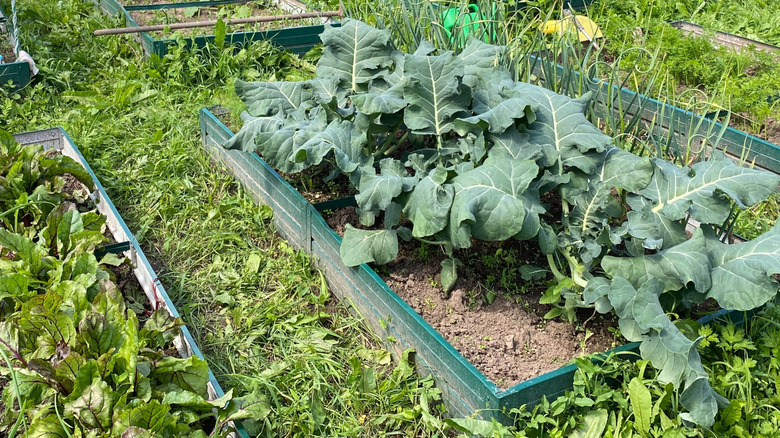
There are some leafy greens that share commonalities with loose leaf lettuce, collards, spinach, and mustard greens, such as a shallow root system, but they're poor companions for tomatoes. Many large plants in the Brassica family, including cabbages, cauliflower, broccoli, kale, and Brussels sprouts, are ones you should never grow too close to your tomatoes in the garden. They're all heavy feeders that will compete with your vines for water and nutrients. Similarly, head lettuce varieties — think iceberg, crisphead, butterhead, and romaine — will also compete for inputs with tomatoes. If you choose to plant these vegetables next to your vines, you risk stunted growth and smaller harvests from all your plants.
Like arugula and mustard greens, collards are the exception to the rule in the Brassica family, but for a different reason. While they will compete for nutrients with tomatoes when planted nearby, they have an additional benefit that may be worthy of a compromise. Collards can help with pest control, even at the expense of a less bountiful harvest. Instead of planting collards in your garden bed for food, plant them near your tomato plants to attract harlequin bugs away from your tomatoes. The collards take the hit from these voracious pests, allowing your tomatoes to thrive. Plant them around the periphery of your veggie garden — a few feet away from your tomato vines — for best results.