

Skip Landscape Fabric: This Ground Cover Is A Natural Replacement
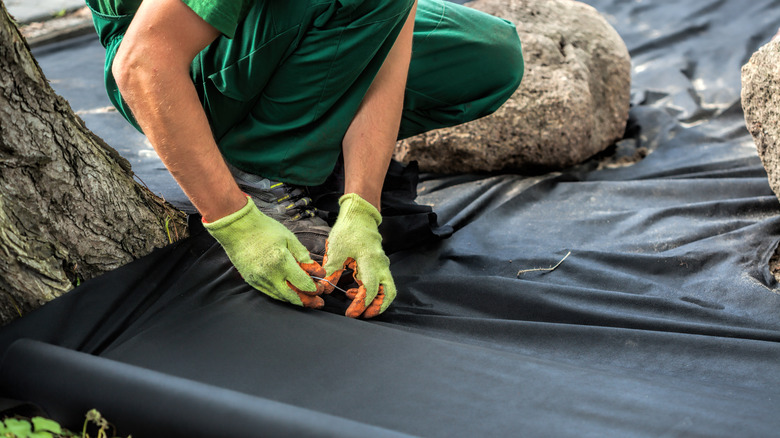
Which method of weed suppression do you prefer? Would you rather use a synthetic, temporary weed suppressor than may starve your soil of air and water and kill helpful microorganisms — or would you prefer a more permanent, natural solution that offers gorgeous foliage and delicate flowers, regulates soil temperature, helps soil retain moisture, and prevents erosion? Increasingly, plant experts are rejecting the first option, which you've probably guessed is landscape fabric. Instead, ground cover plants make for a stunning natural solution. One ground cover plant, epimedium, earns high marks because it doesn't spread invasively like some ground covers. It deserves a spot on the list of ground covers you can plant to help choke out unwanted weeds.
Despite the differences between landscape fabric and epimedium, both suppress weeds the same way — by blocking sunlight from reaching weed seeds, thus preventing them from germinating. Unfortunately, landscape fabric can do so for only a couple of years before it starts to degrade. While both solutions block the sun, only landscape fabric blocks a significant quantity of water, air, and microbes from reaching the soil.
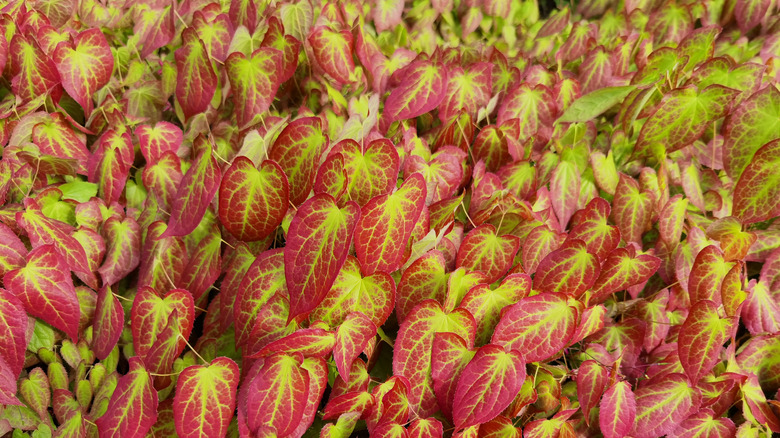
Epimedium, also known as barrenwort, bishop's hat, or fairy wings, is a low-maintenance ground cover that spreads slowly, taking three to five years to completely cover the area in which you've planted it. Its dense root system helps it outcompete most weeds. It's also beautiful, with leaves that are shaped like hearts or arrowheads and clustered flowers that come in a variety of species-driven colors, such as pink, purple, or yellow.
Use a ground cover, like gorgeous epimedium, to suppress weeds
Epimedium, a perennial, is cold-hardy in USDA zones 5 through 8. Transplant from nursery pots into well-draining, moist soil fertile with organic matter in an area of dappled sun and shade. Water regularly as epimedium becomes established. Though the ground cover is drought tolerant once established, it should be watered during long dry spells. While fertilizer isn't required for epimedium, you can give it a light application of a slow-release product in the spring.
Hardcore pruning isn't needed, but do remove dead or dried foliage and snip any excess growth that's not where you want it to be. Deadhead blooms that are on their way out. Propagate by dividing epimedium, placing divisions in other spots that need weed suppression. The ground cover is mostly resistant to pests and diseases; snails and slugs may visit but are unlikely to cause significant damage. Deer don't seem interested in epimedium, but rabbits may be.
Once you're aware of the downsides of using landscape fabric, ground covers like epimedium are likely to look more appealing. You may even see their leaves change color in the fall, depending on the variety of epimedium you choose. In fact, epimedium is one of the evergreen ground covers for stunning color all year round.