

What To Do With Oakleaf Hydrangeas In August For More Blooms Next Season
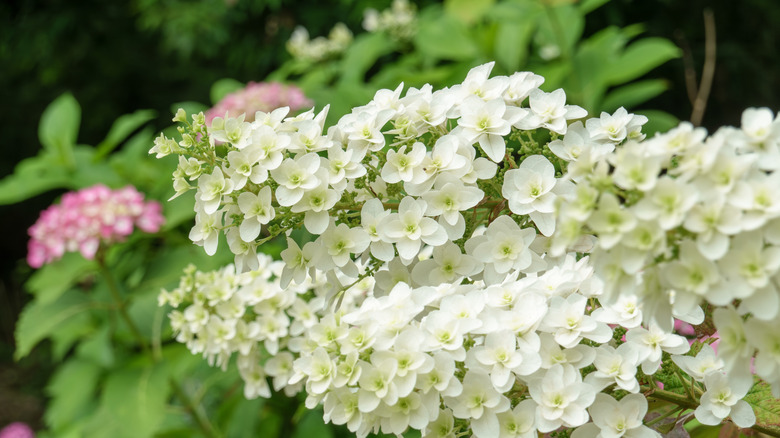
No hydrangea garden is complete without an oakleaf hydrangea (Hydrangea quercifolia). You can easily identify this plant by its distinct, oak leaf-like foliage. This hydrangea species offers visual interest all year with its clustered summer blooms and brilliant fall foliage. It also features interesting exfoliating bark that looks a bit like cinnamon. Native to the southeast United States, it's a perennial that is winter-hardy in USDA Hardiness Zones 5 to 9. It can grow from 6 to 8 feet tall and wide. Oakleaf hydrangeas feature cone-shaped columns of white blooms that shift to purple-pink over time. They bloom from mid-spring to the end of summer, and the flowers develop on old wood. That's why the oakleaf hydrangea is a perennial you should prune in August, right after flowering is done.
It can be tricky to figure out how and when to prune hydrangeas. Each type requires a different approach to this important maintenance practice. Luckily, oakleaf hydrangeas don't require heavy trimming. Pruning is only necessary to help shape your plant and keep it healthy. The healthier your plant is, the more blooms you can enjoy. You'll know your plant is due for a trim when you notice significant dead, diseased, or crossing branches. But timing is still everything. If you prune improperly or at the wrong time, you may jeopardize your next round of blooms.
Since your hydrangea blooms will start to fade by late summer, August is the ideal time to shape your plant before it sets new buds for the following year. For the same reason, it's not a good idea to significantly prune your plant in the spring or winter. You might inadvertently cut off old wood where your plant is set to bloom and minimize the number of flowers your plant will produce next season.
Prune in August and help your oakleaf hydrangea thrive
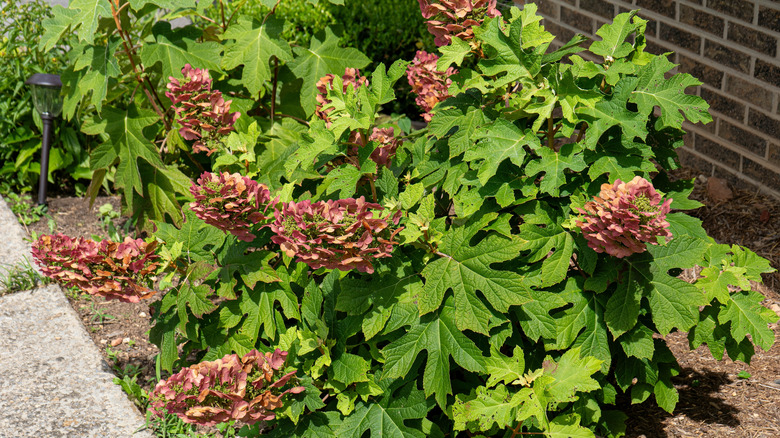
To prune your oakleaf hydrangeas in August, you'll need a clean pair of shears. Go lightly as you trim your plant. Cut back damaged or diseased branches to the ground or the base of the stem. If you encounter crossing branches, prune the weaker branch. Avoid trimming the branches towards the bottom of the bush. You may also need to conduct light pruning in the spring if any branches sustained damage over the winter. You can remove individual dead or diseased branches any time of year.
Pruning isn't the only important way to maintain your oakleaf hydrangeas — there are plenty of other ways to encourage these gorgeous hydrangea varieties to bloom more. Once established, these beauties are fairly low-maintenance, but it's best to ensure that they have at least 4 to 8 feet of space to spread out. They do well in full sun or partial shade, but for the best blooms, more sun exposure is best. They tend to enjoy rich, well-drained soil that leans slightly acidic. These plants are more drought-tolerant than their fellow hydrangeas but still crave moisture. Keep the soil damp but not sopping to prevent rot.
Seasonal care is also essential. Use mulch in the summer to help lock in moisture. Over the winter, be sure to protect your oakleaf hydrangeas with mulch or a burlap sack, especially in colder zones and during their first year in your yard. Lastly, fertilize your oakleaf hydrangeas with a tree and shrub fertilizer every spring. If you follow all these tips, your plants should thrive!