

Double Your Raspberry Bush With This Propagation Technique

What's better than raspberries? More raspberries, of course, and if you have raspberry plants, you can easily propagate them to attain more plants and berries. Indeed, raspberries are among the fruits you should grow from cuttings for a thriving harvest. With raspberries, stem cuttings are not entirely straightforward because only one kind of stem (or cane) can be used for cuttings. In fact, you will not succeed with raspberry stem cutting unless you use primocanes, which are the canes that started their growth and bore fruit in the current season.
You'll want to avoid floricanes, which are last year's primocanes that, after bearing fruit, turn brown and woody, while primocanes are green and pulpy inside. Floricanes have shorter spaces between sets of leaves than primocanes do.
Once you've identified the correct canes to cut, you'll want to gather a few supplies for the propagation process. You'll need sharp scissors or hand pruners and pots filled with moist, well-draining soil, ready to receive cuttings. The Ripe Tomato Farms recommends soaking pots of soil in a few inches of water before placing cuttings in them. Protect your hands from stickers with gloves. Rooting hormone is optional since raspberry cuttings root readily without it (learn about the types of rooting hormones you can use to multiply the plants in your garden).
How to propagate raspberries from primocane cuttings
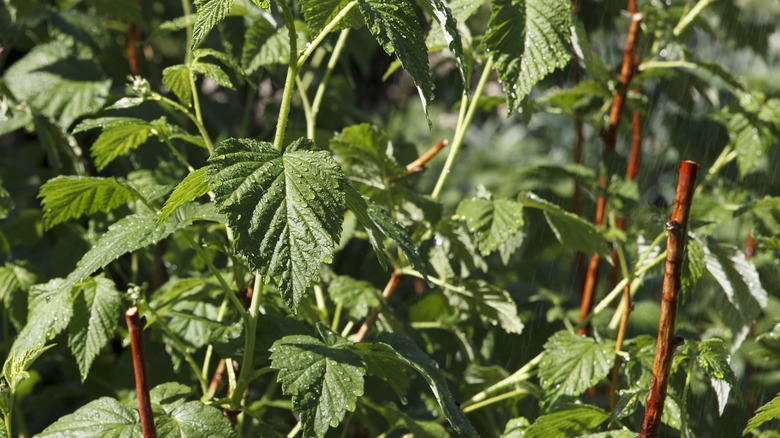
Fall is a good time to take primocane cuttings for propagation because they need cool temperatures to put out roots. Cut a piece of cane with at least four leaf nodes on it. Then, cut the stem below each leaf node. Remove excess leaves so the cut can put its energy into producing roots rather than maintaining them, and be sure to remove leaves from nodes that will be buried. After dipping cane pieces in rooting hormone, if desired, insert each cutting all the way into the soil to the botton of the pot. Tamp soil for firm support around the cane.
Continue to keep the soil moist as you wait for roots to emerge, which could take up to two months. Keep the plant out of direct sunlight but in a bright spot. It's unusual for raspberry cuttings not to root, so you can likely look forward to new raspberry plants to put in the ground in the spring. Learn the best types of raspberries to grow in your garden for a delicious harvest, so you can propagate a tasty selection.
Using primocane cuttings is not the only way to propagate raspberries. Many raspberry enthusiasts plant the suckers that grow from primocane roots. But using primocane cuttings for propagation is a practical option when suckers aren't yet available or when you want more plants than natural suckering alone would provide.