

This Herb With Flowers Adds Visual Interest To Landscapes
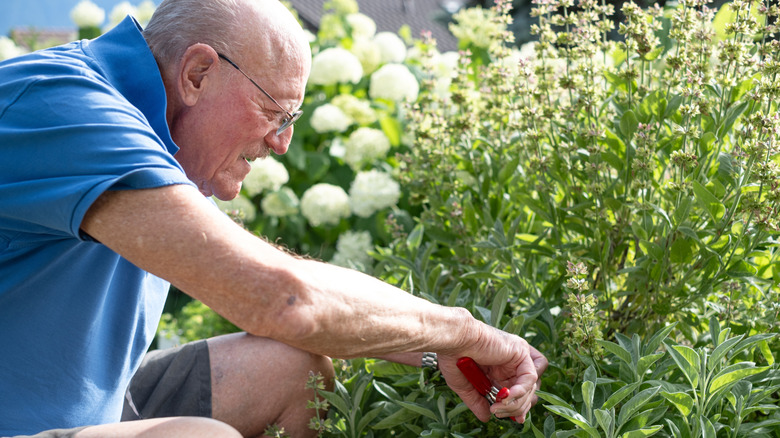
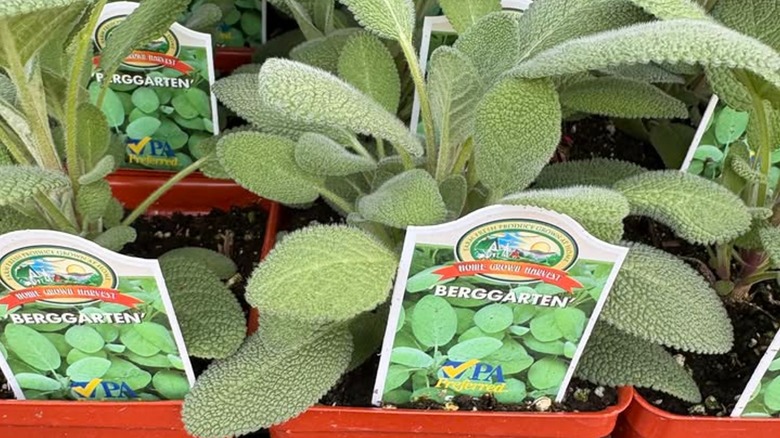
Sage (Salvia officinalis) is one of my favorite herbs. I'm a master gardener and herbalist with two decades of experience, and I have sage dotted around my gardens for its visual interest, ability to attract pollinators, and use as a companion plant and culinary addition. It's also an excellent rabbit- and deer-resistant plant to add color to your yard. Sage 'Berggarten' is a particularly interesting cultivar, as it has the largest leaves of any common sage type. The soft gray-green leaves have an oddly fuzzy appearance from a distance, and the lovely flower spikes are fabulous, as is their scent. Common sage is undervalued in the garden, in my opinion, because it's not massively flashy or flamboyant. 'Berggarten' in particular doesn't get much attention because some sources claim that it doesn't bloom reliably or only blooms sporadically through the season. Others may find it blooms just like other common sage cultivars.
'Berggarten' sage is a short-lived semi-woody perennial shrub that's hardy in USDA Zones 5 through 8. If it's in a protected spot and a warmer climate, this sage will retain most of its leaves through winter, but generally, you can expect it to drop leaves as the weather cools and bounce back with renewed vigor in spring. It's easy to grow, doesn't need a lot of care or maintenance from you, and shoots up fairly rapidly into a substantial shrub. If you've got a bare patch of thin soil in a border, drop in a 'Berggarten' sage plant, give it a little water until it gets established, and watch it mature into a genuinely beautiful plant with more interesting leaves than standard common sage.
'Berggarten' sage brings unique shape and texture
In summer, once most of the spring bloomers have finished, 'Berggarten' sage puts up its short upright spikes of small, blue to lavender flowers. These blooms sit above the foliage in whorls around the central spike. The lower part of the plant remains green, and the flowers put on a show above, giving it a slightly odd but very interesting appearance. It adds sculptural structure to a flower bed. If you are planning on making a pollinator-friendly garden, this particular cultivar of common sage is definitely a plant I'd recommend. Those spikes of flowers, without any leaves to obscure them, are magnets for pollinators like bees.
Even though there is some disagreement regarding the reliability of 'Berggarten's' blooming, the foliage alone makes it worthwhile. The leaves are larger and more deeply rounded than other sage types. There's also a variegated type, aptly titled 'Variegated Berrgarten,' with leaves that have darker green centers and white-yellow edges. This is a really visually striking variant that looks fantastic in a border. Sage also pairs well with other nectar-rich herbs, like borage and lavender. You can even plant 'Berggarten' with other interesting sage cultivars. 'Purpurascens', for example, has deep purple foliage, and 'Tricolor' is a cream variegated sage that has a flush of purple on its new growth. 'Icturina' is a yellow and pale green variegated variety, and 'Albiflora' behaves like standard common sage, but has beautiful, bright white flowers. I have a few different sage cultivars in my borders and amongst my vegetable beds, and they bring color and interest year-round.
How to grow sage 'Berggarten' to keep it happy
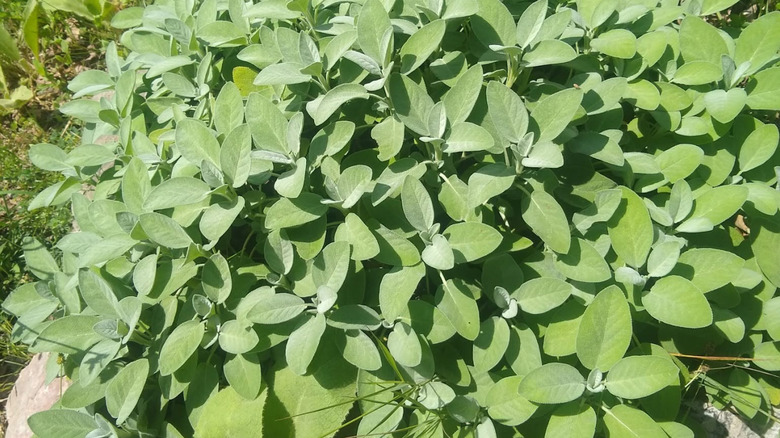
'Berggarten' sage is a great addition to a low-maintenance garden. It does not like too much fuss and it doesn't want to be overfed, either. Put 'Berggarten' where it can get plenty of sun and where the soil is well-draining. Avoid heavily fertilized or very nutrient-rich beds, as sage flowers better in thinner soil. The one thing that will kill sage the fastest is being too wet. Once it's established, it can tolerate periods of drought without any issue, but it does not do well in overly wet soil. You can even grow sage perfectly well in a gravel garden, and it performs just as well alongside other Mediterranean herbs like lavender that dislike rich, damp soil.
In USDA Zones 5 through 8, you can treat this sage as a deciduous perennial. Outside of these zones, treat it as an annual. Sage is fairly resistant to most pests and diseases, but in damp, humid conditions, it can get root rot and powdery mildew. It can also become a target for pests like leafhoppers and spittlebugs. Slugs will also eat sage if conditions are favorable, so good drainage and plenty of airflow around the plant are important. One of the reasons I'm so fond of sage is that deer and rabbits don't eat it, and its strong aroma can also help mask the scent of other plants that would normally fall victim to hungry wildlife. It also features quite heavily in my garden because it's safe for dogs and cats. If you are interested in making your garden or patio more pet-friendly, then again, 'Berggarten' sage is one I'd recommend.