

This Easy-To-Grow Vine With Stunning Yellow Flowers That Hummingbirds Can't Resist
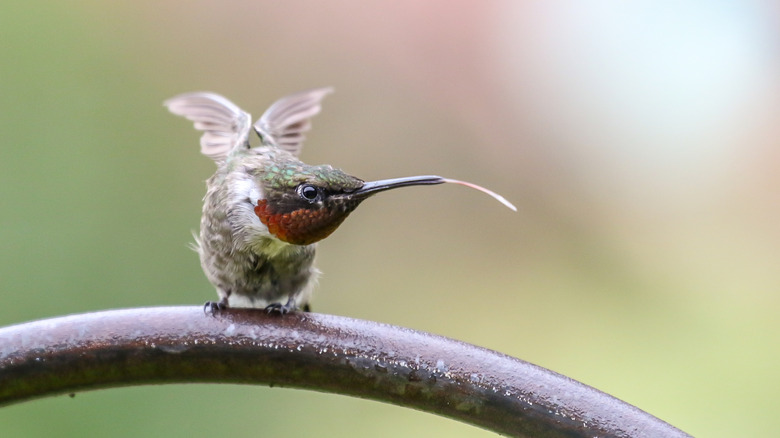
When it comes to enticing as many hummingbirds as possible into your yard, you need to check a few boxes with the flowering plants you choose to grow. For starters, bloom color matters to hummingbirds. To catch their eye from the air, flowers should have brightly colored petals. The shape of the blooms is equally important to get right — they need to accommodate a hummingbird's long, narrow beak. Finally, hummingbird-friendly flowers must have nectar coming out the wazoo. While red blooms are a hummer favorite, adding a splash of living sunshine to your garden won't hurt. There's a plant with bright yellow flowers that checks the other boxes, too: yellow honeysuckle (Lonicera flava). It's a vine with oodles of nectar-filled, tubular blooms that's sure to attract a charm of hummingbirds.
If you've ever talked about growing Japanese honeysuckle in gardening circles, we know you've been warned. This sweet-smelling vine can take over your whole yard, so it's wise to avoid it. After all, no one wants to spend years wrestling it off their fence or the side of their house. Yellow honeysuckle is different. With its trumpet-shaped blossoms that appear in late spring and last into early summer, followed by bright orange-red berries, this is the well-behaved honeysuckle you didn't know you needed. It's native to the central and southeastern U.S. and is a magnet for pollinators, including the hummingbirds you're interested in attracting. There's even better news: yellow honeysuckle is far from a high-maintenance vine. If you want to add this pretty vine to your yard, you don't need much preparation — just find a sunny spot with enough room for it to climb.
How to grow yellow honeysuckle in your yard for hummingbirds
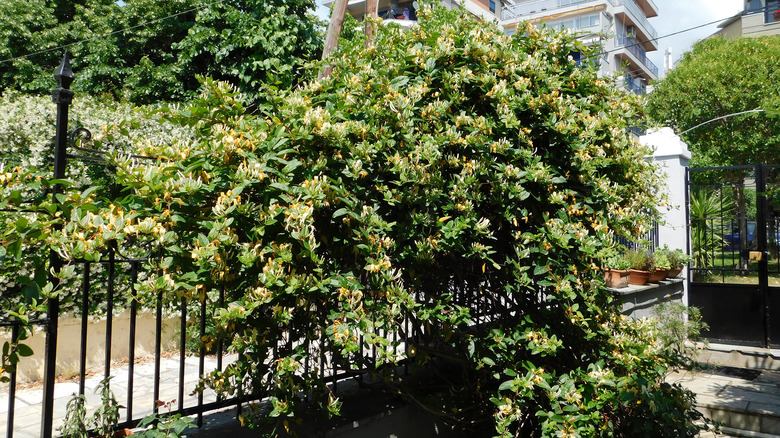
Although there are lots of smart ways to draw more hummingbirds into your yard or garden, planting a flowering perennial that doesn't take up much of your time is arguably the smartest. Yellow honeysuckle is the right plant for the job. It's hardy in Zones 5 through 8 and needs at least two hours of sun a day. However, if you want lots of blooms, choose a full sun site (six hours or more of direct sunlight). After all, the more flowers your garden has, the more hummingbirds you'll be able to feed. If you really love native varieties of honeysuckle, plant and grow more for a hummingbird paradise. Depending on where you live, fly honeysuckle (Lonicera canadensis), trumpet honeysuckle (Lonicera sempervirens), and hairy honeysuckle (Lonicera hirsuta) could be nice companion plants for your yellow honeysuckle. Bonus: You'll have a yard filled with sweet fragrance.
Because it's a vine, yellow honeysuckle needs something to climb, like a fence, trellis, or arbor. Otherwise, it will grow along the ground looking for something to cling to and clamber up or grow into a rangy shrub. Once established, you can expect your yellow honeysuckle to reach 10 to 20 feet tall and spread up to 6 feet wide, depending on the growing conditions and how much you prune it. Yellow honeysuckle doesn't care what soil it's planted in and is mildly drought-tolerant. Once your vine has developed a strong root system, it will prefer a less frequent watering schedule, but it can't go without water for long stretches. Keep the soil consistently moist (though not soggy) for young yellow honeysuckle plants and vines in containers.