

Think Artificial Turf Will Solve Your Weed Problems? Think Again
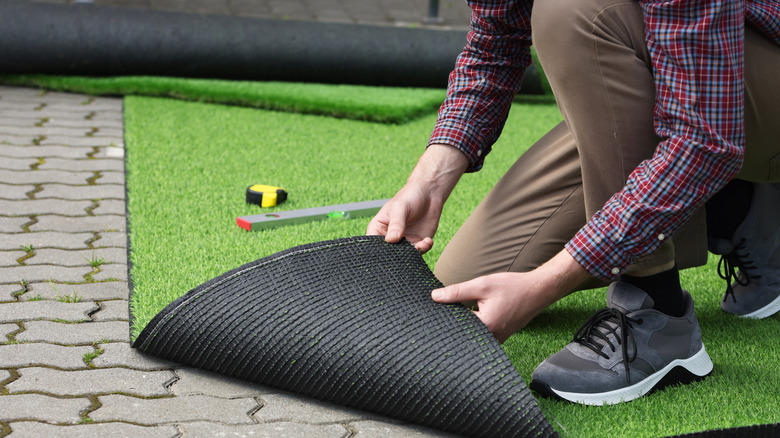
Artificial turf is regularly sold as the ultimate solution to a zero-maintenance yard. Manufacturers promise no mowing, fertilizing, or weeding, and they tell you you'll never need to use chemicals again. It's very tempting. The idea of a green space that doesn't need constant attention is obviously incredibly attractive. Unfortunately, as someone who has been gardening professionally for over two decades, I can tell you artificial turf never really stays weed-free. If the ground isn't prepared properly and there are still roots or rhizomes in the soil, more vigorous plants will find a way to push through to the surface. Artificial turf has quite a few downsides.
Even with proper installation that removes all living growth beneath and creates a stable, well-compacted base before the turf is laid, there will be weak points, particularly around the edges or seams. Plus, dust, windblown soil, pollen, fallen leaves, tiny bits of mulch, and other debris land on the lawn and settle between the synthetic blades. Then it rains, and you have a very fertile, very hospitable little seedbed. Weed seeds get blown in on the wind. Once those seeds make their way down to the lovely seedbed you've created for them, they will germinate and pop right up on top of the artificial turf. You were so hopeful it would block weeds, but you will still find yourself on your hands and knees pulling little weeds out of your plastic grass. Plus, even in the best conditions, calling artificial turf "no maintenance" is untrue. You need to brush and clean it regularly, inspect it for damage, and remove weeds as they appear.
How to keep weeds out of your artificial lawn
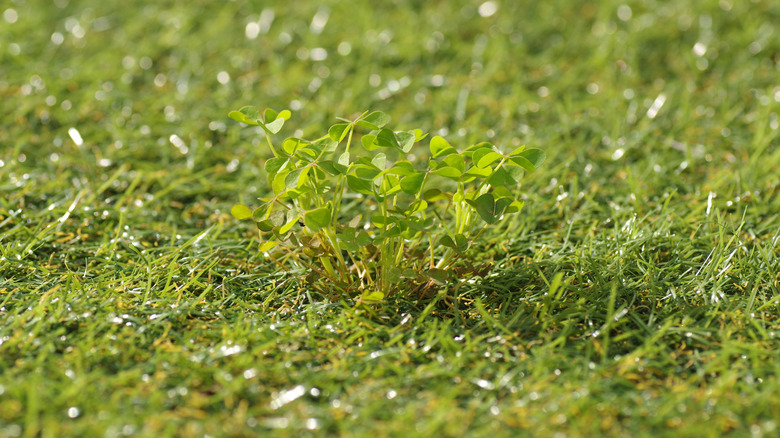
Installing a weed membrane beneath the turf does help with weed pressure from below ground, but it still won't prevent anything germinating on the surface. One particular hazard, if you have dogs, is that impermeable weed membranes do an effective job of trapping whatever your dog also deposits on the lawn. The smell can quickly build up beneath the turf and be very difficult to clean away. If you have dogs, weed membranes are something to be wary of.
To prevent your yard from becoming an inviting seedbed, regularly clean your artificial turf. Regular brushing and using a leaf blower across the surface help dislodge seeds and debris before they become a problem. You also want to wash the turf periodically with a good blast from the hose, as this will help to flush away the fine particles that collect in the plastic pile. You can also pressure wash some artificial turf if you are extremely careful, but you'd need to find out manufacturer guidelines first. Only use a low-pressure setting and a patio cleaning nozzle or a fan nozzle. Using high pressure or an inappropriate nozzle can damage the turf, lift seams, and flush away the infill, but it is a good option if you are trying to get rid of persistent stains or an odor buildup. When weeds do inevitably appear, pull them immediately. When they are young they have a very shallow root system so they are particularly easy to remove by hand. If you do get a stubborn one, then you can pour hot, not boiling, water over the plant without hurting the plastic or your pets.
Better low-maintenance alternatives to artificial turf
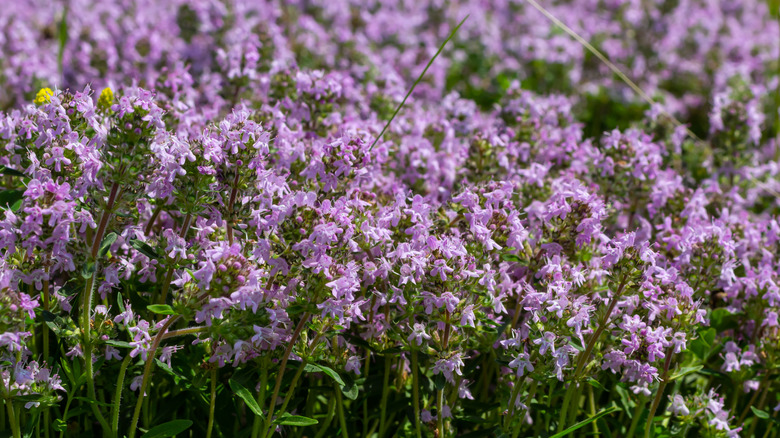
Unfortunately, no alternative to grass is truly maintenance-free. There are, however, better low-maintenance options that don't cause problems like microplastic shedding and heat buildup, and that still support soil health and local wildlife in a low-maintenance way. A low-growing ground cover that needs minimal mowing, such as creeping thyme (Thymus serpyllum), is brilliant. It's drought-tolerant once it gets going and can handle modest foot traffic, although it will struggle if you have kids that constantly play soccer. It's also a magnet for bees, making it a great low-effort way to support pollinators in your garden. It grows in zones 4 through 9, and once it anchors itself in it's very independent. White clover (Trifolium repens) is another fantastic choice, particularly if the soil you're trying to cover is thin and poor. It's a nitrogen fixer, so it doesn't require supplemental feeding and helps to nourish the soil below. Before you make a final decision, make sure you check your regional invasive species list as some ground covers are deemed invasive in some states.
If you need something harder-wearing than grass or ground covers, then consider permeable hardscaping like gravel or decomposed granite with planting pockets that you can fill with low-maintenance perennials. Once established, those plants will take care of themselves and if you choose the right ones, they will block weeds from coming up around their bases. You may still need to use a weed wand to burn off any weeds that pop up through gravel or just pull them out by hand as they appear. Xeriscaping is also a fantastic low-maintenance option for hot and arid climates, where you use a combination of hardscaping and sturdy drought-tolerant native species to bring life to a garden without it requiring constant attention.