

Stop Flushing Ticks Down The Toilet & Use This Foolproof Method Instead

When the weather warms up, many of us flock outside to delight in the sunshine and longer days. We explore hiking trails, traverse open waters in kayaks, and lay out expansive picnic spreads. Unfortunately, people aren't the only ones enjoying the great outdoors. Oftentimes, we find ourselves sharing space with ants, mosquitoes, and other pesky critters. While some are more of a nuisance, others — like ticks — can lead to serious health issues.
Ticks are tricky in that they are hard to detect. They're invisible hitchhikers, waiting patiently in grass or bushes along busy trails. (Side note: Be aware of common areas where ticks are most likely to lurk in your house.) When a person or animal passes near, the tick will hop on and find a tasty spot to dig in. Ticks release an anesthetic that prevents us from feeling the bite, leaving ticks undetected for hours or even days. Some bites may cause only minor skin irritation, but ticks also can carry transmissible bacteria and diseases.
If you spot a feeding tick, remove it immediately with fine-tipped tweezers, taking care not to squeeze or twist it. Slowly and delicately lift the body upward, as the tick's barbed mouth is probably dug into the victim's skin. Common disposal techniques include flushing the tick down the toilet or eliminating it with the help of this medicine cabinet staple, but a less common, and very effective method involves a simple strip of tape — guaranteeing that the tick will not return for a second feast.
Why disposing of ticks with tape is more effective than flushing
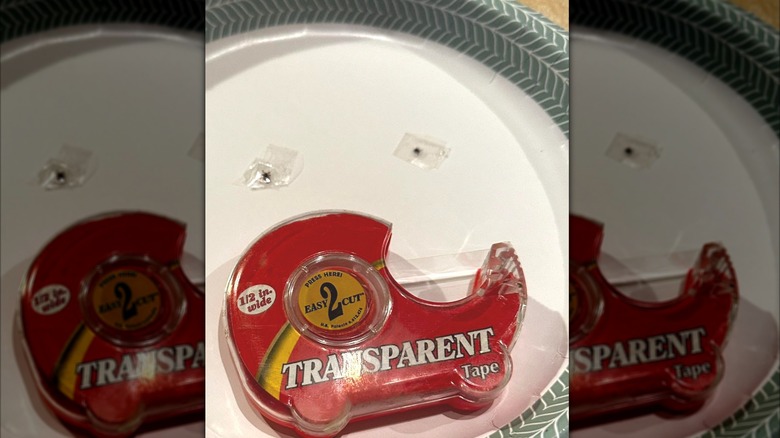
Tear off a small strip of tape (any kind will do) and fold it in half around the tick. Press the tape together around the tick, completely trapping it in. Don't squish the insect, as doing so could release and expose you to bacteria. Once the tick is completely enclosed in tape, if you are not saving it for medical reasons, throw it away in your outdoor trash.
Although flushing has typically been a way to dispose of insects, doing so may not be as foolproof as we think. It's unlikely that ticks can swim back up through your pipes, but they have been known to survive even after being submerged in water for as many as three days. If you do decide to flush a tick, keep an eye on it to make sure it goes down the waterslide. For extra assurance, wrap it tightly in a wad of toilet paper before flushing. If you live in the Northeast, Minnesota, Wisconsin, and around Lake Michigan, where Lyme disease is prevalent, save the tick and contact a healthcare professional.
To lower your chances of being bitten, it's important to know how to stay safe from ticks before venturing out. Easy tactics include using bug spray with tick-repellent ingredients such DEET, picaridin, or IR3535, and keeping your body well covered so ticks can't reach your skin. When hiking or walking outdoors, avoid wandering into tall grass or even brushing up against it. And even with these precautions, be vigilant about checking yourself and pets for any stowaways before returning indoors.