

Landscape Fabric Vs Plastic Sheeting: Which One Works Better?
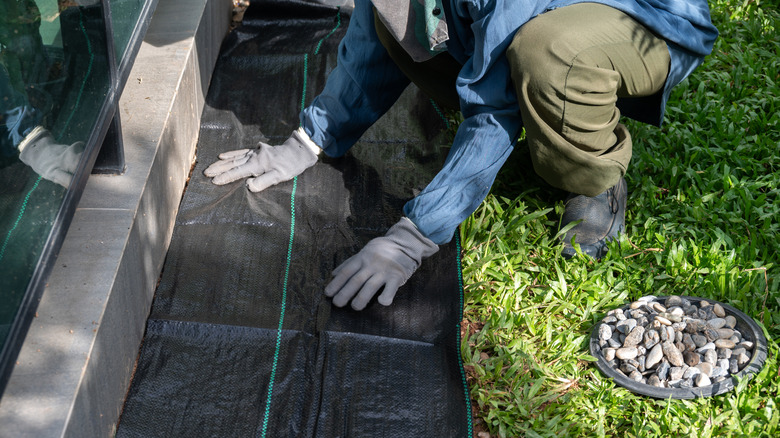
You've planned out your garden to a tee. You know where the carrots will go, what companion plants will pair with your onions, and the exact amount of sunlight hitting your flower beds and citrus trees. Everything's ready to go ... at least until you reach the weed control area of the gardening aisle. Do you need the landscape fabric or plastic sheeting? Which one actually works better to keep weeds from taking over your garden? The answer: it depends.
Landscaping fabric and plastic sheeting serve relatively the same purpose — to keep weeds at bay — but there are some key differences. Made from interlaced plastic or polyester, landscape fabric helps keep weeds down while still letting water and nutrients through so they can sink into the soil and reach your plants' roots. Its woven nature gives it an inherent sturdiness, allowing it to last anywhere from five years to a decade when properly installed. However, some gardeners don't love the prominent use of petroleum-based materials to make it. Plastic sheeting, on the other hand, is solid plastic. Typically made of polyethylene, thin plastic sheeting is definitely more budget-friendly, and since it blocks out nutrients and water, it's much more effective at shutting out weeds, according to anecdotal evidence. However, it has been known to break apart quickly in more extreme weather.
There is one major downside to using landscape fabrics and plastic sheeting: They aren't permanent solutions. Many newer gardeners lay down their chosen weed barrier and dust off their hands, thinking they've won the battle against weeds forever. But the barrier will inevitably fall apart at some point. The trick is finding the one that's most effective for your yard.
Plastic sheeting for temporary use, landscape fabric for long-term projects
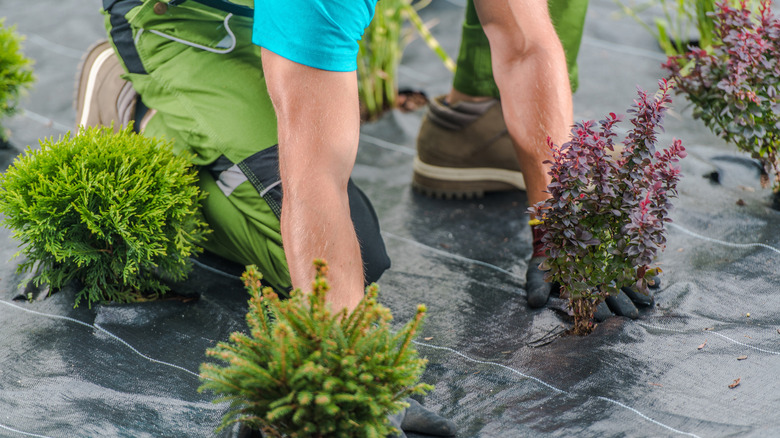
While both landscape fabric and plastic sheeting both can help get rid of weeds in your garden, the best option depends on your gardening project. If you're trying to get rid of a big patch of weeds before amending the soil, try laying down black plastic sheeting first. Then, after the weeds have died, remove the plastic and lay out landscape fabric to keep unwanted plants from sprouting. Because plastic sheeting retains moisture and holds in the heat, it might be a better choice for warm-season plants, like eggplants or peppers, especially if you want an early start in spring. Just be careful not to overheat your plants in summer.
For long-term usage, like in your perennial flowerbed or the shrubbery along your driveway, landscape fabric is definitely the wise choice, since it weathers time and the elements better than plastic sheeting. In flower beds and vegetable gardens, landscape fabric is also much better for soil health, but weeds can sometimes take hold through the porous material. Some home gardeners recommend pulling it up after your harvest so weeds don't have time to move in, then re-using it next season.
What if you're not planning to grow anything? When mulching, laying down stone pathways, or using rocks as a groundcover, giving the soil beneath some breathability may not feel as important. But before you grab the plastic sheeting, consider the grade and drainage in your yard, especially if it's prone to standing water. Plastic sheeting might mean fewer weeds to pull, but since water can't pass through the plastic, it'll get trapped or carry your substrate away. Plastic will also disintegrate faster. Instead, consider a woven stabilization landscape fabric to allow water to pass through and keep your gravel beds intact.