

5 Mistakes Everyone Makes When Cleaning Their Linoleum Floors
Linoleum flooring comes with many benefits. It provides budget-friendly solution to flooring while also remaining durable enough to last for decades within your home. It remains a popular choice for flooring, especially in high-traffic areas such as kitchens or within many types of commercial spaces. However, to make the most of your linoleum flooring, it's essential to provide it with the proper care. After all, for as durable as it can be, one of the biggest downsides of linoleum flooring is that it doesn't hold up to direct damage, and mistakes like using the wrong tools or cleaners can take a toll on your floor. Fortunately, familiarizing yourself with the common mistakes many people make when cleaning their linoleum floors can help reduce this risk.
After you get past the main installation phase, learning about how to care for your linoleum flooring can be broken down into three parts: regular maintenance, annual care, and the tools to get the job done. Skipping out on regular or annual upkeep, or using the wrong cleaners, mops, or other tools, often lead to some of the most common mistakes people make. This includes problems such as scratches, damage, or otherwise reduced longevity. As a result, learning to identify these common problems, and the ways to correct or prevent them from happening in the first place, is essential if you want to make the most out of your linoleum flooring.
Using too much water when cleaning
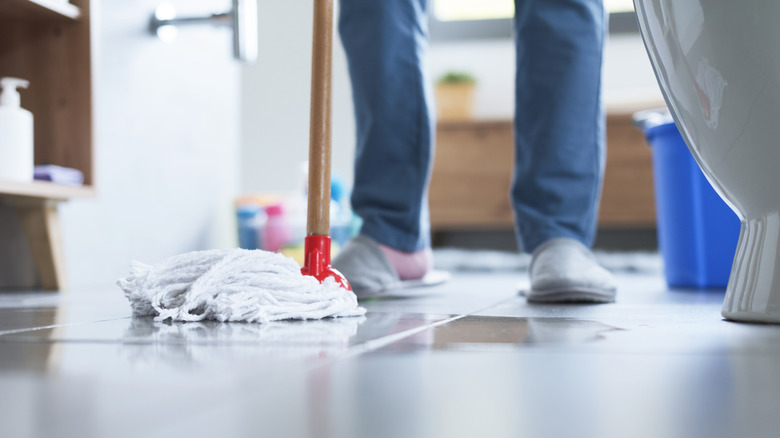
One of the easiest ways to clean your linoleum floor is to use a damp mop. However, using too much water can do more harm than good. If you're a fan of CleanTok, you may have noticed people dumping entire buckets of water on their floor for a thorough mopping. While this can be useful for properly sealed concrete surfaces that aren't at risk of damage, linoleum can bubble or warp when exposed to too much moisture over time. And, since it's often recommended to gently clean your linoleum weekly, weeks of oversaturation and soaking your floors can build up, potentially leading to damage over time.
Instead of waterlogging your linoleum floors by using too much water when cleaning, opt for a damp mop or rag to clean the surface. When possible, wring out your chosen tool well before beginning the mopping process. This ensures that it has enough moisture and cleaning products to get the job done without exposing your floors to large amounts of liquid. You may wish to dry your floors afterwards as well to remove any excessive moisture. These steps can also help prevent any mold or mildew by reducing the amount of moisture available to become trapped within your flooring.
Skipping out on annual maintenance and upkeep
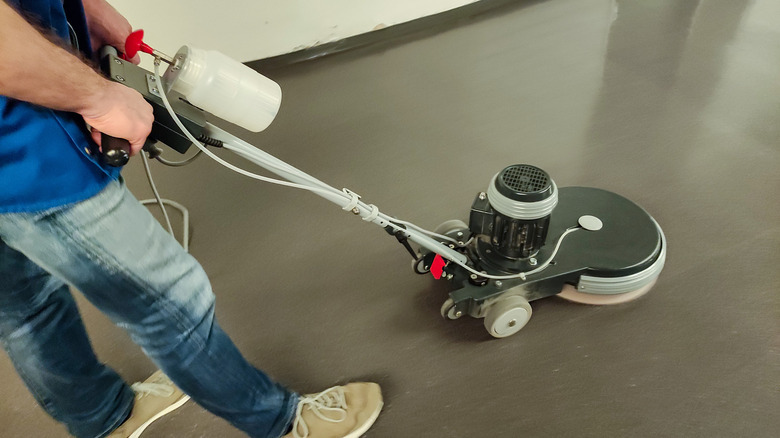
So, you know it's important to care for your linoleum floors often. However, care isn't just mopping when dirty to maintain a clean appearance. Instead, there are also annual upkeep tasks you'll want to schedule to help your linoleum flooring last. Annual polishing is one of these. When you regularly walk on your flooring, it can lose some of that shine that makes it look brand new. Polishing, when done correctly, can help restore your floor's appearance. In rooms that don't receive much foot traffic, annual polishing is typically enough to keep your flooring in good shape. However, in high-traffic areas, such as bathrooms or kitchens, you may prefer to polish your linoleum flooring more often, such as quarterly.
While polishing isn't always a necessity, unless used to prevent damage, skipping it can reduce the visual appearance of your flooring. However, while forgetting this step is a common mistake, over-polishing can be just as harmful, building up a dense layer of polish that can dull your floor's appearance and may require professional stripping followed by reapplication. This is one reason why polishing is often saved for infrequent upkeep rather than the same weekly schedule that gentle damp mopping and sweeping fall under.
Using the wrong types of cleaning tools
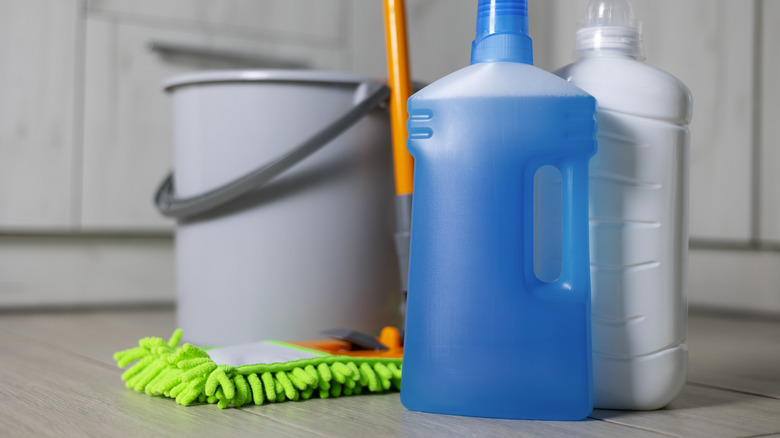
Soaking your floors and forgetting about polishing can take away from your linoleum flooring, no doubt, but using the wrong types of cleaners or cleaning tools is one of the easiest ways to accidentally damage your flooring. Linoleum requires a specific pH to protect its finish as well as gentle tools that won't scratch the surface of your linoleum.
As far as cleaning tools go, you learned above that a simple mop or rag is often enough to complete the task of cleaning your flooring. However, not all mops are equally suited for linoleum flooring. A traditional string mop, for example, may seem like a solid choice, but they can introduce too much moisture. Instead, you may wish to opt for a spin mop or microfiber mop that doesn't hold as much water while still remaining gentle enough to clean your linoleum without scratching or damaging the finish on your flooring.
When stubborn grime builds up, another mistake many people make is reaching for an abrasive cleaning tool, like a scouring pad. These can scratch your linoleum flooring, which may reduce its lifespan while also taking a toll on its appearance. You also want to avoid steam cleaning. Instead, for stubborn grime, opt for gentle, non-abrasive scrubbers. One hack is to use a tennis ball, which can scrub away grime without scuffing or otherwise damaging your flooring.
Not sweeping beforehand
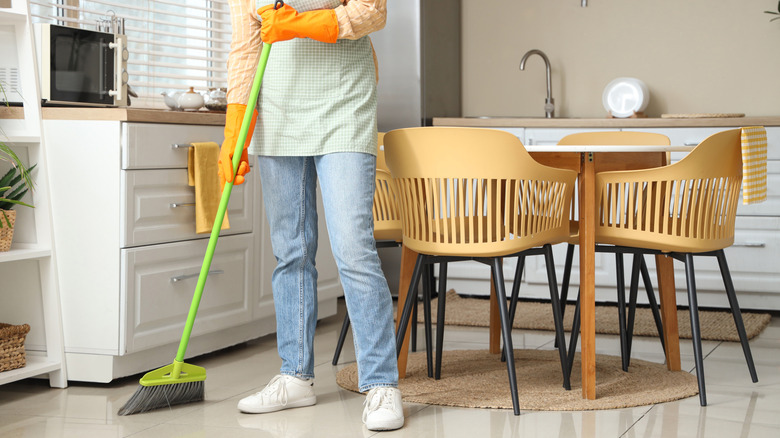
Imagine you're in a hurry before guests come. Quickly mopping your flooring just to restore its shine can seem like an easy way to ensure your home's looking your best, but it's actually an easy mistake to make. Remember how you just learned that abrasive cleaners are harsh on linoleum floorings? When you neglect to sweep before you mop, all the dirt, grime, and grit on your flooring gets pushed around without removal. This can, in turn, create effects similar to that of abrasive cleaners or scrubbers, wearing away polish or even creating small scratches.
Because of this, always properly sweep your linoleum floors before mopping, if it does make this chore a bit more time-consuming. This is true even if you sweep your floors regularly. On the bright side, you can use a vacuum on your linoleum flooring to speed up the process. You'll just need to make sure you pick the right one. Any vacuum with heavy, stiff beaters circle back to the problem of potentially causing damage, so pick a vacuum, or even a robotic vacuum, that is designed with linoleum flooring or similar sensitive surfaces in mind.
Using cleaners not designed for linoleum flooring
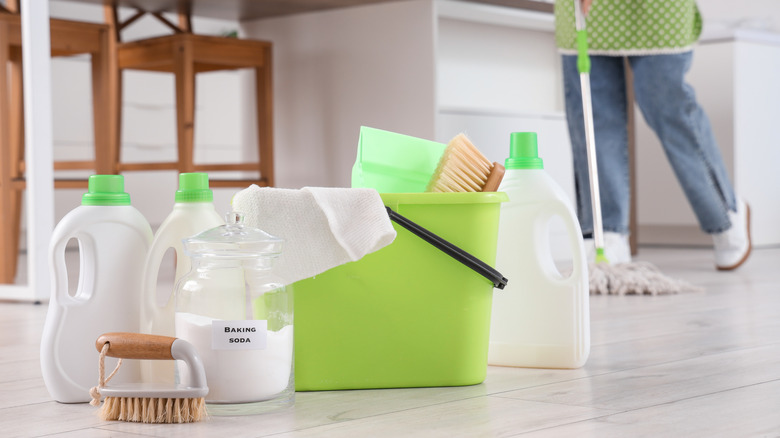
If it's your first time having linoleum flooring, you may be tempted to reach for the same products you've used on other floors. This includes those tried-and-trued products like ammonia or bleach. However, while these basic cleaners may be safe for some surfaces, they aren't the right choice for all, and picking them to mop your linoleum floor with is another one of those easy mistakes that anyone can make when cleaning their linoleum floors.
Above, you learned more about how annual cleaning tasks, like polishing and finishing, may need to be done to keep your floors in good shape. However, when you opt for a high-pH cleaner, those options like ammonia or bleach, can wear down on the finish of your linoleum or damage the material itself. While it may seem like it works to clean your flooring, it could be causing damage that may require lengthy repairs or even replacements.
Because of this, it's best to opt for a neutral pH cleaner for mopping your linoleum floors. You can even choose an option designed specifically with this material in mind to give yourself the most peace of mind. However, commercial cleaning solutions aren't the only choices available to you. There are also various home essentials you can use for linoleum flooring, such as a mild dish soap, baking soda, or vinegar. By choosing a neutral solution, you can reduce the likelihood of discoloration and damage that may occur with high-pH options.