

This Exotic Plant May Be Luring Slugs & Snails To Your Garden
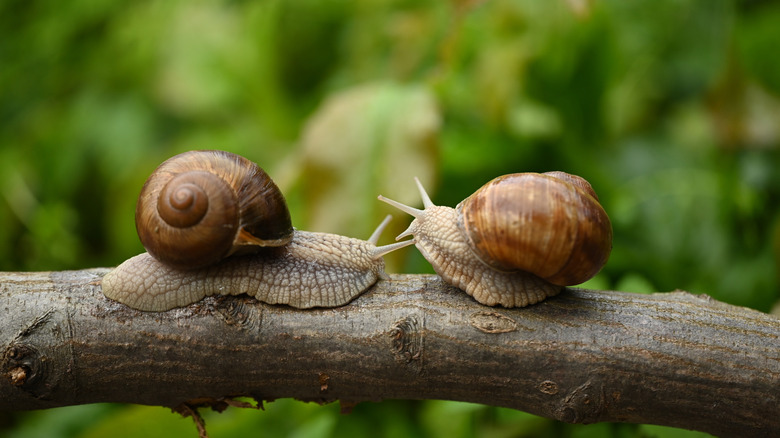
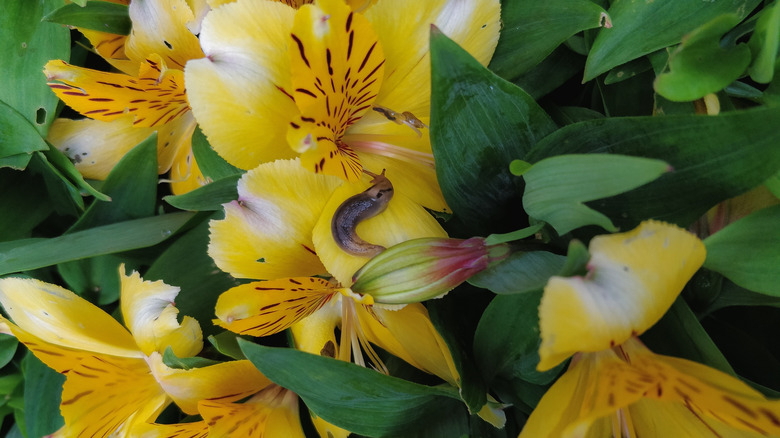
It's a summer blooming perennial perfect for a colorful garden, and if you live in California, Massachusetts, or Michigan, it's the most popular flower in your state. This gorgeous plant is Peruvian lily (Alstroemeria), and among its many horticultural offerings is something that, unfortunately, slugs and snails absolutely love to dine on. These destructive critters cannot get enough of the tender, fleshy young leaves and shoots that Peruvian lily puts out, and they can destroy a new plant by munching on it at ground level. Because it's the soft, spring leaves that slugs and snails find so irresistible, the mollusks are less of a problem later in the season as the lilies grow.
Since they feed at night, you may not see them in action, but you'll recognize slug and snail damage from their ubiquitous and unpleasant slime trails, as well as the irregular holes they chew in the Peruvian lily's leaves. Peruvian lily is an exotic coastal garden standout, and the slug and snail problem can be especially noticeable in wet locales. This colorful flower is so lovely that it would be a shame not to plant it just because it's so attractive to snails and slugs, so let's look at how to keep the mollusks away from your flowers.
Keeping snails and slugs away from your Peruvian lily plants
There's no lack of tips for keeping snails and slugs out of your garden, and vigilance is key. Hand-picking them off your plants is a good immediate defense — this endeavor is most effective during their nighttime feeding period. They like to shelter under container rims, so be sure to inspect those, as well. For long term relief, encourage the natural predators that consume slugs and snails, such as birds and toads, to stop by your garden with the help of feeders and safe habitats. You can also try barrier tactics, some of which use copper, or traps, which often rely on beer or cornmeal as bait. They'll also die if they ingest a bacteria contained in a nematode used as a biological control.
You can also try solutions focused on protecting the plants in concert with those that remove the pests. Place the plants under horticultural fleece or inside cloches; these protective covers offer the added benefit of protecting Peruvian lily from cold (the plant is cold hardy in USDA Zones 7 to 10). Many slug pellets, which shut down the digestive metabolism of slugs and snails, are not recommended because of their potential effects on other wildlife.