

Add One Simple Ingredient To Your Soil For Thriving Thyme
We may receive a commission on purchases made from links.
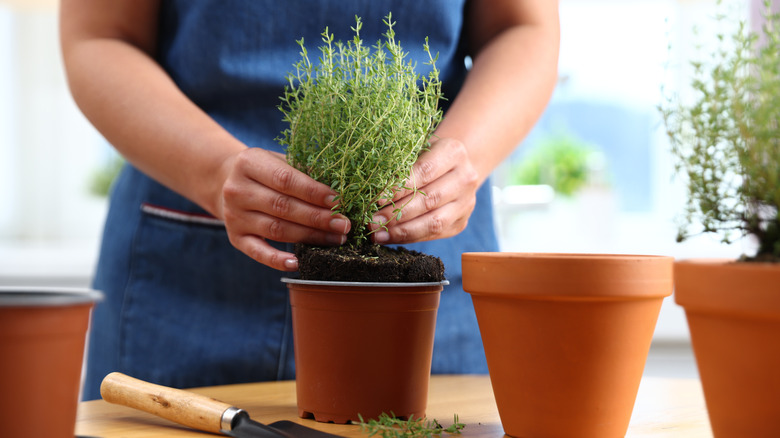
As tempting as the proposition may be, you don't have to pack up all your belongings and move to the Mediterranean to cultivate the healthiest thyme. Instead, you can make this tasty herb feel more at home by adding a single, simple ingredient to your growing medium. That may sound too good to be true — admittedly, it may not be quite as appealing as dipping your toes into the waters of an azure sea, but it's certainly much easier to achieve. While relocating to a warmer coastal climate may simply be a daydream, you can still have a thriving patch or pot of thyme right in your backyard or on your balcony. Here it is: the trick for growing the best thyme in your garden is adding sand to the soil.
The reason thyme (Thymus spp.) ranks among the stunning fast-growing flowers that thrive in sandy soil is its dislike of boggy conditions. Adding sand to potting or garden soil helps improve drainage. Water moves through sand relatively quickly, ensuring the plant's roots stay aerated. On the other hand, dense, heavy soil tends to hold onto water, leaving less space for air and reducing oxygen availability around the roots. Adding sand to your potted thyme's soil also lowers the risk of root rot. Root rot occurs when fungi that thrive in damp conditions start to colonize the roots of a plant. Growing thyme in perpetually moist, poorly draining soil is a common cause of root rot. Watch out for wilting or dying foliage, despite the plant being otherwise well cared for.
Sand in your thyme's soil adds drainage and prevents rotting
Given that thyme hails from hot, coastal regions of the Mediterranean, it's a plant that thrives in sandy soil and full sun. This low-growing herb, which is evergreen in most of USDA Zones 5 through 9, has tiny leaves and white, pink, or purple flowers. It typically grows no more than 12 inches tall with a slightly wider spread. Both the foliage and flowers are highly aromatic, making this plant a popular choice for kitchen gardens. Beyond its culinary uses, it's a useful addition to rock, pollinator, and patio container gardens. It's often grown alongside other drought-tolerant herbs like rosemary and oregano.
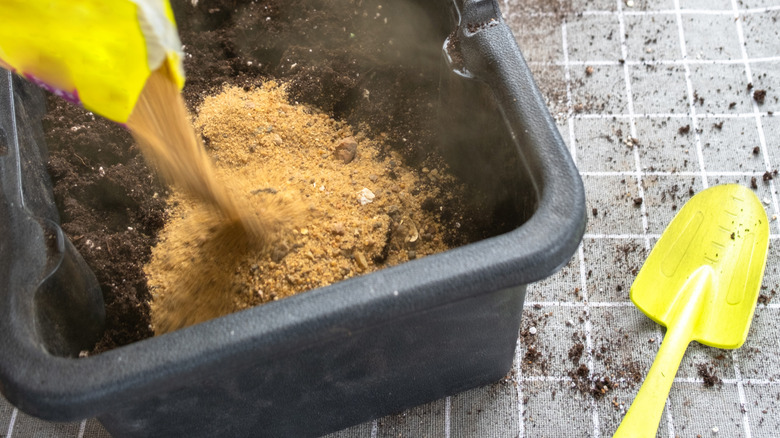
It's easy to add some Ivymay Coarse Sand to whatever medium your thyme is growing in. For best results, combine one part sand with three parts potting mix or compost by volume before adding it to the planting hole or container. Horticultural grit is a good substitute if you can't find the right sand. Are you filling a bare spot in a rockery with waterfall thyme (Thymus longicaulis subsp. odoratus)? Perhaps you're popping a newly purchased lemon thyme (Thymus x citriodorus) into a pot for your balcony? Either way, the sandy blend helps create the dry conditions these species prefer. If you don't want to make your own medium, use a commercial succulent mix. It mimics the dry soils succulents and cacti thrive in, so it's ideal for coastal herbs like thyme. Back to the Roots 100% Organic Succulent and Cacti Mix, for example, contains perlite, aged bark, and horticultural sand.