

Naturally Deter Pigeons With Flowers That You Love And They Hate
We may receive a commission on purchases made from links.
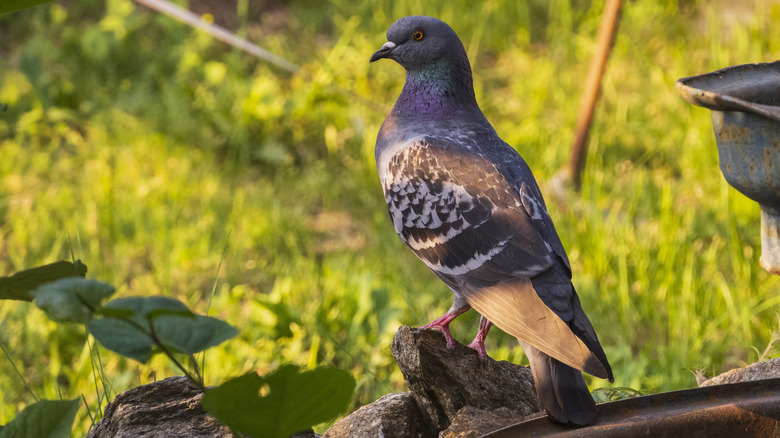
You may consider pigeons an urban pest, commonly found in busy city parks and the window ledges of skyscrapers. However, these once-domesticated animals can also become a major nuisance in yards and gardens. If you have a bird feeder, you've probably experienced firsthand the chaos pigeons can cause in a suburban backyard. Plus, their waste can harbor serious diseases for humans, while their feathers can carry mites, fleas, and ticks. In other words, few people welcome pigeons into their garden with open arms. In fact, if you see this bird in your yard, you have a problem on your hands. Thankfully, it's one you might be able to solve with flowers.
Deterring pigeons from your yard using humane methods is entirely possible. You can fill your garden beds and patio planters with flowering plants that these pesky birds detest. Growing strongly scented plants like lavender and daffodils underneath your bird feeder or birdbath may discourage pigeons from stopping by. These troublesome birds also dislike white flowers, so planting swaths of marigolds or citronella geranium in places they've congregated in the past may deter them from visiting again.
Some flowers may work better than others, and you might have to plant them in large concentrations or over many seasons to see results. You may also need to pair them with other pigeon deterrents, including decoys, moving reflective objects, and metal sheathing on roosting areas. It really depends on how persistent your local pigeon population is. At the very least, flowering plants are beautiful — it's a bonus if they solve your big, feathery problem.
Marigolds
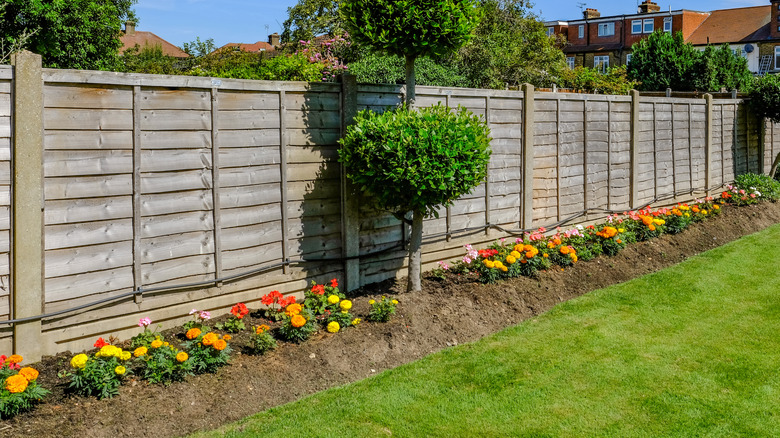
Marigolds (Tagetes spp.) are flowering plants that produce bright blooms from spring to late fall, depending on the species. There are many benefits of planting marigolds in your garden, including their ability to deter rabbits, deer, and, aptly, pigeons. Pigeons — like their fur-covered co-conspirators — strongly dislike the pungent odor of marigolds. What's more, these feathered pests may also be put off by red and orange marigold flowers since they naturally avoid those colors. There's a reason bird deterrent balloons, like this four-pack of Pesteze Large Predator-Eye Balloons for about $20, feature circular patterns in yellow, red, and black.
Daffodils
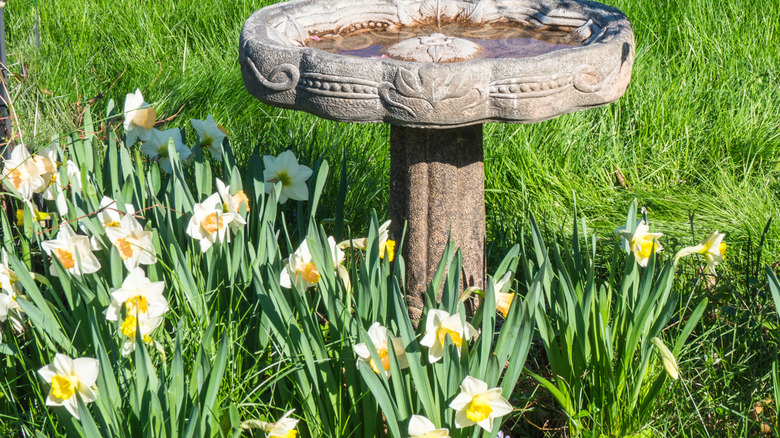
Daffodils (Narcissus spp.) are celebrated by gardeners as heralds of spring. They're also considered easy plants to grow since they will overwinter in Zones 3 through 8. These pretty flowering bulbs, which boast blooms in variations of yellow, white, pink, and orange, may also be a useful natural pigeon deterrent. While the smell of daffodils is wonderful to us, it may irritate pigeons' olfactory system so much that they stay away. Choose cultivars with a particularly strong scent, like 'Carlton,' 'Geranium,' and 'Thalia.' Plus, pigeons may dislike white petals, which reflect high levels of UV light.
Prickly pears
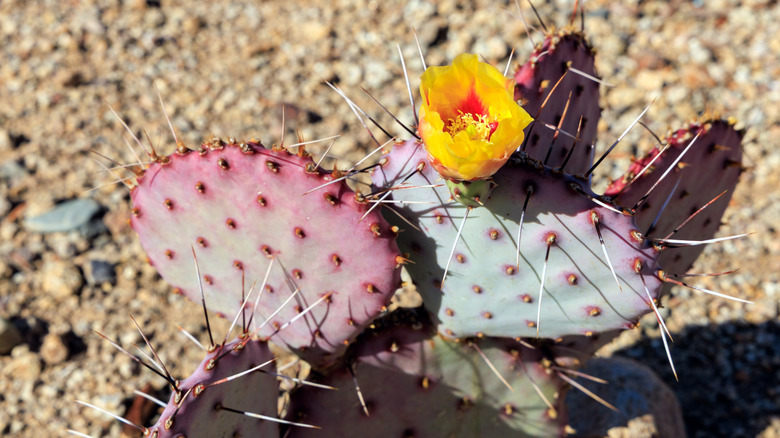
Homeowners often mount bird spikes on backyard structures to prevent pigeons from resting there. Instead of forking out for metal spikes — a 10-foot Aspectek Stainless Steel Pre-Assembled Bird Spikes Kit costs about $30 — why not spend that money on some tall, flowering prickly pear cacti (Opuntia spp.) instead? Plant them near a fence or pergola that's popular with pigeons, where the large, sharp thorns may discourage them from setting up residence. The black-spined prickly pear (Opuntia macrocentra) grows 3 feet tall and 6 feet wide and boasts formidable thorns up to 3 inches long.
Lavender
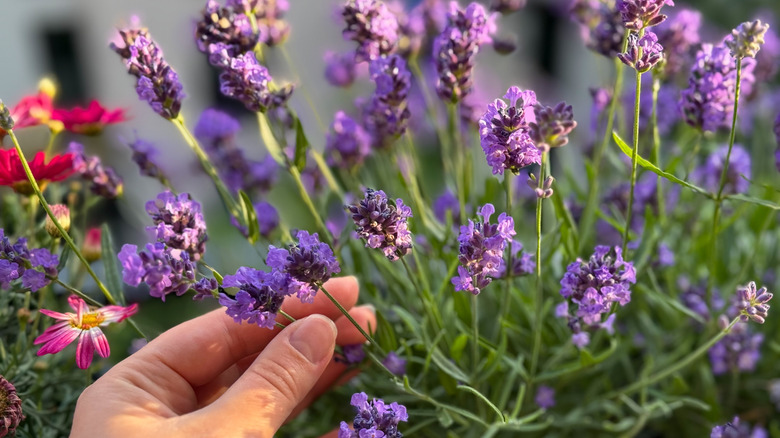
As mentioned, strong-smelling flowers may help to deter pigeons because the scent irritates their nasal passages. Lavender (Lavandula spp.), with its pleasing-to-us fragrance, is sometimes avoided by birds, including pigeons. Growing some lavender shrubs in any part of your garden where pigeons congregate may deter these feathered pests. You could also fill some large planters with lavender to discourage them from visiting your patio. This hardy evergreen perennial thrives in Zones 5 through 9, depending on the variety. Lavandula x intermedia 'Hidcote Giant' and 'Impress Purple' are among a number of cultivars known for an intense scent.
Citronella geranium
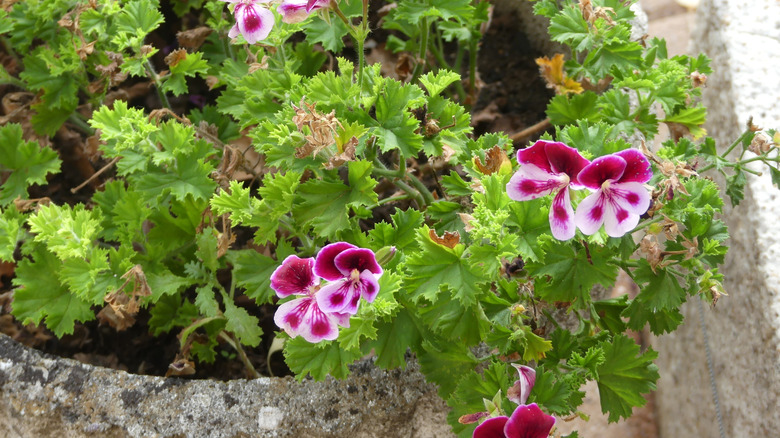
Another flowering plant with a strong smell is citronella geranium (Pelargonium citrosum or Pelargonium graveolens). The scent doesn't come from the flowers; instead, this plant has lemon-scented leaves. It's well-known as an insect pest repellent — for example, you can enjoy a fly-free yard when you add this fragrant flower cultivar to your garden — but pigeons may also find it repulsive. To use citronella geranium as a pigeon deterrent, plant this small shrub in a container and place it on your pigeon-plagued patio or deck. Regularly brush past or gently crush the foliage to release its scent.
Shasta daisies
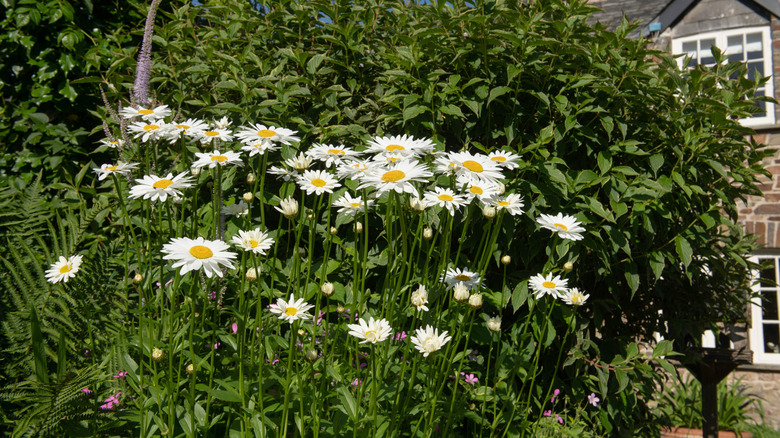
Another reason pigeons may avoid white — outside of the color's reflectiveness — is because many birds use a flash of white plumage to signal danger. Therefore, dotting your yard with bright white-blooming plants may be useful if you have pigeon problems. Shasta daisies (Leucanthemum x superbum) are herbaceous perennials that thrive in Zones 4 to 9. They also produce large white flowers with bright yellow centers from early summer to early fall, depending on the variety. Plant them in a dense border around any garden bed or veggie patch where pigeons are feeding.