

How To Sharpen Drill Bits With A Tool You Already Own
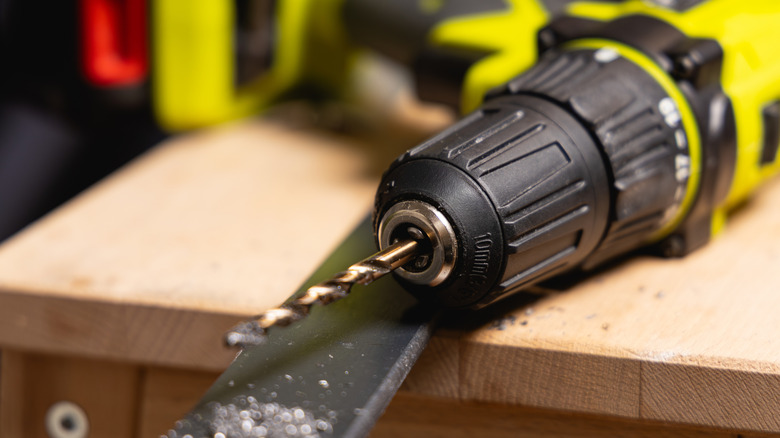
There's possibly nothing more frustrating than getting the ladder out, prepping your tools, and positioning your drill to make the first hole ... only for the drill bit to scuttle across the surface after barely making a dent. Welcome! You're now a member of the dull drill bit club. While dull drill bits are frustrating, there's good news. You can sharpen them with a tool you likely already own: your Dremel.
There are a lot of methods out there to hone your drill's edge, but most of them require heavyweight machinery. But if you want to sharpen your drill bits without a heavy-duty tool, your Dremel (or other handheld high-speed rotary tool) is ideal. Why? It's powerful (reaching up to 35,000 RPM), it's efficient, it's easy to handle, and its wide array of attachments makes it easy to find the perfect one for your bit. In other words, it's one of the best methods for sharpening dull drill bits to bring them back to life.
Even though you're using a smaller tool to sharpen drill bits, you need the same level of protective gear. We're talking protective gloves, safety goggles, ear protection — the whole shebang. Don't forget to wear a dust mask to help prevent accidentally breathing in tiny metal fragments, too.
Check your drill bit for dullness and damage first
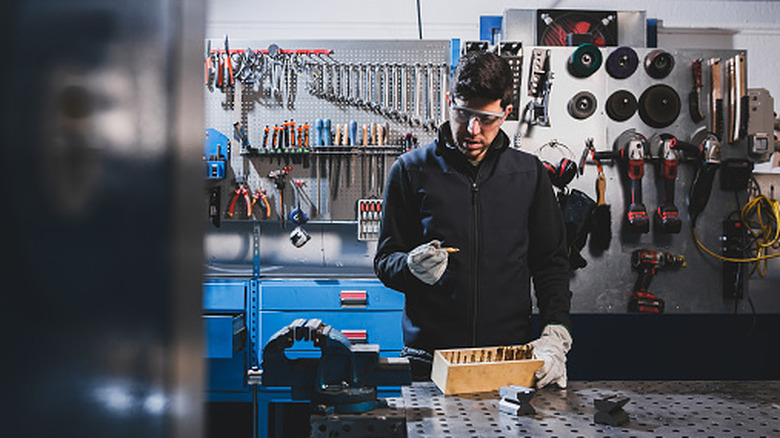
How do you know when it's time to sharpen your drill bit? Some of the signs are obvious: you have to press harder than normal to make a dent, let alone a hole; it won't make a dent in metal; and it isn't cutting as quickly as usual. The others are clear if you know what to look for, like increased heat, poorly-drilled holes, or holes that come out much bigger than they should be. Check the dull bit's cutting edges against a similar sharp one to see if it's blunter or not. The final check? Drill a hole with the suspected dull bit, then with a sharp one the same size. If the first one is dull, drilling the holes will be a drastically different experience.
Next, check that the drill bit can be sharpened. To your wallet's relief, most drill bits can be honed, as long as they are mostly intact. However, if the bit is heavily chipped, bent, or otherwise damaged, it's safer to recycle it instead.
Examine your bit to determine exactly where it needs to be sharpened. Having a magnifying glass and a sharp bit the same size can come in handy. Let's start at the point. The pointy end of the drill bit varies depending on the bit itself. Most drill bit points need to be at a 118-degree angle, while those for harder materials (think steel) need 135-degree angle. Masonry drill bits are unusual, needing a 60-degree cutting edge angle to be truly effective. Compare the dull bit's edges against the sharp one so you know where to sharpen.
Tips to easily sharpen your drill bits with your Dremel
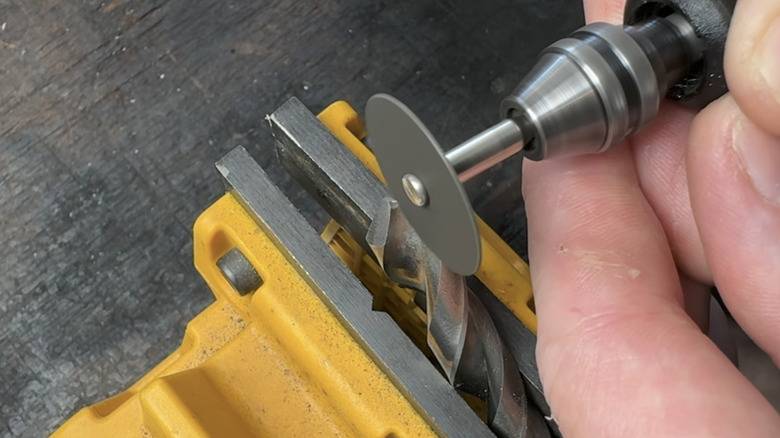
First, secure the sharpening attachment onto your Dremel. Smaller bits typically need a ¼ inch sanding drum or grinding stone, while larger ones (up to ⅝ inch) do well with a ½ inch attachment. (If your bit is larger than that, it's more efficient to pull out your bench grinder.) Use a coarser grit (think 80 to 120) for bits with curved edges. Finer grit sanding drums are ideal for either a quick sharpening or very small bits.
Secure your drill bit in a bench vise to keep it steady. Hold the Dremel at the cutting edge angle then, with light pressure, move it over the drill bit's edge, removing a small layer of metal. Glide it forward and back, keeping the pressure even. If the bit gets too hot, dunk it in some water and let cool. Work on one side at a time. When you're ready, release it from the vise, rotate so the dull side is up, and repeat. Once both sides are sharp, grab your trusty magnifying glass. Look for defined edges on the cutting edges and point, and that the entire bit is equal. One last test: drill a hole with the bit and notice how it performs. Are there any areas that need additional honing?
Drill bits will inevitably dull, but caring for them properly can help them stay in shape longer. Store them so their edges don't rub against each other (most drill bit cases have dividers to safely secure them). After you're done using a bit, wipe it down thoroughly and store it in a dry spot.