

5 Mistakes Everyone Makes When Cleaning Their Wooden Deck
We may receive a commission on purchases made from links.
A beautifully weathered wood deck makes for a stunning feature and elevates our experience of the outdoors. But to make sure it lasts a long time and looks as stunning as ever, it's important to clean and maintain it regularly. Sadly, here's where many homeowners stumble. While some rely entirely on infrequent rainfall to keep their decks clean, others take well-intentioned shortcuts. The result? A wood deck with discoloration and roughened boards that may require professional restoration.
For this reason, being mindful of some of the most common mistakes that people usually make while cleaning their decks becomes important, so you can get it right on the first try without crying foul on Reddit or home improvement forums. Mistakes you need to steer clear of include using bleach and harmful chemicals or hard, metal brushes. Blasting pressure washers at the wrong settings or without the necessary attachments can also damage your deck. Failing to repair before you set about maintenance or neglecting the underside of the deck can also have adverse consequences, which we'll explain below.
Not repairing the deck before cleaning
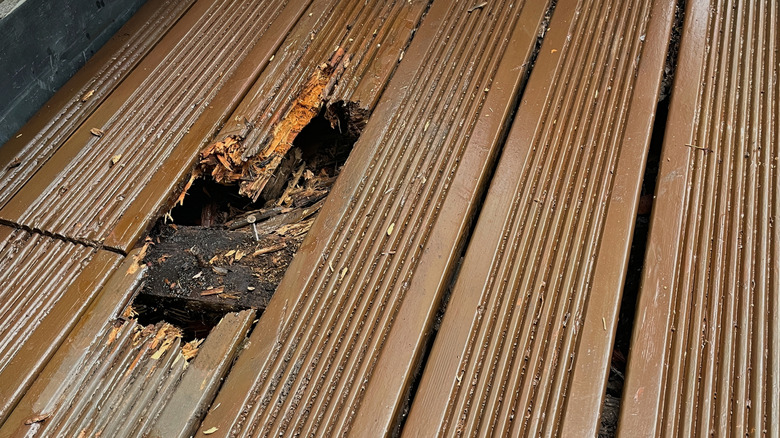
One of the biggest mistakes homeowners make is cleaning the deck without repairing it first. After months of disuse, constant exposure to the elements, and years of normal wear and tear, a deck may develop loose nuts, bolts, boards, or railings. If you clean it in this state, moisture may penetrate deep into the boards, drenching and rotting them, or promote corrosion around the screws. Some nails may also need to be hammered back into place, or they could catch underfoot and create a tripping hazard. It's also a good time to check the condition of wooden posts supporting the deck.
That's why simply brushing away leaves and debris before reaching for a hose or pressure washer isn't enough. Instead, you must conduct a full-scale inspection, examining the wood for cracks, warped boards, loose hardware, discoloration, mold, and rot. Use a screwdriver to probe any suspicious areas for soft spots that could indicate hidden rot. Only after you've made the necessary repairs should you proceed to cleaning.
Using bleach and harsh chemical cleaners
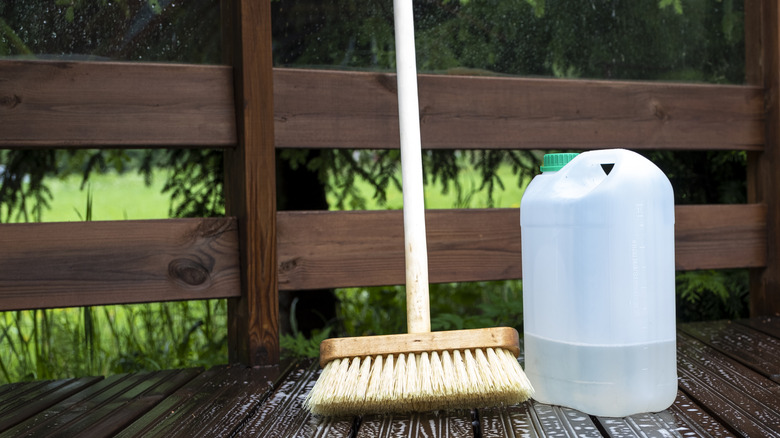
Don't use chlorine bleach to clean your wooden deck, or for that matter, any other harsh chemicals, including two-part acid cleaners. While these products may temporarily brighten the wood and even help get rid of mold, they can also damage the wood itself. Constant exposure to these ruthless cleaning agents strips the wood of its top layers, including lignin, and may also cause striping. As a result, the deck appears rough and worn down.
A roughened surface is also more likely to trap dirt and may prevent new stain from adhering properly, potentially shortening the finish's lifespan. Moreover, bleach can damage the caulking as well as allow rust to set in the fasteners and screws, in a way creating a significant safety hazard. And if you've decorated your deck with plants, don't be surprised if errant bleach splashes or runoff damage or kill them.
Instead, use a gentle, ammonia-free all-purpose cleaner or a small amount of dish soap. It's safe enough to use on all kinds of wooden decks, including the ones that have been coated in paint or sealed with an oil stain, and doesn't risk any stripping or peeling.
Pressure washing with the wrong settings and attachments
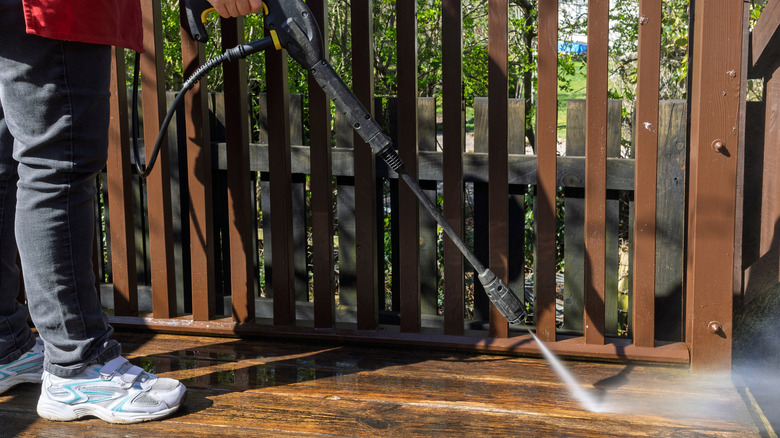
One thing you should know before using a pressure washer on your wooden deck is that the wrong pressure setting can leave it in worse condition than when you started. While it's easy to think that water blasting at a high pressure — measured as PSI or pounds per square inch in this case — will quickly remove all dirt and algal buildup, there's a far more damaging repercussion. It can etch the wood, strip away stain, and roughen the surface, often requiring sanding before refinishing. In severe cases, water can penetrate the deck boards, increasing the risk of warping and rot.
So, what's the best pressure washer setting when cleaning a wood deck? That depends on the wood type. Softwoods like pine or cedar tolerate about 500 to 800 PSI, while hardwoods may set the bar at 1200 PSI. Using the correct spray nozzle also helps control the cleaning pressure. Ideally, you should look for a nozzle with a 40-degree tip, though a 25-degree tip works too when the stains are particularly obstinate — anything more acute may greatly damage the wood. Since you want to play it safe, start at the lowest setting in an inconspicuous or easily replaceable zone (like the steps or along the margins) before dealing with the deck as a whole. Keep the spray wand moving evenly and maintain a distance of about 12 to 18 inches from the deck to minimize gouging.
Using stiff, wire, or metal brushes
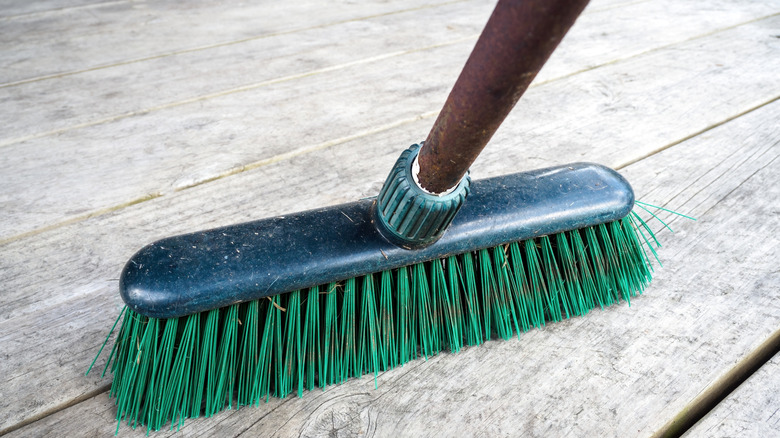
When you don't clean your wooden deck regularly, it's obvious that they will, over time, collect lots of dust, grime, debris, mildew, or troublesome stains. Since increasing the pressure washer's output isn't a good option, the only other way out is to scrub these marks away. Unfortunately, some folks make the mistake of using hard, wire, or metal brushes to save on their labor and elbow grease. But that shortcut can prove costly in the long run, as scrubbing with such tools often leaves the wood scratched and splintered. This makes the deck even more susceptible to damage from natural elements, moisture issues, fading, and it may also wear down quickly. Wire brushes can also damage or tear away caulking between boards and around joints.
To protect your deck against these consequences, be sure to use a soft-bristled brush made of plastic or nylon, like the Yocada Deck Brush. Basically, the bristles should be soft like a broom's and should move smoothly across the surface. These are also useful while clearing out the corners. Unless spot treating, move the scrubber lengthwise, following the grain's direction and not against it, or the marks will show.
Forgetting to clean under the deck
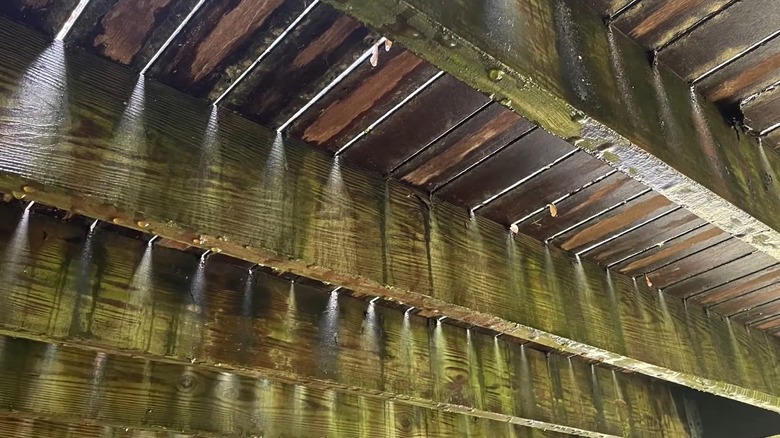
Most people call it a day after cleaning the top of their deck. However, the underside needs attention, too, even if it's out of sight. However, the underside requires similar care, even if it isn't as conspicuous. The reason? Leaves, twigs, and other debris don't stay on the deck's surface. They often fall through the gaps between boards and collect underneath. Left untouched, it may eventually harbor moisture, allowing rot, mold, and mildew to set in. This is especially problematic in humid climates or where winter rains are rampant, and this may eventually show up on top. Over time, severe rot can even compromise the deck's structural integrity. Not to mention, it's common knowledge that lots of caterpillars, ants, spiders, and rodents often make use of such leafy collections as overwintering habitats, making pest control so much harder to deal with.
During your annual deck cleaning, take the time to clear leaves, cobwebs, and other debris from beneath the deck with a broom. You can also use a portable vacuum or leaf blower, provided the debris is completely dry to avoid clogging the equipment. Follow up with a nice rinse with a hose or a pressure washer, though if you suspect mold buildup, you may need to treat it with a dedicated cleaner and scrape it away with a soft-bristle brush first. When rinsing, start near the house and work outward so water flows away from the structure and you're less likely to soak yourself.