

The Clever Watering Method That'll Help Tomatoes Ripen Faster
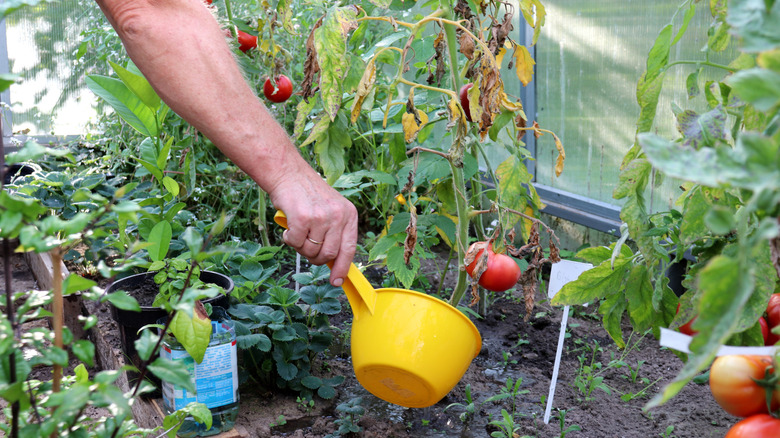
Tomatoes are not the fastest-growing plants out there. In general, you can expect the flowers to transform into ripened fruit in about 6 weeks, depending on the variety. Unfortunately, sometimes things go wrong, and you end up needing your tomatoes to ripen sooner than expected, like when your first frost date comes a little too quickly. In these situations, changing how you water your plants can produce the rapid growth you need. Though it may sound counterintuitive, if you want any chance of your fruits ripening in time, you should slow down your watering.
The point of reducing the water is to increase stress levels. This signals to the plant that something is wrong. It will speed up its growth in response to ensure it still has a chance to reproduce. However, it's best to be careful when making these changes. Going too fast and overly stressing out the plant is likely to make it sickly and may cause damage to the fruits.
There's a bit of a balance to be had with this method. You don't want your tomatoes to be thirsty in a drought-like condition, so just start by decreasing watering times or increasing days between sessions a little. The exact amount you need to reduce depends on your soil type and is one of the key watering tips to know for bigger, healthier tomatoes. In general, though, you want the soil to be dry about 2 inches down before adding more water.
What else you need to know before changing up how you water
While underwatering can speed up the ripening of fruit, waiting too long between sessions may hurt your tomato plant just as much as overwatering. These fruits need pretty consistent deep soil moisture to grow properly. Because you are reducing the watering somewhat, that means you need to be on top of monitoring your plant and soil moisture, or else you may do more harm than good.
However, decreasing water for your plants has other benefits as well. Not only do you get ripe fruit faster, but they are often tastier. Since there's not as much water, the sugar content and flavors will be stronger. Of course, fruits you ripen this way usually end up a little smaller, but for the flavor and speed, the reduced size can be worth it.
You also only want to try this method when your tomato plant is done producing fruits, the tomatoes are fully grown, and are in the process of ripening. When it's growing flowers or converting those blooms into fruit, it needs a little extra water to keep it growing and thriving. Keeping it too dry early on will leave your plant stunted and with fewer fruits than it might otherwise have. It's also worth noting that while changing up your watering schedule will speed up your tomatoes' ripening, they won't grow any larger.
When this method may not work and what else to try instead
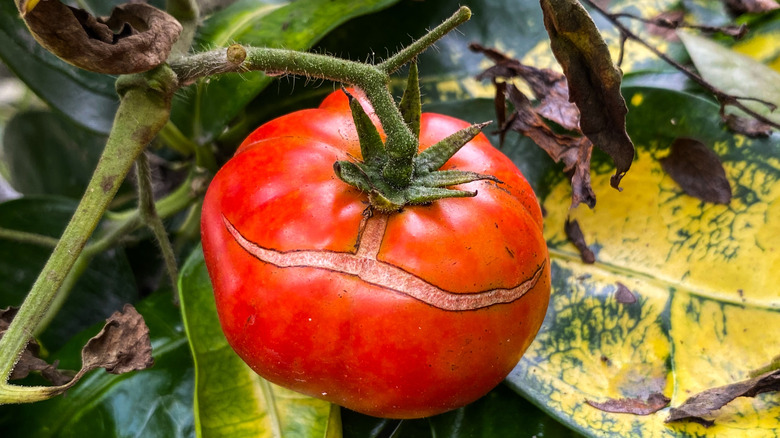
Although this method speeds up the ripening process, it may not always be the best solution. You need to pay attention to your weather forecast before trying it out, for one. If you live somewhere where heavy rains in the fall are common, this method may not be ideal. Going from a drought-like condition to being overwatered can cause the tomatoes to crack. If you know you're going to get rain while trying to rush the fruit, you may want to wait it out. Picking the right tomato for your climate — which is one of the tips for growing the best tomatoes for your garden — will increase the durability of your plants.
Changing up your watering schedule isn't the only way to ripen your tomatoes faster. If you want, you can try multiple methods to increase the chances of them ripening before they need to be harvested. For example, pruning the top and the roots of the plant helps to speed up growth as well.
However, be careful trying out too many methods at once. Making several changes may cause a lot of stress, actually harming the fruit and the plant itself. If you're running out of time and there are still some fruits that aren't quite ready, you can harvest them and place them in a box with an apple — a trick designed to help tomatoes that are struggling to ripen on the vine.