

Is Aluminum Foil Bad For You? It Depends On How You Use It
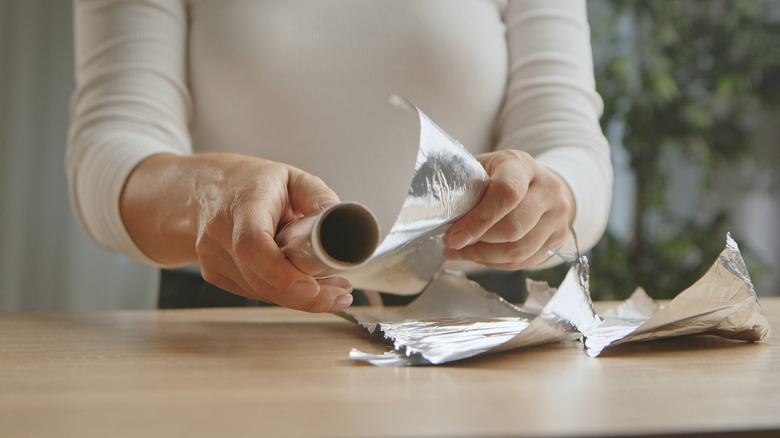
Just like the quality of your aluminum foil is more important than you thought, how you use it can make a significant difference in your health. Have you ever questioned whether the aluminum foil you wrap leftovers in or clean your kitchenware could be bad for you? The answer is more complicated than a simple yes or no. A lot of the concerns are only applicable depending on how you use your aluminum foil. There are instances where using the metal wrap for food storage or as appliance liners could lead to potential contamination of your food.
Because of the potential link between chronic aluminum intake and Alzheimer's disease, as well as other health concerns, it is understandable that people might be concerned about foil's safety. Thankfully, keeping a roll of aluminum foil in your house is not a health hazard. Most of the aluminum that people consume comes from eating food with the substance, such as cereals and teas, not from storing goods in foil or using it as a liner in appliances. However, using the metal wrapping paper to store certain dishes can leach aluminum into the food.
Some of the worst foods that you can store in aluminum foil are acidic foods. Aluminum leaches from foil at higher rates when in contact with acidic items like citrus, tomatoes, and vinegars. These are all bad ideas to store in foil, because the acid can start to corrode the metal. And the longer you store these food in foil inside the refrigerator, the more aluminum contamination can occur.
How to avoid unknowingly consuming aluminum from your food
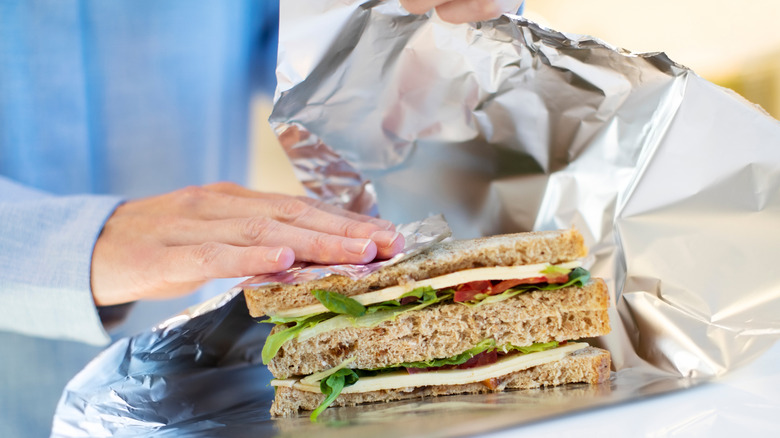
However, not all studies agree that the leached aluminum content is high enough to be a concern. Another problem with food storage involves introducing another metal with a higher standard electrode potential, like steel or silver. A study in Food Additives & Contaminants found that aluminum concentration in the food was very high after placing foil on top of food served on a stainless steel serving plate. Plus, you should never put hot food in aluminum, but rather wait for it to cool to avoid the risk of spreading pathogens.
But what about lining ovens or air fryers with foil? In air fryers, this practice is fine, provided you don't block the heat from circulating properly – it's a dangerous mistake when using foil in an air fryer. However, avoid doing so when cooking acidic foods for the same reason you want to avoid storing acidic foods in foil. Also keep in mind that no studies have investigated the link of potential aluminum contamination and air fryers. And with an oven, you shouldn't line it with foil not because of contamination risk, but due to potentially disrupting its proper function.
Don't be alarmed if you have stored acidic foods in foil before. Occasional, trace aluminum ingestion should not harm you. And according to the European Aluminium Foil Association, only up to 4% of the aluminum humans ingest comes from metalware like aluminum foil. But repeated exposures can be an issue over time, so consider alternatives to foil for storing acidic or salty foods. For example, try beeswax wraps. Or you might decide to make the switch to glass Tupperware for many of your food storage needs to avoid potential contamination altogether.